A highlight of our recent trip to Ireland was a half-day visit to the Great Blasket Island. Located off the coast of the Dingle Peninsula in western Ireland, the Great Blasket Island is the largest of an archipelago that includes Beiginish, Inishtooskert, The Tearaght, Inishabro, and Inihvickilane, forming the aptly named Blasket Islands. While none of the islands are currently inhabited, the Great Blasket Island was inhabited up until 1953 and is steeped in culture, nature, and history, making it a fascinating place to explore. Furthermore, a visit to the Great Blasket Island invites you to get off the beaten path and find the true heart and soul of this magical country without overtourism or large crowds. For me, that is the most enriching way to travel.
Why visit the Great Blasket Island as opposed to the over-touristed places in Ireland
In 2025, over 1.5 million people visited the Cliffs of Moher, one of Ireland’s most iconic and visited places. While the Cliffs of Moher are exceptionally beautiful, it can be argued that there are many other equally if not more, majestic and beautiful places in Ireland that are nearby and without the crowds.
As a sustainable travel writer, I ask: Is visiting the Cliffs of Moher even a good experience anymore? Is it good for the fragile ecosystem, or the masses of tourists arriving on buses (up to a couple hundred buses make the stop each day), cramming together to get the one photo for their memories and check off an item on their bucket list? This kind of mass tourism quite frankly is terrible and does no one any good. Instead, it is important to seek alternative places to visit without the crowds, which is how we found the Great Blasket Island Experience and tour.
I have always had sensitive skin and allergies to certain ingredients in medications and fragrances, and I have unpleasant reactions to bug bites and bee stings. Normally, for me, the first sign of an allergic reaction to a medication or ingredient in a product is a cluster of small, red, itchy hives, usually on my chest, back, or midsection. For bees and sandflies, it is worse. Insane, rapid swelling to the point where, once, when I was in remote Chile for work, I had to use a horse tool to cut off my wedding ring to save my finger!
Getting my room removed by a horse tool in Chile after a yellow jacket sting
Seasonal allergies are something I deal with every single spring, making it miserable to do the one thing I love after a long, cold Minnesota winter: be outside! But I do it anyway, and I leave the windows open for fresh spring air and breathe in the lovely fragrant tree pollen from blossoming crab apple trees and lilacs despite the negative consequences. Usually by late summer, the headaches, runny nose, itchy eyes, and throat are gone. I can finally stop taking daily allergy pills, nose and eye sprays, and be done with it.
How hives can upend your life
But the hives are another thing. They can attack at any time, due to an allergic reaction to food, medicine, ingredients in products, and sometimes even stress.
Normally, they go away in a day after taking Benadryl and stopping the offending medication or product (if I am aware of what it is that is causing the allergic reaction). This time, however, it was different. What started as a drug allergy while filming on location for my job in Northern Europe turned into a full-blast 8-week mess of itchy, prickly masses of quarter-size hives and welts, flaring up after walking outside in the heat, humidity, sleeping, or even taking a shower!
It was like a ridiculous, agitating mess that took five doctor visits, lots of trial and error on medications to stop the hives, hyperactivity from too much medicine making it hard to focus, and worse, insomnia for hours on end with no relief.
Finally, after eight long, miserably itchy weeks, the illness had run its course through my body. I am hopefully hive-free but am aware that it could come back, and if it does, this time I will be prepared. During these eight long weeks and five different doctor appointments, I did a fair amount of my own research to try to figure out what was happening, how to treat it, and why.
With chronic hives, also known as urticaria, the immune system goes into overdrive, and at times I felt like my own body was attacking itself. For me, heat, humidity, stress, and fatigue made it the perfect storm for chronic hives.
What Is Chronic Hives (Chronic Urticaria)
Per the American Academy of Dermatology,Chronic urticaria(opens in new tab) are hives that persist or recur for more than 6 weeks. If no specific cause can be identified, it may be called chronic spontaneous urticaria (CSU). For me, while it cannot be fully proven without being tested by an allergist, my hives started after an allergic reaction to Doxycycline (opens in new tab) a low-level antibiotic prescribed by my dermatologist, ironically to treat a skin rash on my face, called Perioral Dermatitis(opens in new tab) (inflamed itchy rash on face near mouth).
I have had allergic reactions to medications before, so I knew the signs: 24-hours after taking the medication, I normally break out in tiny itchy red hives. But at the time I realized that I was having a reaction, I was traveling in Lithuania and Germany for work. The itching from the hives was less than the horrible itching from the face rash. So I took my chances and would visit the dermatologist once I was back home in early July.
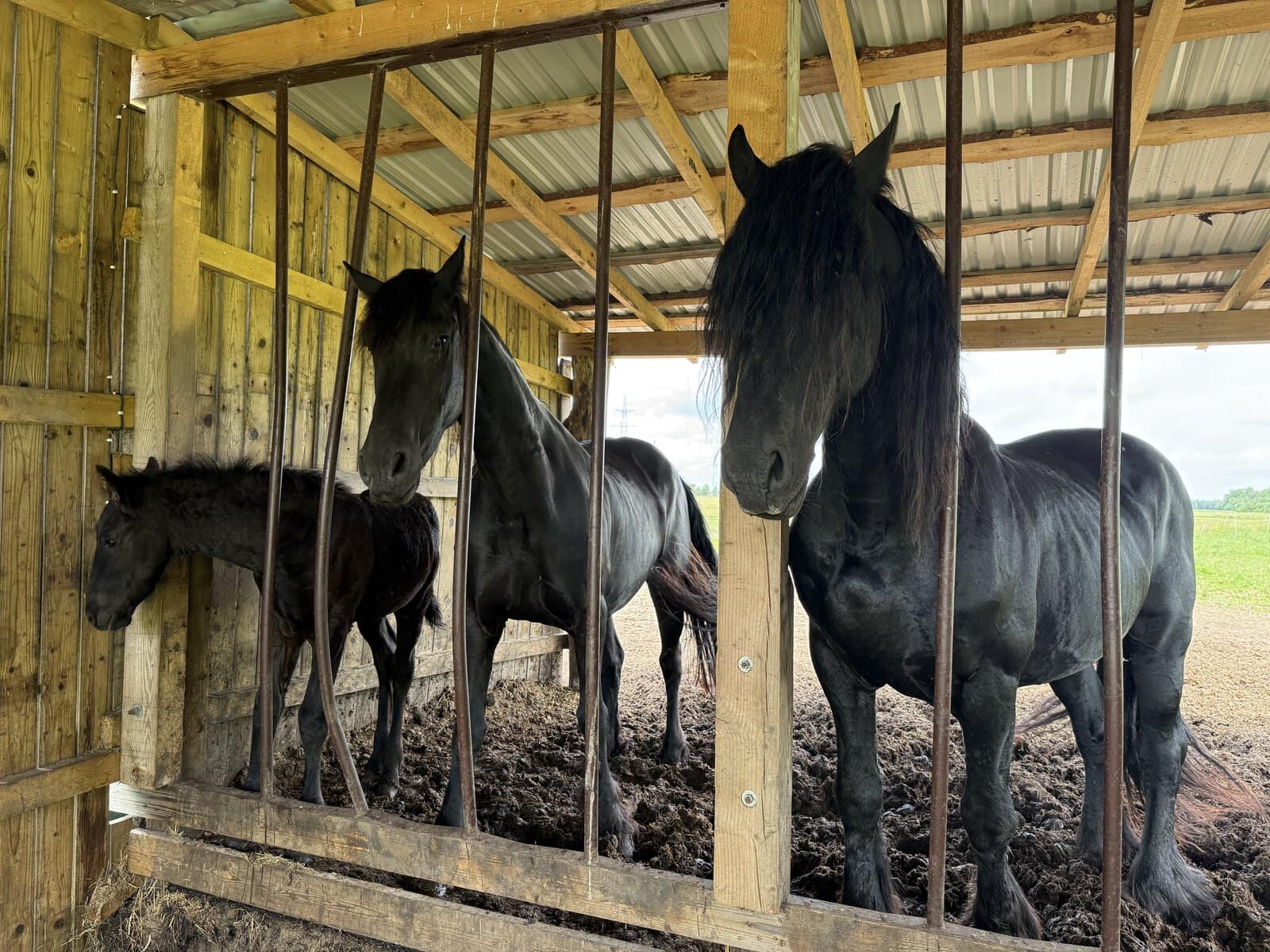
Being on location filming in Lithuania and East Germany in June had many perks like these gorgeous horses. Yet long, demanding hours of work.
How the Hives started
First started as red polka dots of itchy little hives on my chest, stomach, back, and under my armpits and bra area. This continued for two weeks while I was traveling with work. Once I got home to the US, I quit the medication and went to the dermatologist (visit #1) and was prescribed prednisone (a steroid that can make you hyper) and took two Benadryl a day. Meanwhile, life was hectic, stressful, and we were experiencing unusually hot, humid weather for weeks (reaching 100 F/40C ). The hives persisted, and I was back at the dermatologist again looking for answers (doctor visit #2)
The Perfect Storm: Heat, Humidity, Stress and Fatigue
“It was the perfect storm,” the dermatologist informed me. “Heat, humidity, fatigue, and stress” all push up your adrenaline, combined with the prednisone. It was making me crazy! Already a high-energy human, at the age of 54 I felt like I could run a marathon and was on fire. I was super productive with work, accomplishing tasks faster than ever, yet my sleep was a nightmare. I felt so hyper at times it hurt, and at night I’d wake up at 3 am with hours of insomnia. It was terrible! I was so exhausted that I’d hit my rut around 1 pm after lunch and have to sleep for an hour or so to make it through the day. Then, if I got stressed out, went on a walk or took a shower, my body would reinforce this vicious cycle and my hives would flare up.
Trying to Treat the Hives
By week five, I felt I could hardly stand it anymore. I had a headache, my skin felt like sandpaper, and I was exhausted. So on a Sunday afternoon, I went straight to urgent care for doctor visit number 4. (I had snuck in another dermatologist visit, but they told me to suck it up). The hives continued to get worse and more frequent. At this stage, I moved to flare-ups of quarter-sized groups of hives which would come after showering, walking outside in the heat and humidity, and stress. Near the end of my bout with chronic hives, the outbreaks were giant, patchy, itchy welts. I felt my skin prickle all the way up to my hairline. And I’d have a huge headache and so much fatigue that I would have to listen to my meditation on Insight Timer and then nap every day after lunch. Chronic Hives were taking its toll on my life! I couldn’t do anything without itching. I walked around the house unshowered and wearing ice packs to relieve the itching. Sometimes it would feel an itch, and there were no hives visible. I was a train wreck!
The urgent care doctor explained a little bit more about what was happening to my body. My immune system was in overdrive, and I had to calm it down. He recommended taking the antihistamine Zyrtec -24-hour strength twice a day (morning and night) and combining it with 2 doses of 20 mg (morning and night) of Pepcid (famotidine). I was surprised to learn that Pepcid, which is primarily an acid-reducing medication, is also an H2 antihistamine. Because histamine contributes to allergic reactions, famotidine is sometimes used alongside an H1 antihistamine (such as cetirizine, loratadine, or diphenhydramine) for certain allergic symptoms, particularly hives/urticaria.
I was also prescribed another round of prednisone (look out world) along with hydroxyzine ( a prescription antihistamine that can be used to treat itching associated with hives (urticaria). It can cause drowsiness. I was super hyper from the prednisone, and I felt like I was flying and soaring and 20 years old again. It was problematic as it started insomnia where I’d wake up in the middle of the night and toss and turn, restless for hours. I was so exhausted I felt dizzy and had rings around my eyes, which prolonged the hives since fatigue, stress, heat, and humidity are known to be stressors that keep the flare-ups going.
The Role of Stress and Lack of Sleep
At the same time, stress played another role. My body is telling me something. Too slow down. Skin is the largest organ we have. My immune system was attacking my body at this point. I needed to calm down and relieve stress, yet the things I normally do to de-stress (like exercise, take a walk, or a shower or bath) made the hives worse.
Furthermore, having two stressful, sad events happen at the same time did not help. I lost someone I knew who was my age, and another friend’s brother received some very difficult news.
This put it all into perspective. Life is short. What matters most is these four things: Health, Happiness, Love (family), and Community (friends). Everything else – the crazy state of our damn world, our horrible politics, the sadness and tragedy of climate change -keeps me up at night and terrifies me, yet for the most part it is out of my control.
Finally, Eight Weeks Later
Finally, August 15, almost 8 weeks later, my bout with chronic hives had come to an end. I had been to the dermatologist four times (seeing a different Nurse Practitioner who recommended a different way to treat it), then urgent care, and a last follow-up with my general practitioner. He saved my sanity that “Yes, he has seen this happen before (I wasn’t crazy)” and while stress and the other factors may have had a role in my illness, it is often hard to nail down. I could go to an allergist for yet another series of testing but at that point I simply am worn down. I will save that for another time if I get this horrible condition again (which I surely hope not!).
What I Learned
I wrote this piece because I was looking for answers on why I was getting hives, what to do and how to treat them. I was extremely frustrated and wanted to learn as much as possible about this illness that I had never heard of before. In my searching online, I found some helpful things and many other unhelpful tidbits. My hope is this post is somewhere in between and points others in this situation in the right direction.
For me, I did the following to relieve and get rid of chronic hives:
Stopped the offending medication that caused the initial allergic reaction (thankfully it was pretty obvious what started my hives and sometimes it is not).
Visited my dermatologist ASAP
Began a series of medications such as prednisone, Zyrtec and Pepcid combination for a powerful antihistimine, and added in hydroxicine to help even more. It was a lot of meds!
Took naps
Avoided showering or bathing and only did cold sponge baths
Avoided being outside when it was hot
Avoided sweating
Tried to reduce and manage stress for things within my control
Visited the doctor who understood everuthing happening to my entire body besides my skin.
Check out the American Academy of Dermatology Association’s list of 10 ways to get relief from chronic hives(opens in new tab). The first thing they recommend is to make an appointment with a board-certified dermatologist. For me, my hives started because of going to the dermatologist for a skin rash and turned into chronic hives after I quit the aggravating medication and the “perfect storm” of high heat (we had weather up to 100 F/40C for days on end), high humidity, stress (way too much going on to handle), and fatigue.
A Wake-Up Call to Slow Down
This bout with 8 weeks of chronic hives is a wake-up call to slow down. To remember to stop and breathe. To be present and to mindful. In today’s crazy world, it is hard to remember these rules of mindfulness and being present. Yet it is essential to embrace the fleeting speed of life.
Important Medical Note
I am not a doctor, and if you are experiencing hives, please seek medical attention immediately, as some hives and allergic reactions can be life-threatening. What to look for:
Horrified, I opened up WordPress to see what caused the blog post malfunction. As an “OG” (“original gangster” aka someone who has been blogging forever) I tried to use new WP technology to make my workflow faster. Yesterday I tried to use the more powerful Block Editor that also has some AI features to help organize the behind-the-scenes structure of blog posts.
I did not want to suck all the water out of the Mississippi River to help cool the AI datacenter by using a couple of AI features such as the AI title and meta description tool (more on that later). Yet, quite frankly, I was curious to try it out and see if these AI tools help my content be found in searches. I had read all the news that “the blog is dead” and “no one can find your content in AI searches anymore”. I wanted to see if this was true, and if this AI tool helped.
A Formatting Disaster
What happened was this (see screenshot below): an absolute formatting malfunction which ended up taking me hours to fix. It was not a result of the AI tool I used. It was all a HUMAN error. I didn’t know how to use it. I made a mistake, and guess what, AI makes mistakes too. Just like humans, it can be wrong. Very wrong. So search results and AI chat garb must be, I repeat must be, further researched for its validity.
As global tourism continues to surge, the choices travelers make matter more than ever. From reducing carbon emissions and cutting waste to supporting local businesses and protecting natural and cultural heritage, every trip is an opportunity to make a positive impact. Here are simple ways to travel more responsibly this summer—and beyond.
The Summer travel season is now in full swing with millions of Americans hitting the roads, whether it be to experience a beloved family road trip, explore our National Parks, embrace one of our many vibrant cities, or travel abroad. This summer has already been especially busy as the U.S. celebrated its 250th anniversary and hosted major global events, including the FIFA World Cup, which drew visitors from around the world.
Despite global uncertainty, rising fuel costs, tight budgets, and record-breaking heat and wildfire smoke, people are traveling in record numbers, underscoring the urgent need to reduce tourism’s growing climate impact through more responsible travel.
“Summer is when millions of people head out to explore, making it one of the biggest opportunities to create a positive impact through travel. Every trip is filled with choices, from where you stay and eat to the tours you book and the businesses you support. Those choices directly influence local economies, cultural heritage, and the natural places we all love to visit.
The good news is that travelers don’t have to be perfect to make a difference. Choosing a locally owned restaurant, taking a community-led tour, shopping from local artisans, or visiting beyond the most crowded attractions may seem like small decisions, but when millions of travelers make them, the impact is significant. Sustainable travel isn’t about doing everything differently. It’s about making thoughtful choices that help ensure the places we love continue to thrive for generations to come.” –Jessica Flores, Chieff Experience Officer, Tourism Cares
As travelers, our decisions can have an enormous impact on the future of our planet. After years of working in sustainable travel, here are a few additional tips to make your adventures more sustainable.
After a hot Moroccan breakfast with sweet Berber tea, we set off on our last day of hiking in the Atlas Mountains. Today, we would complete our hike from Tizi Oussem to the beautiful village of Imlil, a village easily reachable from Marrakesh making it a popular day trip for those who want to experience the Atlas Mountains and Berber hospitably.
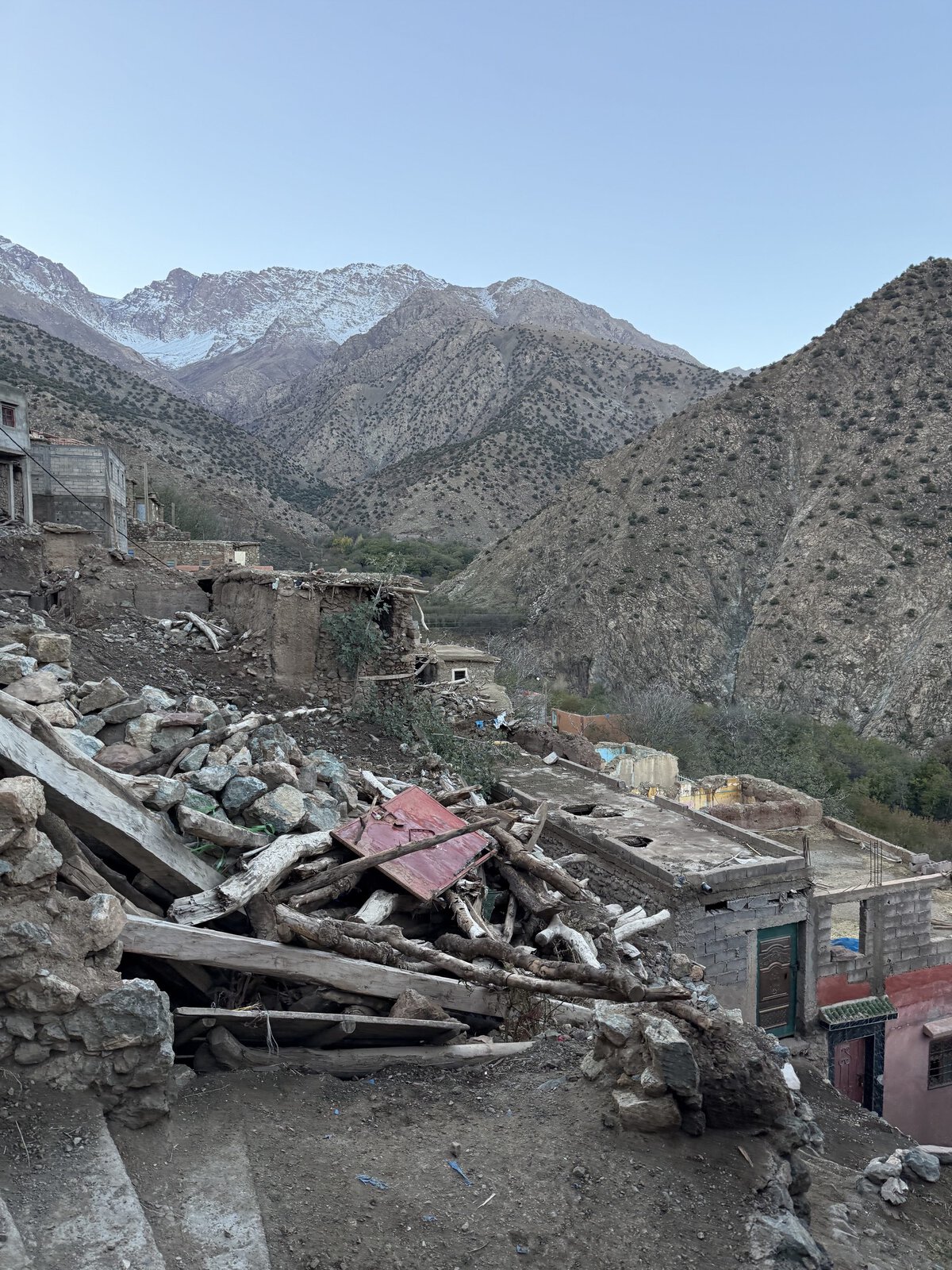
As we left Tizi Oussem, our guide Mohamed showed us some of the leftover destruction from the earthquake a few years back. It had hit this community really hard and they were still trying to rebuild years later. Many Berber homes were built the traditional way using stone to keep the heat in during the winter and hot sun during the summer. Since Berbers are mostly farmers and goat herders, livestock would often live on the bottom floor of the home using their feces to heat the house in the winter months. While a practical style of home, many did not survive a major earthquake so the new homes built by the government and NGOs were made of concrete to last the weather and survive future earthquakes.
Older homes on the left and a newer concrete home pictured on the right. Continue reading →
Our third day trekking in the Atlas Mountains in Morocco was one of the longest days, hiking from the remote village of Imgdal to the even more remote community, Tizi Oussem.
We rose early to the sound of the call to prayer echoing melodically through the valley and the sun was beginning to rise above the village. By day three, I was finally accustomed to sleeping in an unheated gite on a somewhat uncomfortable futon on the floor in a room with six others. It had been quite some time since I traveled this basic and while I would have preferred a warm, cozy bed and a hot shower, the camaraderie of it all made the trip the more memorable.
The second day of trekking the Atlas Mountains ended up being one of my favorites for its sheer wow factor and beauty. Day two took us from the lovely village of Tiziane to the remote Imgdal, a lovely Berber village in the heart of the Atlas Mountains. The five-hour hike would take us up along the Assif n’ait Oussaden valley, passing through walnut groves, climbing up via switchbacks through the clouds until our descent into the village of Imgdal.
After an early morning breakfast, we packed our gear and set off to the rising sun and the echoes of the call to prayer. As we left the village, school children were already up and ready for their walk to school while farmers were heading out to the fields for their day of work. Just like the day before, we did not see another tourist and had the entire trail to ourselves.
Heading out for our hike a little after seven am from the lovely village of Tiziane
Is a Quechua Weaving Day Trip From Cusco Worth It?
A traditional Quechua weaving day trip from Cusco is worth every penny, and it stands out as one of the most meaningful cultural experiences in Peru. My daughter and I spent a half-day with a multi-generational weaving family in Amaru Village, about 1.5 hours northeast of Cusco, learning how alpaca and sheep wool is sheared, cleaned, naturally dyed, spun, and finally woven. The whole process, from raw fiber to finished textile, is done entirely by hand using techniques passed down for thousands of years. It was a beautiful, hands-on, and deeply moving experience. Here’s why you should do a day trip from Cusco to see traditional weavers.
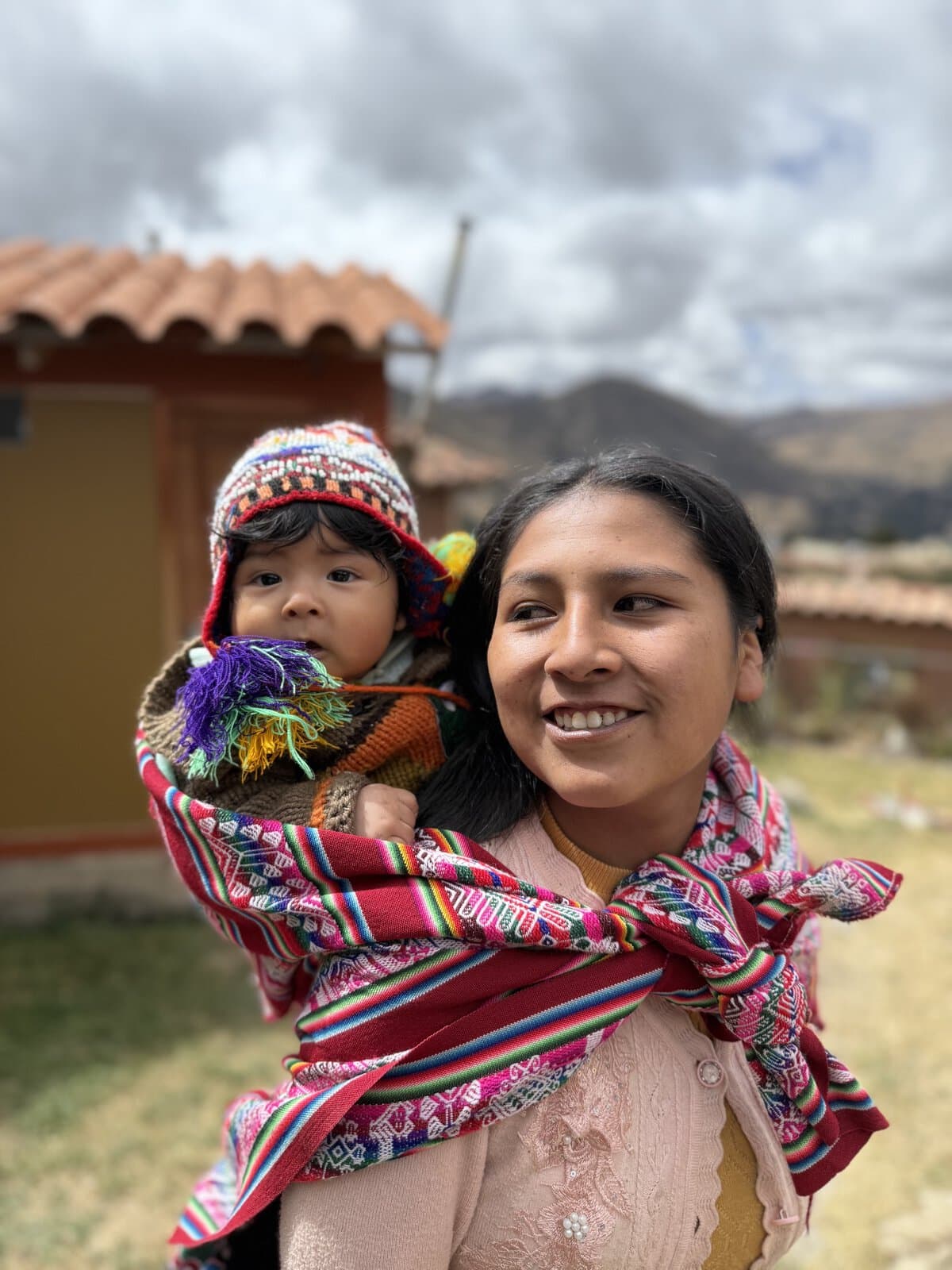
Our amazing guide Martin holding Betsy’s little boy, Samir, who stole the show with his cuteness.
Last August, my daughter and I completed the Salkantay Trek to Machu Picchu, an unforgettable adventure through the soaring Andes to one of the most iconic treasures of the Inca civilization. While visiting Cusco, the historic heart of the Inca Empire, I was eager to experience another important part of Peruvian culture: the ancient weaving traditions of the Quechua people.
The Quechua people of Peru are renowned for their extraordinary textiles, colorful handwoven fabrics created and preserved for thousands of years in the Andes. More than simply beautiful souvenirs, these traditional Andean textiles are deeply connected to Quechua history, spirituality, and daily life. Because the Quechua language was historically passed down orally rather than through written texts, weaving became an essential way to preserve ancestral stories, mythology, cultural identity, and regional traditions.
Today, Quechua weaving remains a sacred art form passed from one generation to the next. Every pattern, color, and symbol woven into the fabric carries meaning, telling stories of family, nature, and life in the Andes. Visiting a Quechua weaving community near Cusco offered us a rare opportunity to learn firsthand about one of Peru’s most enduring and meaningful cultural traditions.
Beautiful mama and baby (Betsy and her son, Samir) who showed us how to thread wool – not an easy thing to do – with a baby on her back.
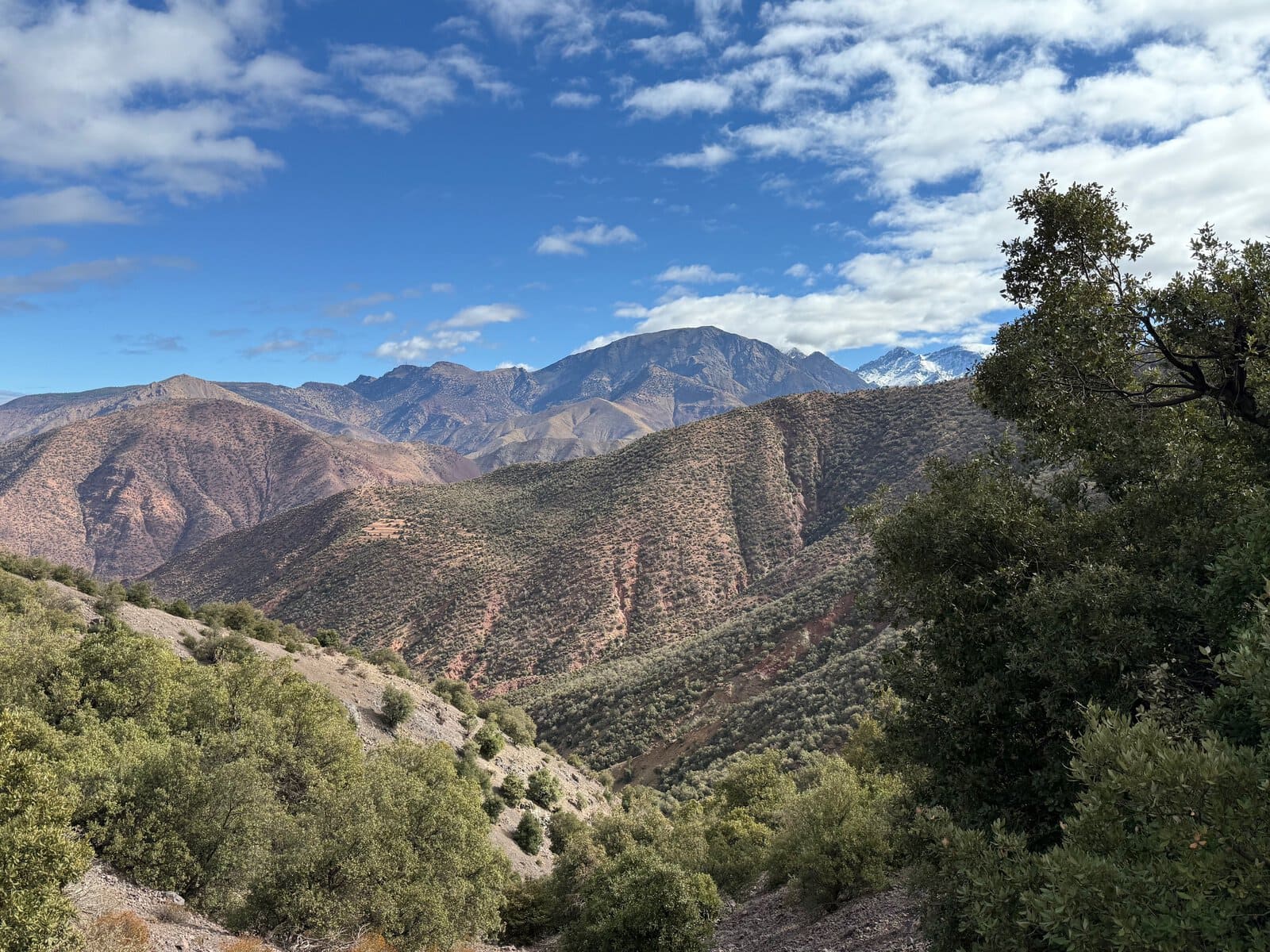
Few treks in the world feel as timeless and captivating as the four-day journey through Morocco’s Atlas Mountains. Hailed as one of the world’s great hikes, the trail winds through dramatic mountain scenery and centuries-old Berber villages hidden deep within the valleys, places so untouched that it often feels like stepping back in time. Stone homes cling to steep hillsides layered like a wedding cake, while lush terraced fields snake up the mountains, irrigated by ancient systems still used by farmers today. Life here moves slowly, to rhythms that have endured for generations.
Morocco’s cultural identity is deeply rooted in the heritage of the Berbers (also known as the Amazigh people), who are the Indigenous tribes of North Africa, and the country’s oldest inhabitants. For centuries, the Amazigh have called the Atlas Mountains home, building villages in remote valleys and forging a way of life inseparable from the rugged landscape around them. Intrepid travelers can witness the Berber way of life on foot, hiking through the ancient mule trails that connect these mountain communities.
The trails weaving through the high peaks and valleys of the Atlas Mountains were once vital mule tracks used by Amazigh traders, shepherds, and families to travel between villages. Walking these same routes offers far more than a hike; it is a journey through living history. Around every bend are sweeping mountain vistas, terraced hillsides carved by hand, and villages where traditions and daily life remain deeply connected to the land.
Marrakesh is one of those cities that takes you by surprise. I had been to Morocco before visiting its capital city of Rabat and also Casablanca. Yet once I arrived in Marrakesh, I realized that I hadn’t been to the real Morocco.
Marrakesh, the fourth-largest city in Morocco, located at the foothills of the High Atlas Mountains and one of the country’s four imperial cities, is a place that requires the use of all five senses. From its elaborate, colorful, and endless souqs to its eye-popping architectural treasures, and the plethora of smells, sounds, and oddities of its main square, Jemaa El-Fnaa, Marrakesh is a city that will inspire you, overwhelm you, and keep you exploring its endless serpentine streets until your feet ache.
At the end of March, my son and I traveled to Italy for a week of skiing at Breuil-Cervinia in the Italian Alps. It had been a dream of mine ever since I skied the French Alps over 25 years ago. Fortunately, the stars aligned with my son’s school break, so in early January, I began researching the best place to go late-season skiing in Europe. The decision was easy: Breuil-Cervinia was the best place with (almost) guaranteed snow, stunning panoramic views, reasonable costs, and a beautiful, dreamy Alpine ski village to enjoy apres-ski all within walking distance to the slopes.
Many people wondered why on earth we would travel that far to go skiing. Of course, we have plenty of excellent ski areas in the U.S., with Utah and Colorado as two of my favorites. However, the cost of a ski vacation in the U.S. has skyrocketed, becoming rather outrageous. Daily ski passes at popular resorts such as Vail or even my favorite, Snowbird in Utah, can cost almost $200/day, depending on the time of year. Furthermore, lodging, food, and a rental car are also much more expensive, making a ski vacation in the U.S. rather insane.
Honestly, given the political climate and the weather (the West suffered a historic snow drought), I wanted to escape as far away as I could. The flight to Europe obviously costs more than out west and takes longer, yet in my mind it was worth it. The thought of skiing down endless runs with breathtaking views of the Matterhorn and Mont Blanc sounded too hard to resist. Plus, the incredible food, wine, and warm Italian hospitality sounded dreamy.
A before ski cappuccino with a view of the Matterhorn
There is something special about reaching a destination on foot. After six glorious days of hiking the Salkantay Trek to Machu Picchu, we finally reached Aguas Calientes after a short one-hour train trip from the end of our hike. The last time I had been to this town was over 25 years ago, when I hiked the Inca Trail with my dad. I was flabbergasted by how much it has changed.
It is no secret that Machu Picchu (UNESCO World Heritage Site since 1983) has struggled with overtourism. In 2024 alone, over 1.5 million tourists visited (a 58% increase over 2023), and it is only expected to get worse. As the biggest tourism attraction in Peru, tourism brings in a huge chunk of revenue for the country. However, of course, it comes at a cost. With thousands of tourists descending on the site each day, erosion has become a significant problem, and one can argue that so has Machu Picchu’s cultural integrity. In 2025, the government set a maximum visitor capacity that varies by season: 5,600 daily visitors during peak season (May to September) and 4,500 during low season (January to April and October to December). Tickets must also be purchased online for strict time-slotted entries and for one of the three different circuits of the site. If you don’t get a ticket in advance, you may end up in a long line that goes for blocks and have to wait sometimes for days for the next open time slot. None of this was in place when I went in November 2001. However, many experts believe that they are not doing enough to safeguard this national treasure. With the upcoming opening of a new airport (Chinchero International Airport) located only 18 miles away from the site, I fear that it will never be the same again.
Arriving in Aguas Calinentes after the solitude and near emptiness of the Salkantay Trail was a shock to the senses. There was a long line of tourists waiting to hopefully purchase a timed-entry ticket to Machu Picchu.Continue reading →