10 Responsible, Sustainable Travel Tips to Reduce Your Impact

Responsible Travel Tips to Reduce Your Impact


As global tourism continues to surge, the choices travelers make matter more than ever. From reducing carbon emissions and cutting waste to supporting local businesses and protecting natural and cultural heritage, every trip is an opportunity to make a positive impact. Here are simple ways to travel more responsibly this summer—and beyond.


The Summer travel season is now in full swing with millions of Americans hitting the roads, whether it be to experience a beloved family road trip, explore our National Parks, embrace one of our many vibrant cities, or travel abroad. This summer has already been especially busy as the U.S. celebrated its 250th anniversary and hosted major global events, including the FIFA World Cup, which drew visitors from around the world. 

Despite global uncertainty, rising fuel costs, tight budgets, and record-breaking heat and wildfire smoke, people are traveling in record numbers, underscoring the urgent need to reduce tourism’s growing climate impact through more responsible travel. 

“Summer is when millions of people head out to explore, making it one of the biggest opportunities to create a positive impact through travel. Every trip is filled with choices, from where you stay and eat to the tours you book and the businesses you support. Those choices directly influence local economies, cultural heritage, and the natural places we all love to visit.

The good news is that travelers don’t have to be perfect to make a difference. Choosing a locally owned restaurant, taking a community-led tour, shopping from local artisans, or visiting beyond the most crowded attractions may seem like small decisions, but when millions of travelers make them, the impact is significant. Sustainable travel isn’t about doing everything differently. It’s about making thoughtful choices that help ensure the places we love continue to thrive for generations to come.” –Jessica Flores, Chieff Experience Officer, Tourism Cares

As travelers, our decisions can have an enormous impact on the future of our planet. After years of working in sustainable travel, here are a few additional tips to make your adventures more sustainable.

Continue reading

The Salkantay Trek to Machu Picchu: Hiking over the Salkantay Pass

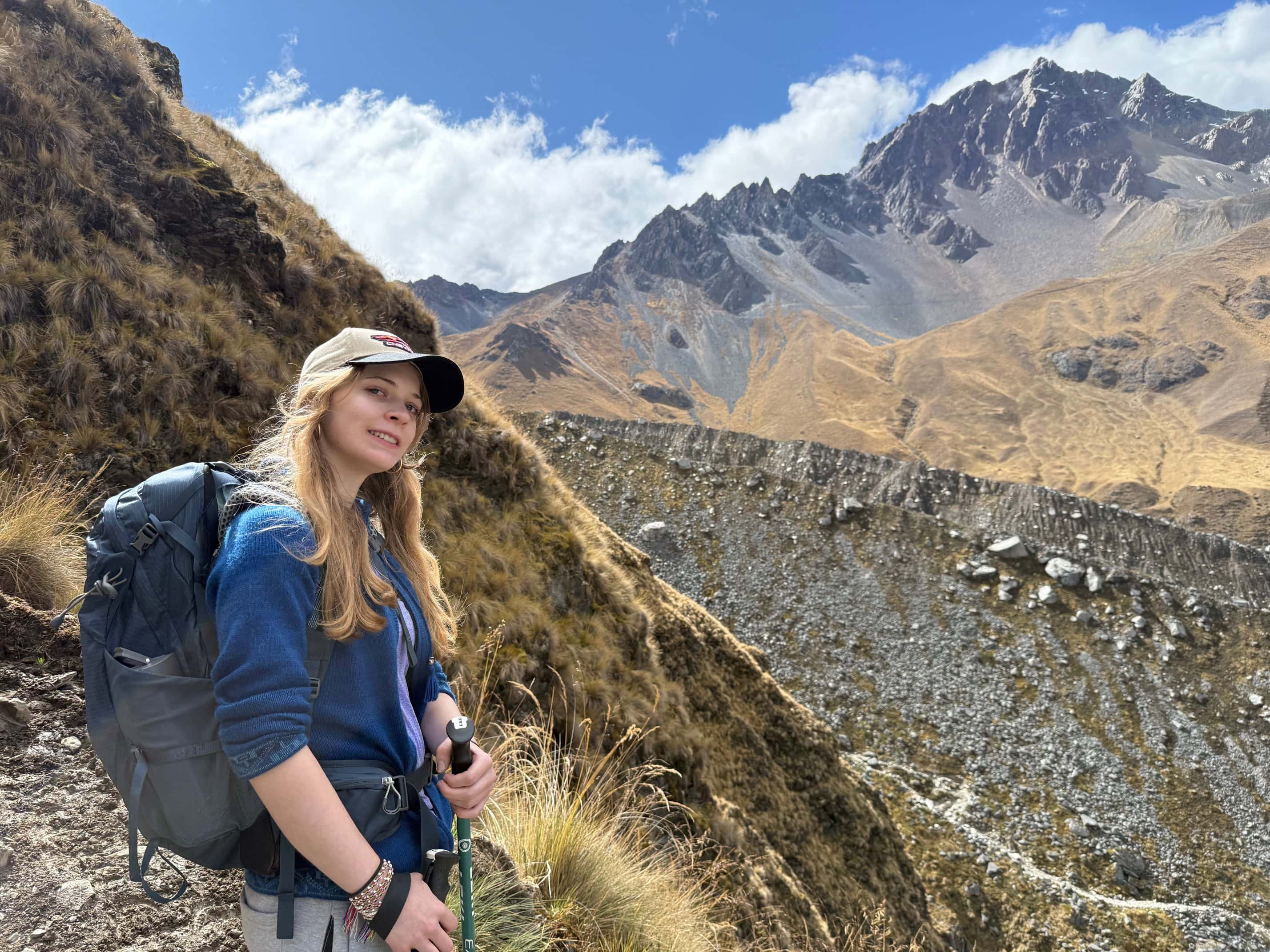
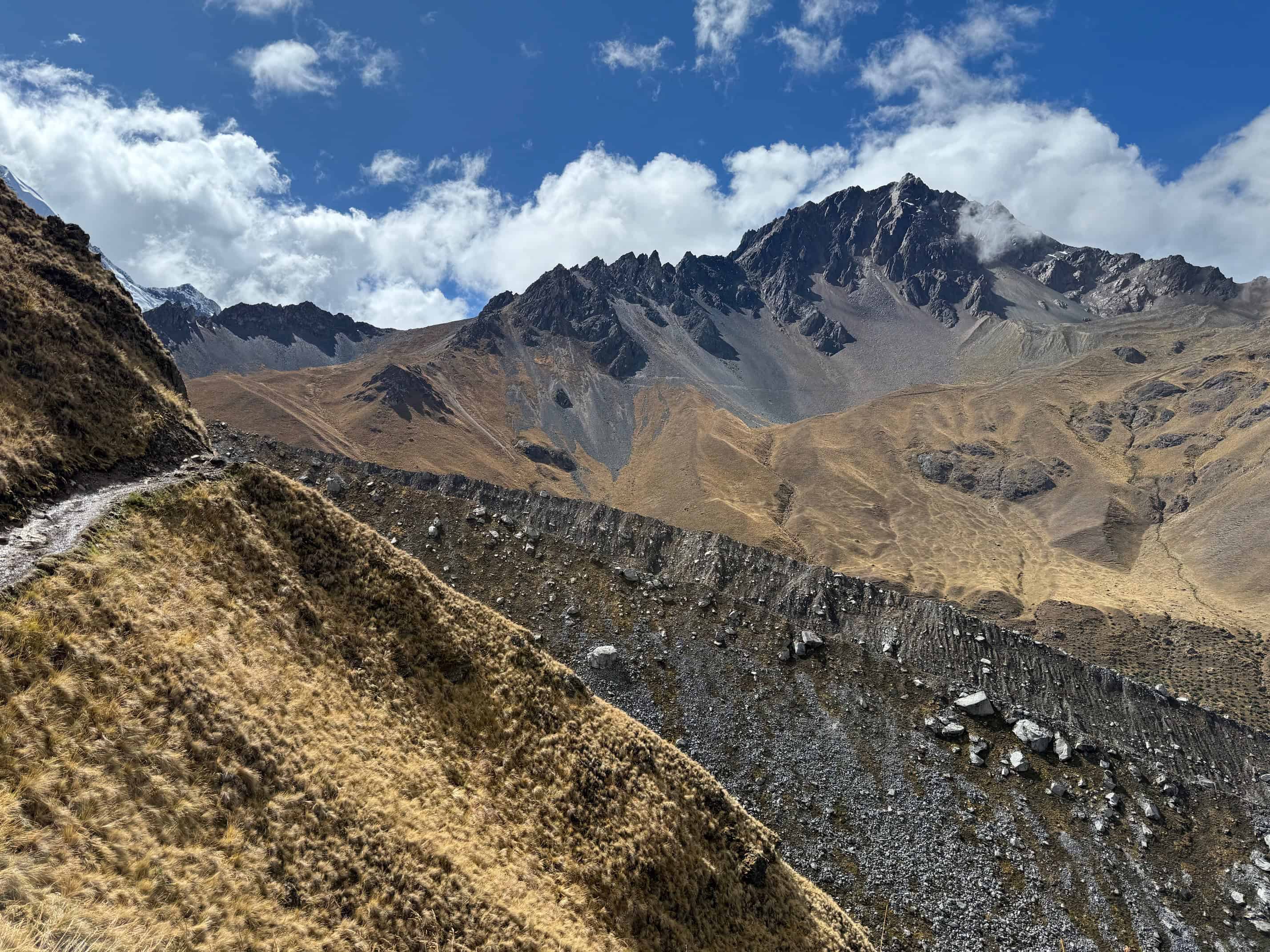
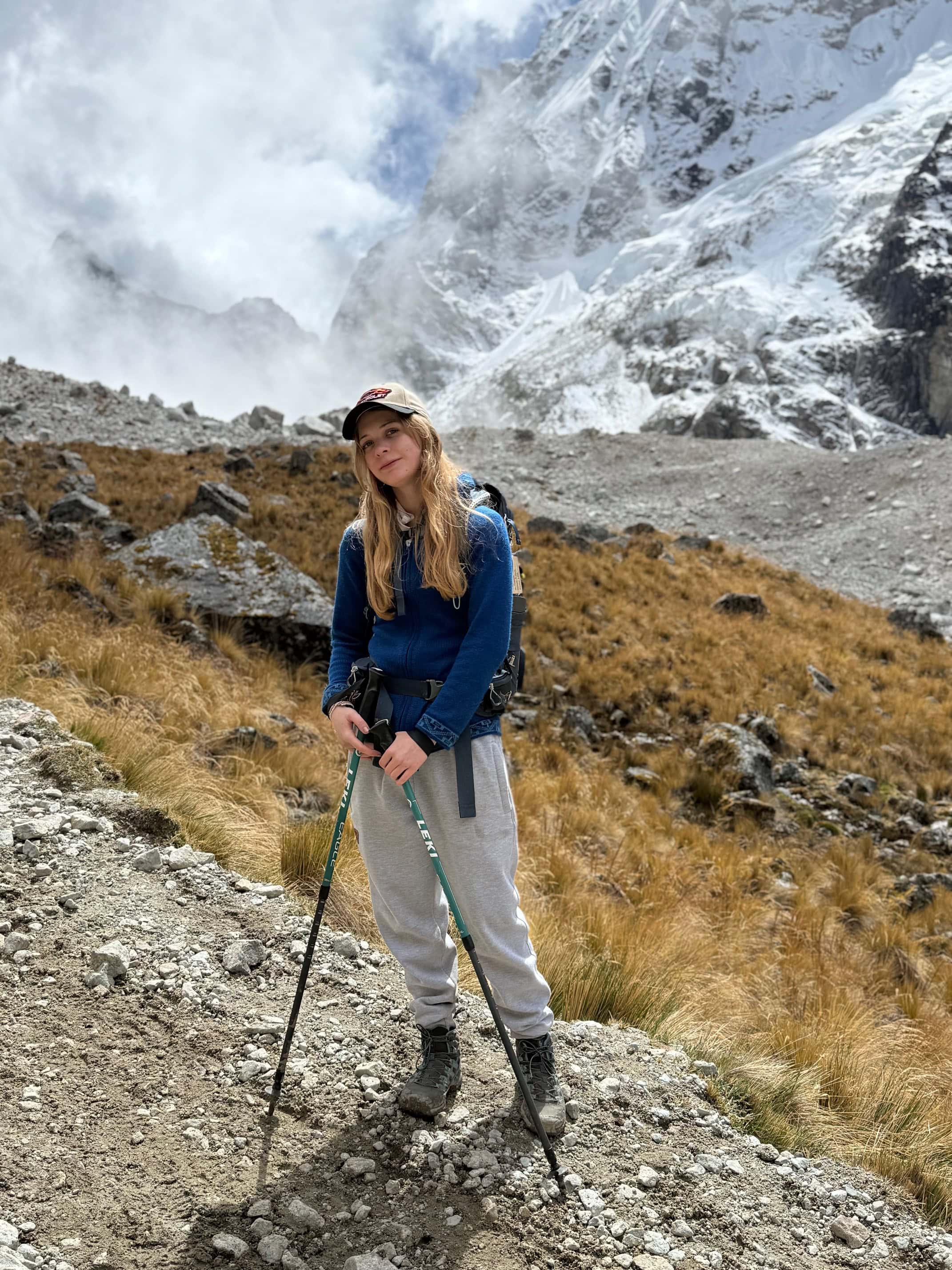
The third day of the Salkantay Trek to Machu Picchu is by far the most challenging day of the entire hike, taking you up a series of switchbacks to reach the Salkantay Pass, the highest point of the trek at 15.213 feet/4636m. This is the biggest test for hikers to see how well they have acclimatized to the high altitude. Yet in my opinion, it is one of the most rewarding days of the journey for its awe-inspiring views and feeling of accomplishment.

We rose early after a fabulous dinner at the Salkantay Lodge, Mountain Lodges of Peru’s hallmark lodge in Soraypampa. Since we were traveling with Mountain Lodges of Peru (MLP), we would be the only hikers ascending to the pass on foot, since MLP is the only outfitter that has accommodations in Wayraccmachay, a plateau located three hours after reaching the pass. There are no campgrounds there so everyone else hiking normally ascends the pass on horseback and then continues past Wayraccmachay to the next village, where we would hike the following day.

For us, it was magnificent because it meant we would have the entire trail to ourselves for two days.  As an avid hiker, this is a very special treat!

We started our hike at 7 am and were blessed with an absolutely stunning day. Had it been cloudy, we would have seen nothing.

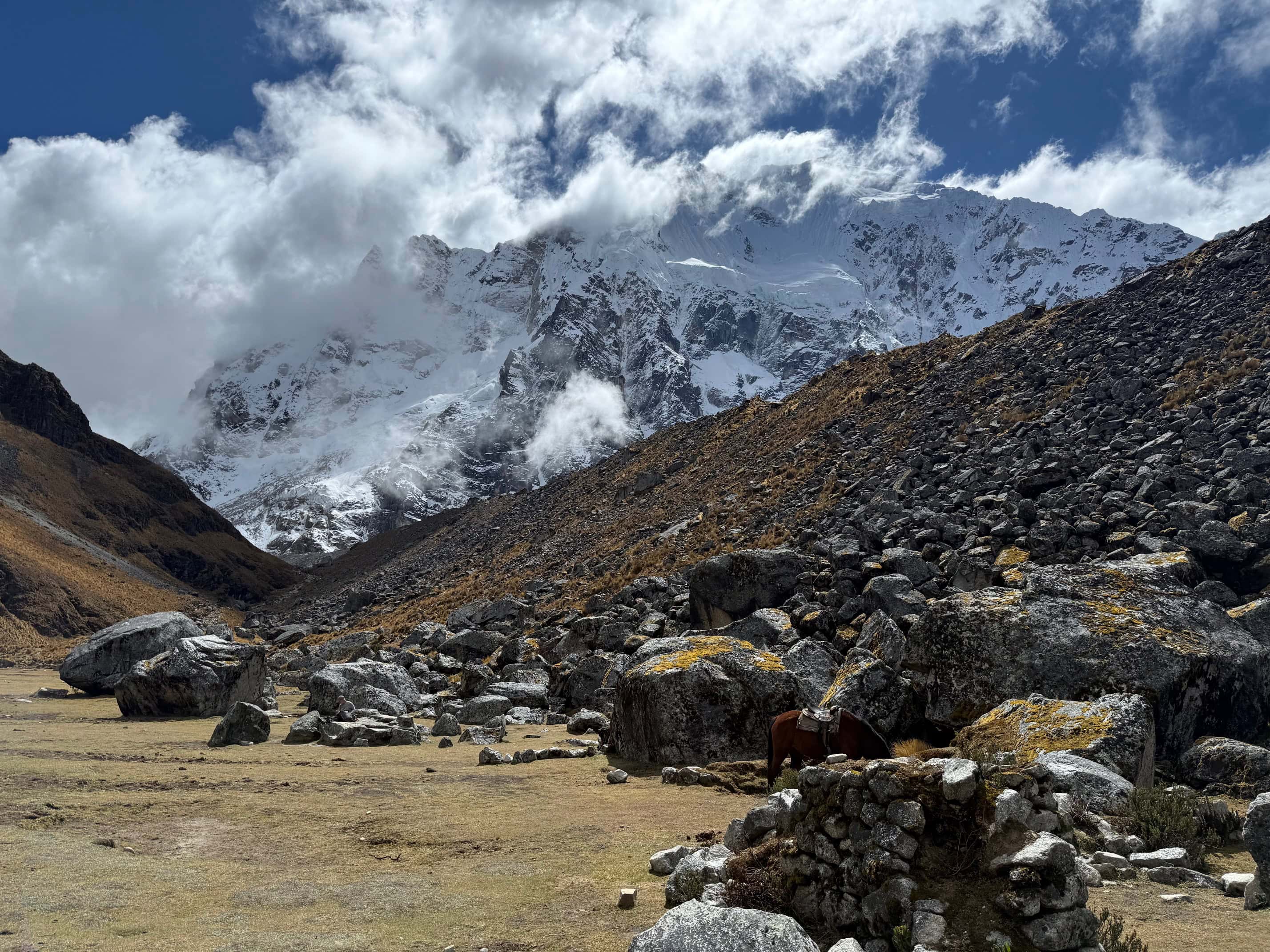
We were incredibly lucky to have surreal views of the snow-capped Humantay Peak.

As we climbed up, our lungs pounded as we acclimatized to the higher altitude. We circled Humantay Peak, with stunning views of expansive plateaus connected by enormous boulders, and remnants of the Rio Blanco Valley.

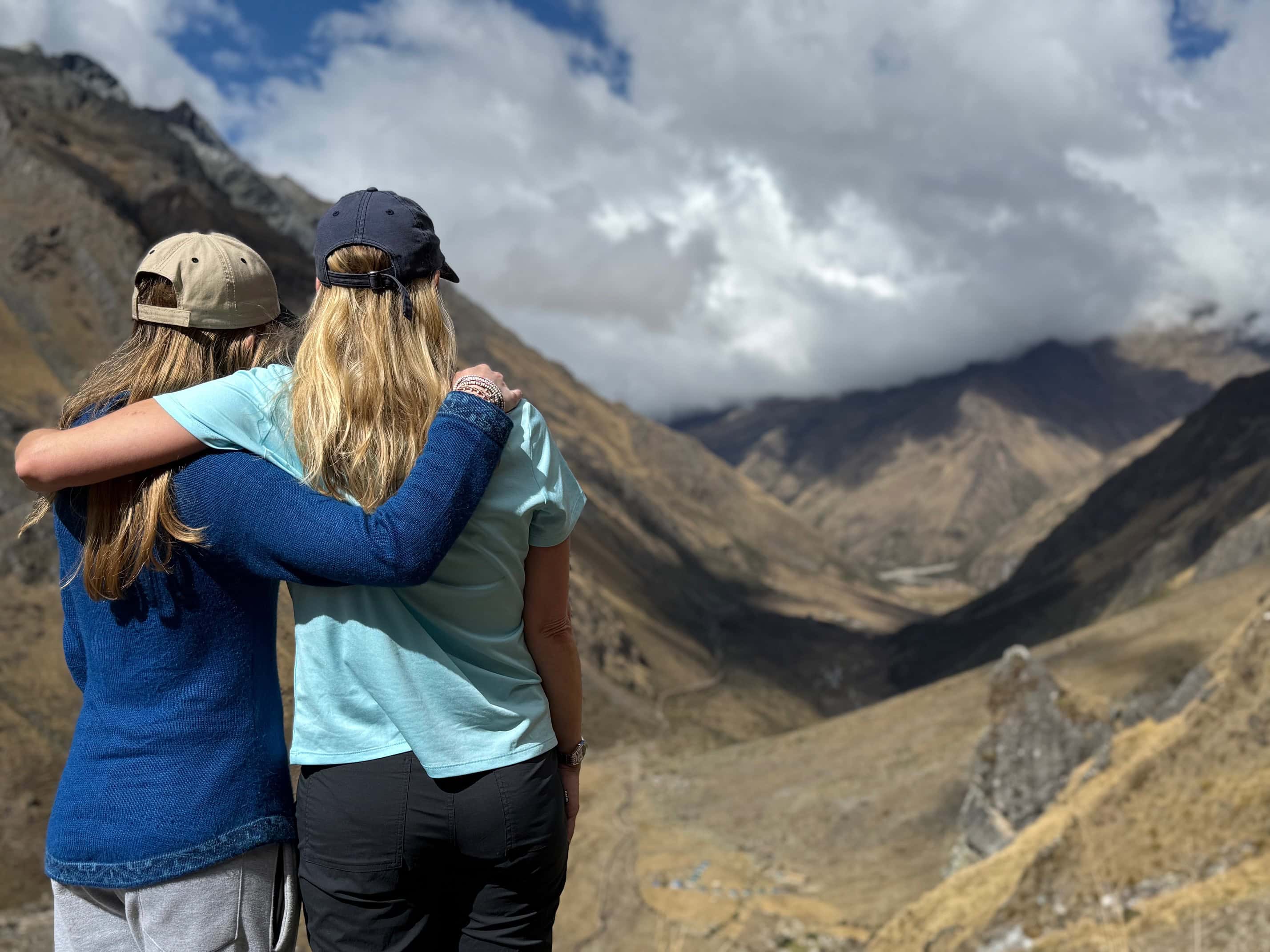
I felt really good and did not take altitude pills since I have not had any issues before with altitude. However, it was a challenge for my daughter as she had never been this high before and was struggling with her breathing. We took it slow, stopping frequently to catch our breath and take photos. The views were so spectacular that it helped.

We reached the pass around 11:30 am, taking 4.5 hours (with a half-hour stop for a snack before the final push). It was an exhilarating feeling to stand at the top of the highest point of the hike with my daughter. I was so proud of her! Especially since she has been suffering from unexplained migraines and lightheadedness for several months. Even her doctor, treating her for this condition, was amazed.

Clouds coming over the mountains at the pass. We timed it right as it would cloud up soon taking away the stunning views of the mountains

After the pass, we continued for another three hours hiking through rolling hills and boulders to reach the Wayra Lodge at Wayraccmachay. This is the only place to stay here – there are no campsites. If you are not hiking with Mountain Lodges of Peru, you have to continue to the next village. This is why we saw the other groups on horseback going up the switchbacks to reach the pass earlier. If they hiked it all in one day, it would be extremely difficult and almost impossible to make it before sunset.

It had clouded up, so I didn’t take many pictures after the pass. We were tired as well and ready to finish the hike.

Around 2:30 pm, we saw the lodge off in the distance. I could hardly wait!

This would be one of my favorite places we stayed during the hike. It was so isolated. I tried to imagine how hard it must have been to build this place, as there are no roads and it can only be reached on foot and with the help of mules.

If you go: We booked our trip through Mountain Lodges of Peru, the only outfitter who has lodges along the trail. From start to finish, they were absolutely incredible. I highly recommend them.

Best Dolomites Hikes: Circuit around Croda da Lago near Cortina d’Ampezzo

Nestled in the heart of the Dolomites, lies the spectacular mountain town of Cortina d’Ampezzo. Known for its sensational beauty, high-mountain charm, and easy access to hundreds of fabulous hiking trails, it is no surprise that we chose Cortina as our last stop on our family hiking trip this past July.

I discovered the lure of Cortina last year when I went on a hiking trip with my Dad in early May just three months after a total hip replacement. Unfortunately, the timing was all wrong. There was still thick, fluffy snow coating the high mountain trails, almost the entire town had shut down after ski season and would not reopen until June, and my physical recovery and stamina from a full-blown surgery made hiking anything longer than three hours impossible. But I went on the trip, and I fell in love with the place, promising I’d come back again with my family.

Fast forward fourteen months later, I was back with a new lease on my athletic life and my desire to explore the high alpine, challenging trails that I could only dream of the year before. Over the week, we did plenty of awe-inspiring hikes with our favorite to date being the glorious hike to Lake Coldai to Rifugio Tissi (near Alleghe) and the stunning loop hike around the Sassolungo near Val di Gardena Selva. Each hike was magical, special, and unique.

We had thought we had gotten all of the long, challenging hikes out of our system until we decided to do the Circuit hike around the Croda da Lago. Rated a moderate-hard hike, this 12.5 km/7.7 mile was a beast of a hike given the field of boulders and endless scree.  Yet the wild, rough, and dramatic scenery was worth every effort and sore knees. If you are an avid, experienced hiker, then this hike is for you. Continue reading

Best Alleghe Hike: Lago Coldai to Rifugio Tissi

What Is the Best Day Hike in Alleghe?

One of the best day hikes in the Dolomites is by far the hike to Lake Coldai to Rifugio Tissi. The 6 hour roundtrip hike starts from the top of Col dei Baldi above the village of Alleghe to the stunning Coldai Lake, passing the northwestern flank of the mighty Civetta until we finally reached the Rifugio Tissi. If you have one tough hike in you, this is the one to do. Note: There are two routes listed on AllTrails to Rifugio Tissi-ranging from a 5.8 miles hike with a 3,435 feet elevation gain to Pian de Pezze(opens in new tab) or an even more demanding option for a 12-4 mile loop trek. We took the gondola up to Pian di Pezze and started our hike there, which took us about 6-7 hours round trip. 

Pian di Pezzè – Lago di Coldai – Rifugio Tissi

“I wish we could stay here forever” said my seventeen-year-old daughter as she stood overlooking a view seemingly out of a fairytale.

It was our second day hiking in the Dolomites, and we were on one of the most awe-inspiring hikes of our lives. A hike from high above the Italian village of Alleghe passing under the extraordinary towering face of the mighty Civetta.

Just three weeks ago, I was in urgent care with my daughter who had sprained her ankle while doing tricks on her new skateboard right before a big hiking trip. I could hardly believe that we were here, in the Dolomites preparing to do a fairly challenging hike. “But younger bodies heal so much faster” her doctor said during a check up examination before the trip. And he was right.

We began our hike from the top of Col dei Baldi above the village of Alleghe to the stunning Coldai Lake, passing the northwestern flank of the mighty Civetta until we finally reached the Rifugio Tissi where we rewarded ourselves with homemade gnocchi before returning to Alleghe. On a clear day, the hike gifts some of the most spectacular scenery in the Dolomites and provides enough challenge to make it an incredibly rewarding, memorable experience.  If you have one hard hike in you, this is the one you should do.

My daughter unfazed by her sprained ankle, marveling up at the Civetta.

I had grown up hiking with my own parents and it was my hope that my teenagers would also grow to love it as much as me. While we started with short hikes when the kids were younger it took some time for them to both fully embrace it and go without complaints. Last summer, we did our first real hiking trip to Alaska as a family and it was a big success.

After proving that she could definitely out hike me during our trip last summer to Alaska, my daughter was on board for a hiking trip to Italy and especially was up for the challenge on day two with a longer hike. My son had already discovered his love for hiking a few years earlier after experiencing hiking with me and my father around Mont Blanc.(opens in new tab) So it was decided that we would do a big hike on our second day in the Dolomites.

Getting There: Gondola, Parking, and Trail Start

We set off early in the morning catching the first gondola up to the top of Col dei Baldi. We learned from our hike the day before,(opens in new tab) that you can either take the gondola up two stops from Alleghe or drive to Pian di Pezzè, park and take the gondola up to Col dei Baldi. It was cheaper for our family to do it the later way.

There are two ways to access the gondola:

From Alleghe village: Take the gondola two stops up from the village center.
From Pian di Pezzè: Drive up to Pian di Pezzè, park, and take the gondola one stop up to Col dei Baldi. This option was cheaper for our family and is worth considering if you are traveling with a group.

Once at Col del Baldi  (1922 m / 6300 ft), follow a wide gravel path straight until you reach an old abandoned stone building and see a path (path 556) to the right that zigzags up the side of the mountain en route to the first Rifugio Sonino al Coldai.  Many choose to do a shorter hike to the stunning Coldai Lake, a high alpine glacial lake. The roundtrip hike from Col dei Baldi to Coldai Lake and back(opens in new tab) takes roughly 3 hours and 15 minutes and is rated moderate. However, I highly recommend continuing to Rifugio Tissi for the out-of-this-world views of the Civetta’s northwestern flank. The hike there and back takes roughly 6-7 hours depending on pace and without stops (we did several along the way and enjoyed lunch at the Rifugio Tissi). It ranks as one of the best hikes I’ve done in years and is a must on a clear day.

Continue reading

The Kona Cloud Forest Sanctuary : One of Few Rare Remaining Tropical Cloud Forests in the World

What Is the Kona Cloud Forest Sanctuary?

What started 50 years ago on a plot of cattle-stripped land has grown into the only tropical cloud forest in the United States with over 100 species of bamboo, gigantic tree ferns, and many rare and endangered species affording visitors an opportunity to learn firsthand about the value of conservation. This original story was written in 2022, and since that time, Norman’s daughter, Nadara Rose, has taken over the reigns. Norma was a University of Hawai’i Professor and horticulturalist who we had the honor of doing this tour in the summer of 2022. 

As I drive up the windy road, high above the white-sand beaches and black lava fields of the Kona coastline into an area covered by ‘Ōhi‘a trees and lush rainforest, I am struck by how ecologically diverse the island of Hawai’i truly is. As the largest inhabited island of the Hawaiian archipelago, the island of Hawai’i has almost every subclimate zone on the planet altogether in one relatively small place. If you are looking for top ten unforgettable family experiences on the island of Hawai’i(opens in new tab), a visit to the Kona Cloud Forest Sanctuary belongs near the top of that list.

Author’s note: Norman has since retired and his daughter now has taken over the lead. This is my account of our tour in 2022 with Norman.

At the entrance of the 70-acre Kona Cloud Forest Sanctuary (opens in new tab) a white-haired, eighty-ish-looking man is greeting visitors. Wearing a sweatshirt that reads “May the forest be with you” Norman Bezona’s smile spreads ear to ear, crinkling the deep creases along the corners of his eyes. He can hardly wait to tell us the story behind this unique forest. It is one of 736 known tropical cloud forests in the world(opens in new tab) and the only one in the United States except for the El Yunque National Forest located in the U.S. Territory of Puerto Rico.

The entrance to the Kona Cloud Forest Sanctuary.Tours available by appointment only. 

Our small group of ten visitors follows Norman inside the entrance, stepping into a magical oasis of peace and tranquility. Statues reminiscent of Bali line the property. Norman informs us that Bali is one of his favorite places on earth, except for of course the island of Hawai’i. We sit on a wooden balcony overlooking the vast depths of the forest while Norman pulls up a chair, readying himself to start our first lesson.

“Does anyone know the difference between a tropical rainforest and a tropical cloud forest?” Norman asks the group.

One blond-haired, pig-tailed girl eagerly raises her hand and replies: “It rains a lot in a rainforest while a cloud forest feels like being in the middle of the clouds“. Continue reading

A Day Trip From Florence Exploring all Five Villages in Cinque Terre

Perched high atop the steep, rocky coastline of the Ligurian Sea lie the Cinque Terre, five breathtaking colorful Italian fishing villages dating back to the 11th Century. Established as a national park and UNESCO World Heritage site in 1999, the Cinque Terre National Park may be the smallest park in Italy but is perhaps the most unique. For centuries, its inhabitants have used its dramatic landscape to survive by working with it to create a unique system of terrace-based agriculture among its steep slopes which tumble to the sea. Cinque Terre can be visited in a variety of ways: via train, boat, and best of all, on foot exploring its network of footpaths linking the cliff-hanging villages together all while affording dazzling views of the sea. It is an unforgettable experience that can be done as a long but worthwhile day trip from Florence, Pisa, or other towns in Tuscany.

A Day Trip Exploring Cinque Terre from Florence: Getting there

Since cars are not allowed inside the heart of Cinque Terre, getting there is half the fun. You need to either take the train, drive, or a bus to the town of La Spezia (about 2 hours), where you can catch a ten-minute train ride to the entrance to the park. From there, you can either continue via train or else on foot along the 120 kilometers of trails meandering along the coast.

Most people begin their visit in Riomaggiore, the southernmost town which is the first stop from La Spezia via train. We chose not to start our day here as we had hoped to take the ferry back to Riomaggiore at the end of the day and finish there. Instead, we continued on to the next town, Manarola, which is less than 2 minutes away via train (you can see the stop from the first town!). Continue reading

Best Day Hikes in Crater Lake National Park

Want to explore Crater Lake on foot and discover the top two hikes that cannot be missed? Look no further, I’ve got it covered. Check out my recommendations on the best day hikes in Crater Lake National Park and a few other stops along the way. You won’t be disappointed!.

We rose to a dusting of snow sprinkled around our tiny wood cabin at the Union Creek Resort. I opened the curtains to discover a glorious fall morning before us. After a quick breakfast, we packed up the car and headed east for our forty-minute drive to Crater National Park. There are not many places to stay inside or near the park especially during the off-season when the campgrounds and some seasonal lodging are closed. It was mid-October, a perfect time of the year to spend a fantastic day hiking the trails at Crater Lake National Park.

As we drove east along Highway 62, the forest trees glistened with morning light, and the drying pavement created a magical mist floating up into the air. Beams of sunshine trickled through the thick old-growth forest, increasing my anticipation of arriving at the park. Crater Lake National Park had been on my bucket list for years and I finally would get to explore it my favorite way, on foot.

First sight of Crater Lake

Continue reading

Take a Walk with Me Through Petra: One of Jordan’s Most Magical Places

Petra Walking Guide: Caves, Treasury & Monastery

Is Petra Worth Walking in Full, and How Long Does It Take?

Yes, walking Petra is absolutely worth every step and the more you can walk, the more you will see. The main trail from the entrance through the Siq to the Treasury takes 20-45 minutes on foot. Reaching the Monastery from the entrance and returning covers roughly 8 kilometers and takes 6-8 hours for most walkers. I covered nearly the entire site, including the High Place of Sacrifice, in 7 hours on day two, but I had already explored the Treasury and Siq the afternoon before. Two days is the honest recommendation if you want to do Petra justice.

Why a visit to Petra is magical

Have you ever had one of those travel experiences that was so magical it was almost spiritual? That is how I felt when I discovered Petra. I honestly did not know much about it before going and perhaps that made the entire experience all the better. I simply fell in love with the beauty, mystique and sheer size of Petra. It is absolutely extraordinary and like no place on earth. Built over 2,000 years ago by the Nabateans as a place for camel caravans to rest and trade, the stunning “Rose City” was once one of the grandest ancient trading centers in the Middle East connecting ancient Mesopotamia and Egypt. Its massive size and number of intricate hand-carved buildings, tombs, and temples literally blow you away.

A brief history of Petra

The Nabateans were Arab Nomads who thrived from 312 BC to 106 AD. They became wealthy from the prosperous incense trade, using their aptitude for complex engineering and architecture to build one of the region’s most successful ancient civilizations, the Nabatean Kingdom and their capital city, Petra. At its prime, Petra housed over 30,000 people throughout its massive complex of caves, temples, and tombs. Scholars believe that their name, Nabateans, comes from the Arabic word “nabat” which means to extract water from the earth. The Nabateans channeled water to Petra from nearby springs using sophisticated pipes, hand-cut channels and large, underground water containers called cisterns to keep a constant flow of water inside Petra.  As you enter the Siq, you can see the irrigation channel carved into the rock, leading into the depths of the city. It is incredibly impressive.

Petra thrived under the Nabateans until 106 AD when there was a change in trade routes bypassing Petra and weakening the Nabatean’s power and wealth. The Romans conquered Petra and added their own Roman features to the ancient city such as the Colonnaded Street, roman baths and an expansion of the theater to seat more spectators. A massive earthquake struck in 336 AD and another devastating earthquake in 551 which lead to Petra’s eventual demise. It became a forgotten, lost city to most of the world except for the local Bedouin who kept it a secret and called it home.

Petra’s existence was unknown to the outside world until 1812 when it was rediscovered by a Swiss explorer named Johann Ludwig Burckhardt who snuck into Petra disguised as a Muslim Holy Man. The exciting news of Petra’s existence brought researchers and intrepid travelers to the site. Meanwhile, a large Bedouin community lived in Petra’s caves from the 16th Century up until 1985 when Petra became a World Heritage Site and the locals were relocated to the Bedouin Village Camp.  Today, Petra is one of the world’s most treasured sites and her mysteries are still being uncovered. Spending a few days in Petra was the absolute highlight of my trip to Jordan and a truly unforgettable experience. 

Sometimes a place is beyond words. Come take a walk with me through Petra…. 

P.S. If you don’t want to read this entire post, you can tour Petra with me in a little over three minutes in this video!(opens in new tab) I will take you on a walk with me through this incredible place!

Continue reading

Unforgettable Hikes along the Tour de Mont Blanc: Hike from Col des Montets to Lac Blanc

Lac Blanc Hike: Col des Montets to Lac Blanc, Chamonix

Is the Col des Montets to Lac Blanc Hike One of the Best Hikes in Chamonix?

The payoff is extraordinary: alpine ibex, glacial viewpoints, the mirror-like Lac de Chéserys, and finally Lac Blanc at 2,352 m (7,717 ft) with the full Mont Blanc massif reflected in the water. Read my firsthand account of why this a hike that you will not want to miss! Check out this hike’s rating on AllTrails(opens in new tab) and you will see the step by step details for wy this is one of the best hikes in Chamonix.


Sometimes in life, the best comes last. Serendipitously, this proved true on our very last hike of our intergenerational do-it-yourself Tour de Mont Blanc (TMB) (opens in new tab). After ten glorious days of hiking the TMB – from the stunning Val Ferret(opens in new tab) and Val Vény in Courmayeur(opens in new tab) to our hike above the gorgeous Champex-Lac in Switzerland(opens in new tab) and finally to a variety of different hikes in Chamonix-(opens in new tab)  our hike to Lac Blanc proved to be the one hike that had us wondering when on earth we’d ever be able to come back to this magical place. The hike to Lac Blanc reminded me exactly why I hike in the first place: To feel utterly, insanely alive. And, there is nowhere I feel more alive than outside. The pure, raw beauty of the Alps and the Tour de Mont Blanc itself can all be captured in this one hike. It is a must-do for anyone in Chamonix and anyone hiking the TMB.

We had heard about Lac Blanc from our hotel and had desperately wanted to hike there earlier but the gondola lift to La Flégère was closed. So instead, we filled our first two days with a hike to the top of Le Brévent that affords stunning panoramic views of Mont Blanc,(opens in new tab) and we did an incredible hike along the Grand Balcon on Mont Blanc to the Mer de Glace.(opens in new tab) While both hikes are exceptionally stunning for some reason I had to see Lac Blanc. I had this nagging, unexplainable urge to do this hike so I persisted. Our hotel manager told us we could reach Lac Blanc a different way – albeit a bit longer of a hike – if we drove past Argentière and parked at the Col des Montets located in the Réserve naturelle des Aiguilles-Rouges. It was rated a difficult hike but was doable in anywhere from 4-7 hours depending on level of fitness. I got my dad and son to agree and on our last day in Chamonix we set off for what would be the greatest hike of the entire trip.

We arrived at the trailhead shortly after ten. There were plenty of parking spots remaining, which was of course a good sign that this beloved hike was not too busy yet. It was an absolutely perfect day for hiking, with a few scattered powderpuff clouds, brilliant sun, and a glorious blue sky. We could not have asked for a better day for our last hike.

Trail at a Glance: Col des Montets to Lac Blanc

Before you lace up your boots, here is what you need to know about this route.

Starting point: Col des Montets trailhead, Réserve naturelle des Aiguilles-Rouges (parking available on site)
Difficulty: Rated difficult, roughly 5.8 miles/9.4 kilometers(opens in new tab) to complete. 
Duration: 4-7 hours depending on fitness level
Summit elevation: Chalet du Lac Blanc at 2,352 m (7,717 ft)
Route type: Out-and-back via the Col des Montets alternative (no cable car required)
Terrain: Switchbacks through wildflower meadows, rocky alpine terrain, glacial viewpoints, high alpine lakes
Highlights: Alpine ibex sightings, Lac de Chéserys reflections, Lac Blanc, panoramic Mont Blanc massif views

This route is the alternative to the La Flégère gondola approach. If the gondola is running, you can also access Lac Blanc from the La Flégère lift station and hike along the Grand Balcon Sud. The Col des Montets start adds distance and elevation gain but rewards you with a quieter, wilder approach through the heart of the Aiguilles-Rouges nature reserve.

The start of the trail is right behind the Reserve Naturelle del Aiguilles Rouges, France

Continue reading

The Best Hikes in Tucson’s Sabino Canyon

There is no better way to connect with the raw beauty of nature than by doing a good hike. I grew up hiking and for the past twenty years, I have enjoyed sharing many hikes with my father, my siblings and my own children wherever we can find a good trail especially when we are visiting my parents in Arizona.  Tucson is a hiker lover’s paradise. With over 300 days of sunshine a year, a desert climate and four different mountain ranges surrounding the city, there are endless opportunities to take a beautiful walk or challenging hike in nature. Whether it be to the Santa Catalina Mountains in the north, the Rincon Mountains in the east, the Santa Rita Mountains in the south or the Tucson Mountains in the west, you will find no shortage of trails to explore.

Fortunately for me, my parents have lived in the foothills of the Santa Catalina Mountains for over 25 years and their home is only five minutes away from one of the best places to hike in all of Tucson, Sabino Canyon Recreation Area with tons of hikes through both Sabino and Bear Canyon.  Over the decades Sabino Canyon Recreation Area has become my outdoor playground and I try to hike every day when I’m visiting my parents. It is achingly beautiful and perhaps one of the most stunning places in all of southwestern Arizona.

While there are several hikes and walks to choose from, these are my top four recommendations for the best hikes in the Sabino Canyon Recreation Area. I have put them in order of difficulty which does not necessarily mean distance. All of the hikes are appropriate for children over ten as long as they have a decent level of fitness however I wouldn’t recommend bringing a child under ten years old on any of these unless you are prepared to take a lot of breaks and be mindful of the dangers that exist. Instead, I would stick with walking on the paved path that runs 3.8 miles (7.6 miles roundtrip) through Sabino Canyon or even wandering around some of the shorter nature paths near the entrance of the recreation center. There is a guided tram service that brings tourists to both Sabino and Bear Canyon which is wonderful for both families with children and also hikers wanting to save their legs by using the tram to reach the start of some of the trailheads.

Sabino Canyon is beautiful any time of year.

Continue reading