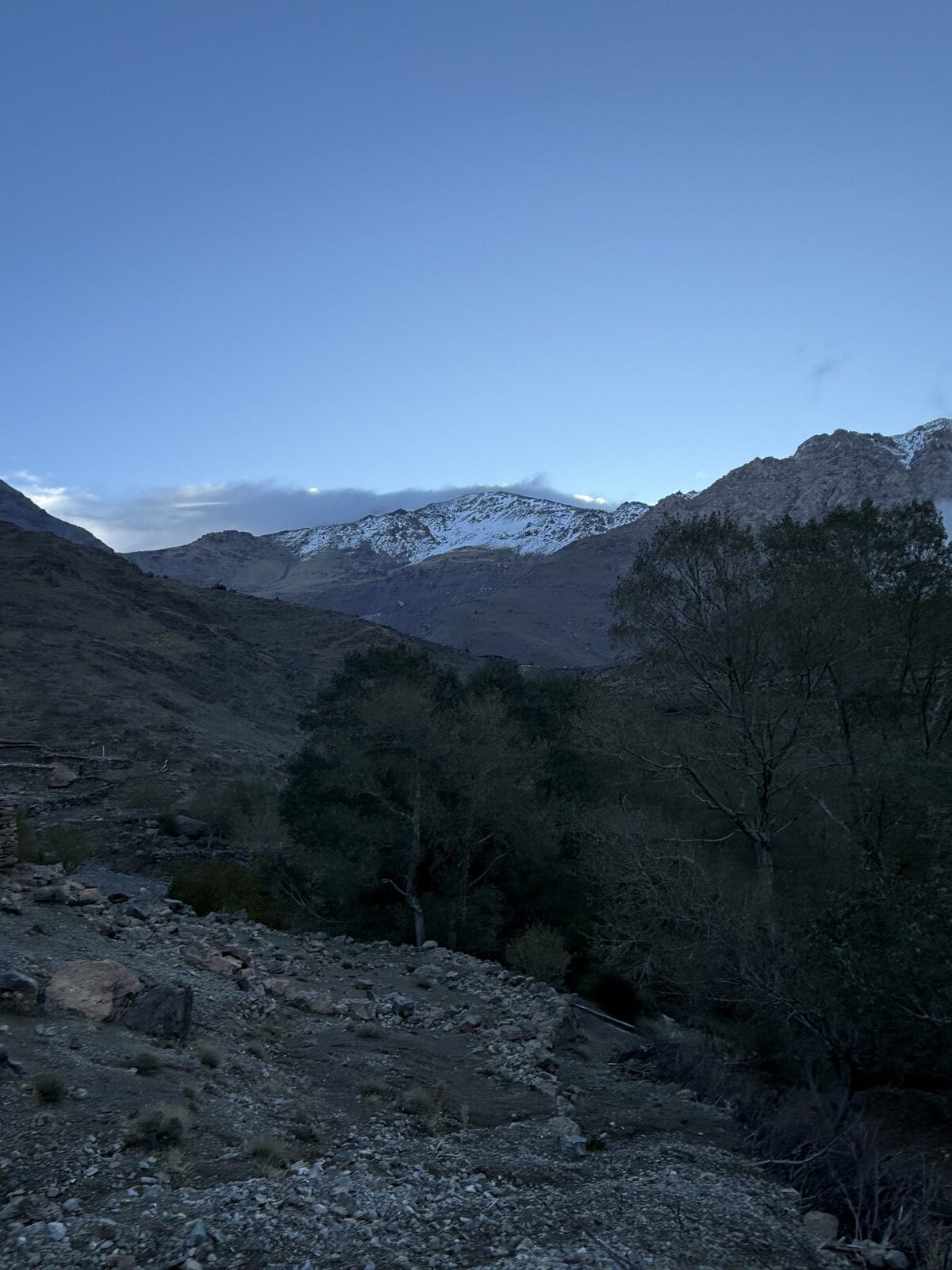
After a hot Moroccan breakfast with sweet Berber tea, we set off on our last day of hiking in the Atlas Mountains. Today, we would complete our hike from Tizi Oussem to the beautiful village of Imlil, a village easily reachable from Marrakesh making it a popular day trip for those who want to experience the Atlas Mountains and Berber hospitably.
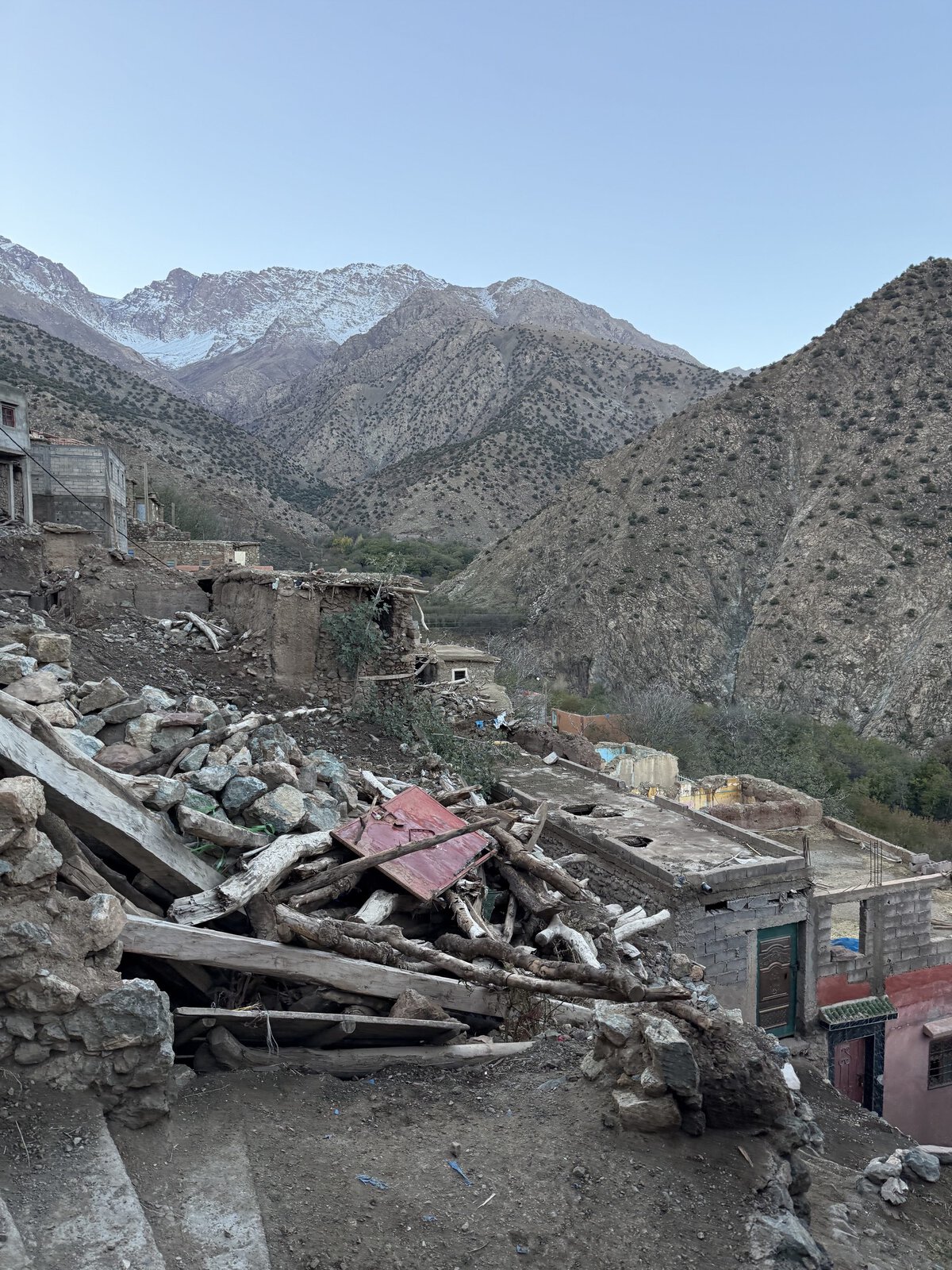
As we left Tizi Oussem, our guide Mohamed showed us some of the leftover destruction from the earthquake a few years back. It had hit this community really hard and they were still trying to rebuild years later. Many Berber homes were built the traditional way using stone to keep the heat in during the winter and hot sun during the summer. Since Berbers are mostly farmers and goat herders, livestock would often live on the bottom floor of the home using their feces to heat the house in the winter months. While a practical style of home, many did not survive a major earthquake so the new homes built by the government and NGOs were made of concrete to last the weather and survive future earthquakes.
Older homes on the left and a newer concrete home pictured on the right. Continue reading →
Our third day trekking in the Atlas Mountains in Morocco was one of the longest days, hiking from the remote village of Imgdal to the even more remote community, Tizi Oussem.
We rose early to the sound of the call to prayer echoing melodically through the valley and the sun was beginning to rise above the village. By day three, I was finally accustomed to sleeping in an unheated gite on a somewhat uncomfortable futon on the floor in a room with six others. It had been quite some time since I traveled this basic and while I would have preferred a warm, cozy bed and a hot shower, the camaraderie of it all made the trip the more memorable.
The second day of trekking the Atlas Mountains ended up being one of my favorites for its sheer wow factor and beauty. Day two took us from the lovely village of Tiziane to the remote Imgdal, a lovely Berber village in the heart of the Atlas Mountains. The five-hour hike would take us up along the Assif n’ait Oussaden valley, passing through walnut groves, climbing up via switchbacks through the clouds until our descent into the village of Imgdal.
After an early morning breakfast, we packed our gear and set off to the rising sun and the echoes of the call to prayer. As we left the village, school children were already up and ready for their walk to school while farmers were heading out to the fields for their day of work. Just like the day before, we did not see another tourist and had the entire trail to ourselves.
Heading out for our hike a little after seven am from the lovely village of Tiziane
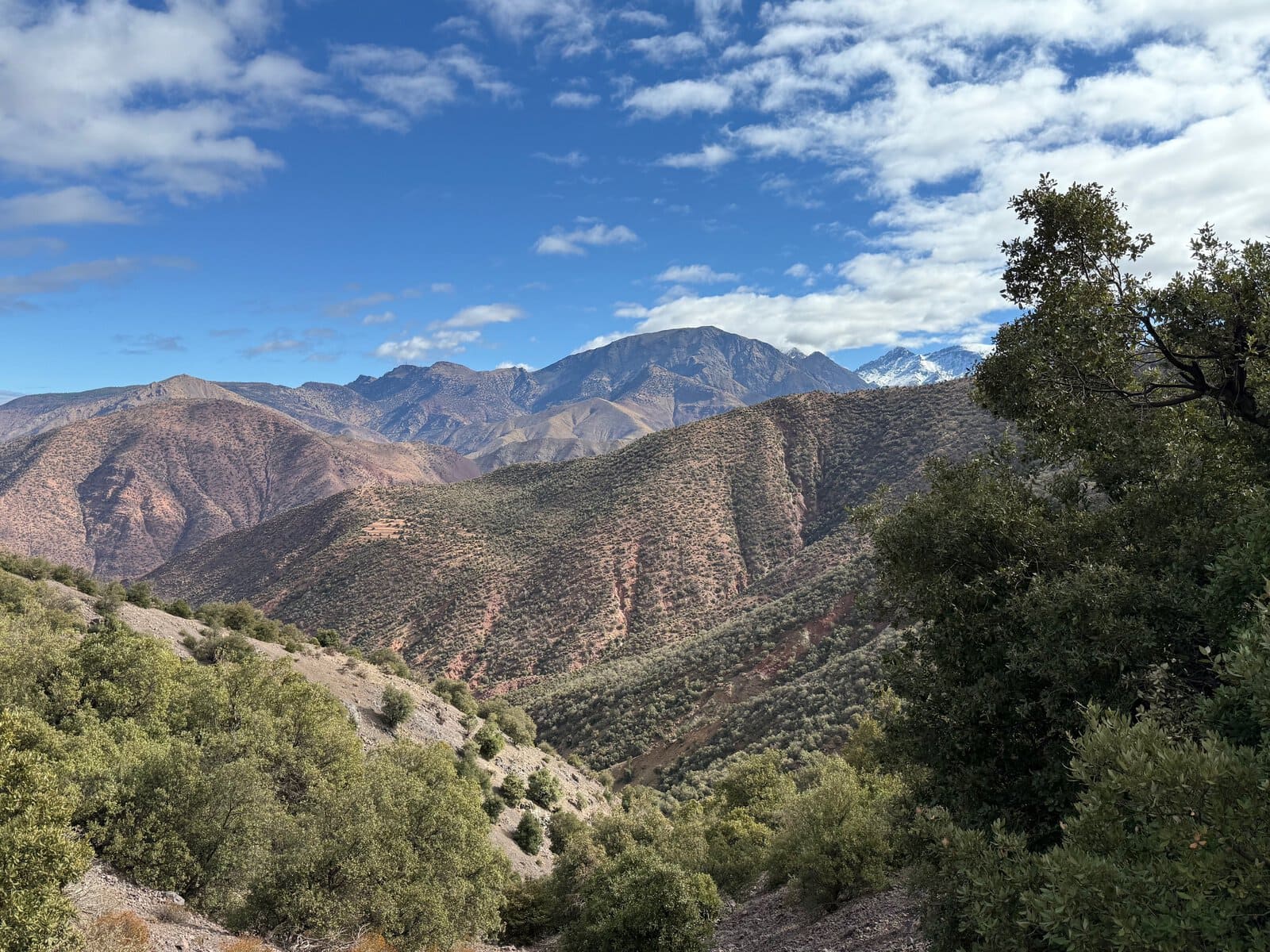
Few treks in the world feel as timeless and captivating as the four-day journey through Morocco’s Atlas Mountains. Hailed as one of the world’s great hikes, the trail winds through dramatic mountain scenery and centuries-old Berber villages hidden deep within the valleys, places so untouched that it often feels like stepping back in time. Stone homes cling to steep hillsides layered like a wedding cake, while lush terraced fields snake up the mountains, irrigated by ancient systems still used by farmers today. Life here moves slowly, to rhythms that have endured for generations.
Morocco’s cultural identity is deeply rooted in the heritage of the Berbers (also known as the Amazigh people), who are the Indigenous tribes of North Africa, and the country’s oldest inhabitants. For centuries, the Amazigh have called the Atlas Mountains home, building villages in remote valleys and forging a way of life inseparable from the rugged landscape around them. Intrepid travelers can witness the Berber way of life on foot, hiking through the ancient mule trails that connect these mountain communities.
The trails weaving through the high peaks and valleys of the Atlas Mountains were once vital mule tracks used by Amazigh traders, shepherds, and families to travel between villages. Walking these same routes offers far more than a hike; it is a journey through living history. Around every bend are sweeping mountain vistas, terraced hillsides carved by hand, and villages where traditions and daily life remain deeply connected to the land.
There is something special about reaching a destination on foot. After six glorious days of hiking the Salkantay Trek to Machu Picchu, we finally reached Aguas Calientes after a short one-hour train trip from the end of our hike. The last time I had been to this town was over 25 years ago, when I hiked the Inca Trail with my dad. I was flabbergasted by how much it has changed.
It is no secret that Machu Picchu (UNESCO World Heritage Site since 1983) has struggled with overtourism. In 2024 alone, over 1.5 million tourists visited (a 58% increase over 2023), and it is only expected to get worse. As the biggest tourism attraction in Peru, tourism brings in a huge chunk of revenue for the country. However, of course, it comes at a cost. With thousands of tourists descending on the site each day, erosion has become a significant problem, and one can argue that so has Machu Picchu’s cultural integrity. In 2025, the government set a maximum visitor capacity that varies by season: 5,600 daily visitors during peak season (May to September) and 4,500 during low season (January to April and October to December). Tickets must also be purchased online for strict time-slotted entries and for one of the three different circuits of the site. If you don’t get a ticket in advance, you may end up in a long line that goes for blocks and have to wait sometimes for days for the next open time slot. None of this was in place when I went in November 2001. However, many experts believe that they are not doing enough to safeguard this national treasure. With the upcoming opening of a new airport (Chinchero International Airport) located only 18 miles away from the site, I fear that it will never be the same again.
Arriving in Aguas Calinentes after the solitude and near emptiness of the Salkantay Trail was a shock to the senses. There was a long line of tourists waiting to hopefully purchase a timed-entry ticket to Machu Picchu.Continue reading →
Days 5 and 6 of the Salkantay Trek to Machu Picchu continued down the Santa Teresa River Valley, through ribbons of emerald-covered mountains, until we got our first view of Machu Picchu nestled into the mountainside. By this time in the journey, we were all fast friends, and our hiking was filled with laughter, gratitude, and friendship after sharing such an incredible experience.
It had been over 25 years since I first laid eyes on Machu Picchu, and I wondered how I would feel seeing it once again. I had heard over and over again about the challenges of overtourism to this UNESCO World Heritage Site and was curious to see how the Peruvian government was managing it. Continue reading →
After crossing the Salkantay Pass (the highest point on the trek at 15,213 ft/4,636m), the next day was relatively easy with only a four-hour hike descending down into the cloud forest of the Andes mountains until we reached the Colpa Lodge at 9,414 feet/2870 m, where we would spend the night. It was our fourth day hiking the Salkantay Trek to Machu Picchu and we were halfway there.
We woke up to brilliant sunlight and sore legs after our long hike the day before over the pass. However, we were excited to continue our journey into warmer temperatures and felt the growing anticipation of getting closer to our goal.
One reason why I loved the Salkantay trek to Machu Picchu so much is that the ecosystem changed every single day. Beginning in the highlands of the Andes with breathtaking views of the Salkantay peak and aquamarine glacial lakes, the hike continues down into the lush cloud forest surrounded by trees, shrubs, and flowers. There are orchids everywhere as well as hummingbirds and butterflies, and you can hear the roar of the Salkantay River below. It was quite a contrast from the day before.
The third day of the Salkantay Trek to Machu Picchu is by far the most challenging day of the entire hike, taking you up a series of switchbacks to reach the Salkantay Pass, the highest point of the trek at 15.213 feet/4636m. This is the biggest test for hikers to see how well they have acclimatized to the high altitude. Yet in my opinion, it is one of the most rewarding days of the journey for its awe-inspiring views and feeling of accomplishment.
We rose early after a fabulous dinner at the Salkantay Lodge, Mountain Lodges of Peru’s hallmark lodge in Soraypampa. Since we were traveling with Mountain Lodges of Peru (MLP), we would be the only hikers ascending to the pass on foot, since MLP is the only outfitter that has accommodations in Wayraccmachay, a plateau located three hours after reaching the pass. There are no campgrounds there so everyone else hiking normally ascends the pass on horseback and then continues past Wayraccmachay to the next village, where we would hike the following day.
For us, it was magnificent because it meant we would have the entire trail to ourselves for two days. As an avid hiker, this is a very special treat!
We started our hike at 7 am and were blessed with an absolutely stunning day. Had it been cloudy, we would have seen nothing.
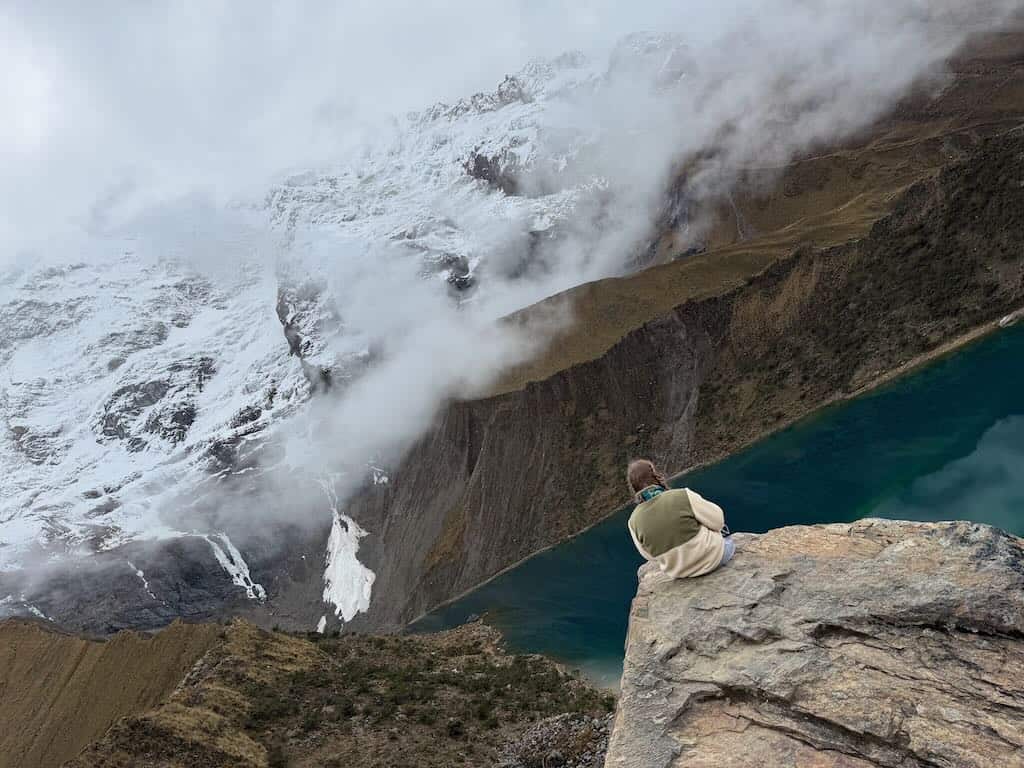
We were incredibly lucky to have surreal views of the snow-capped Humantay Peak.
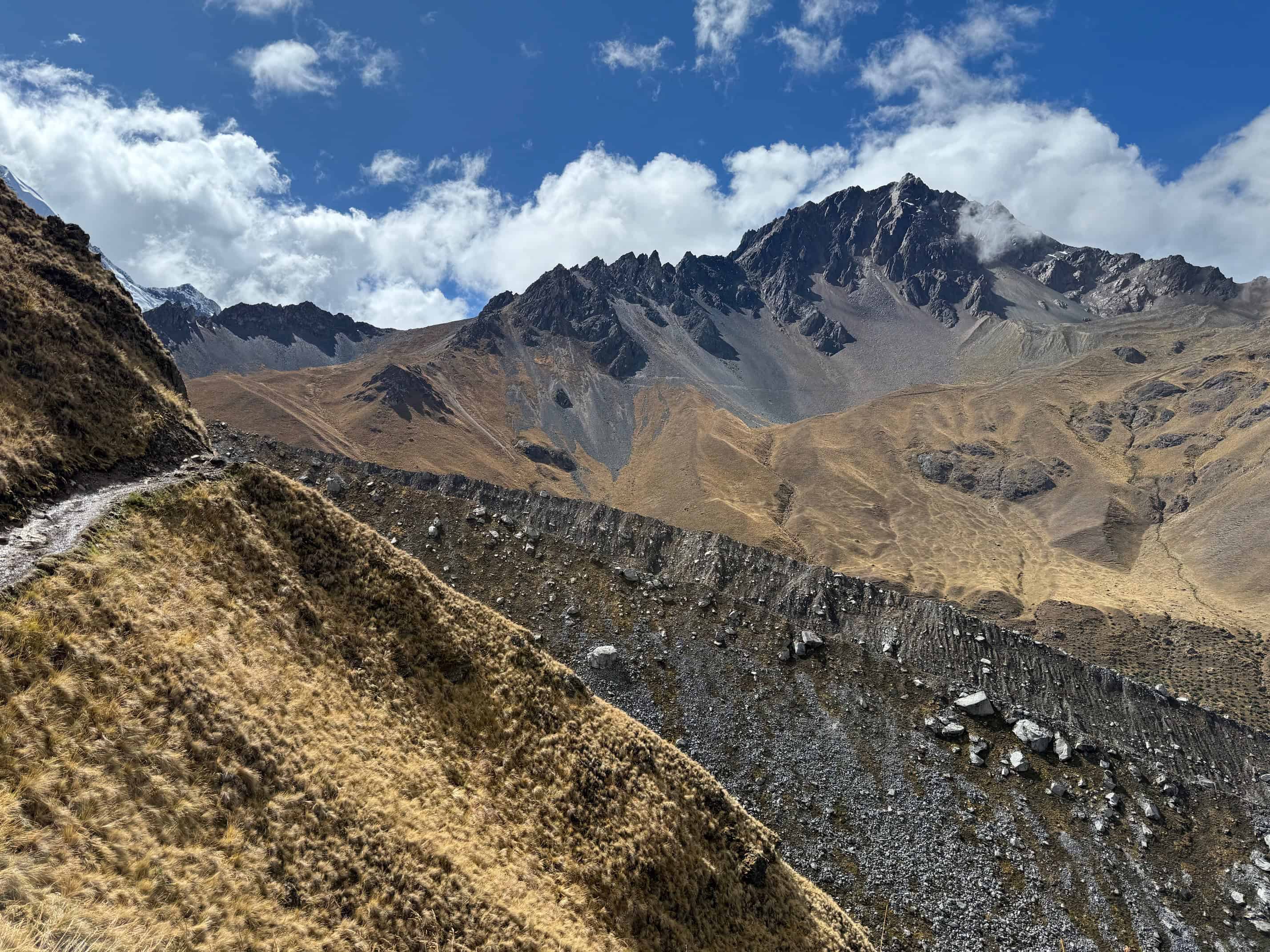
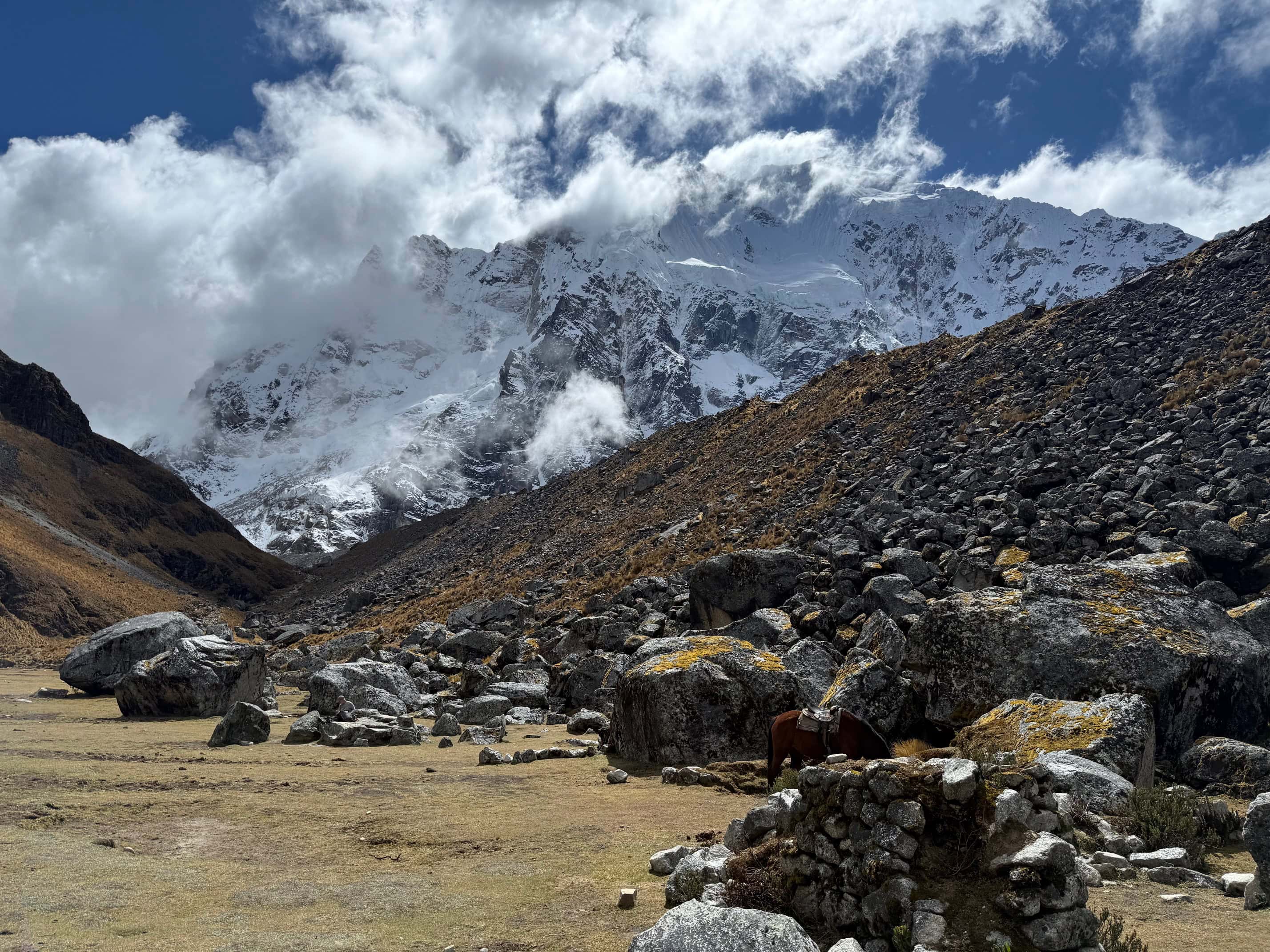
As we climbed up, our lungs pounded as we acclimatized to the higher altitude. We circled Humantay Peak, with stunning views of expansive plateaus connected by enormous boulders, and remnants of the Rio Blanco Valley.
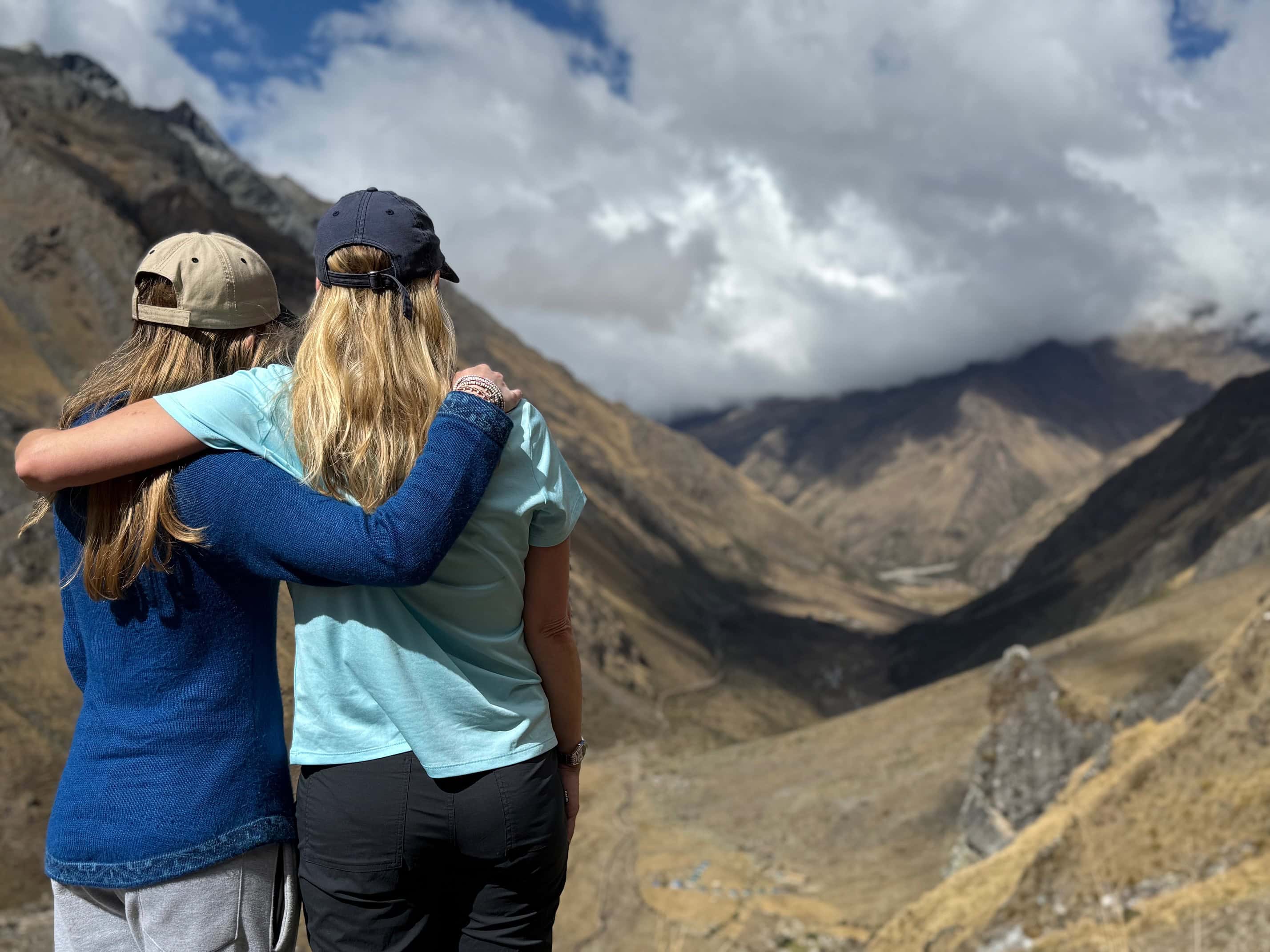
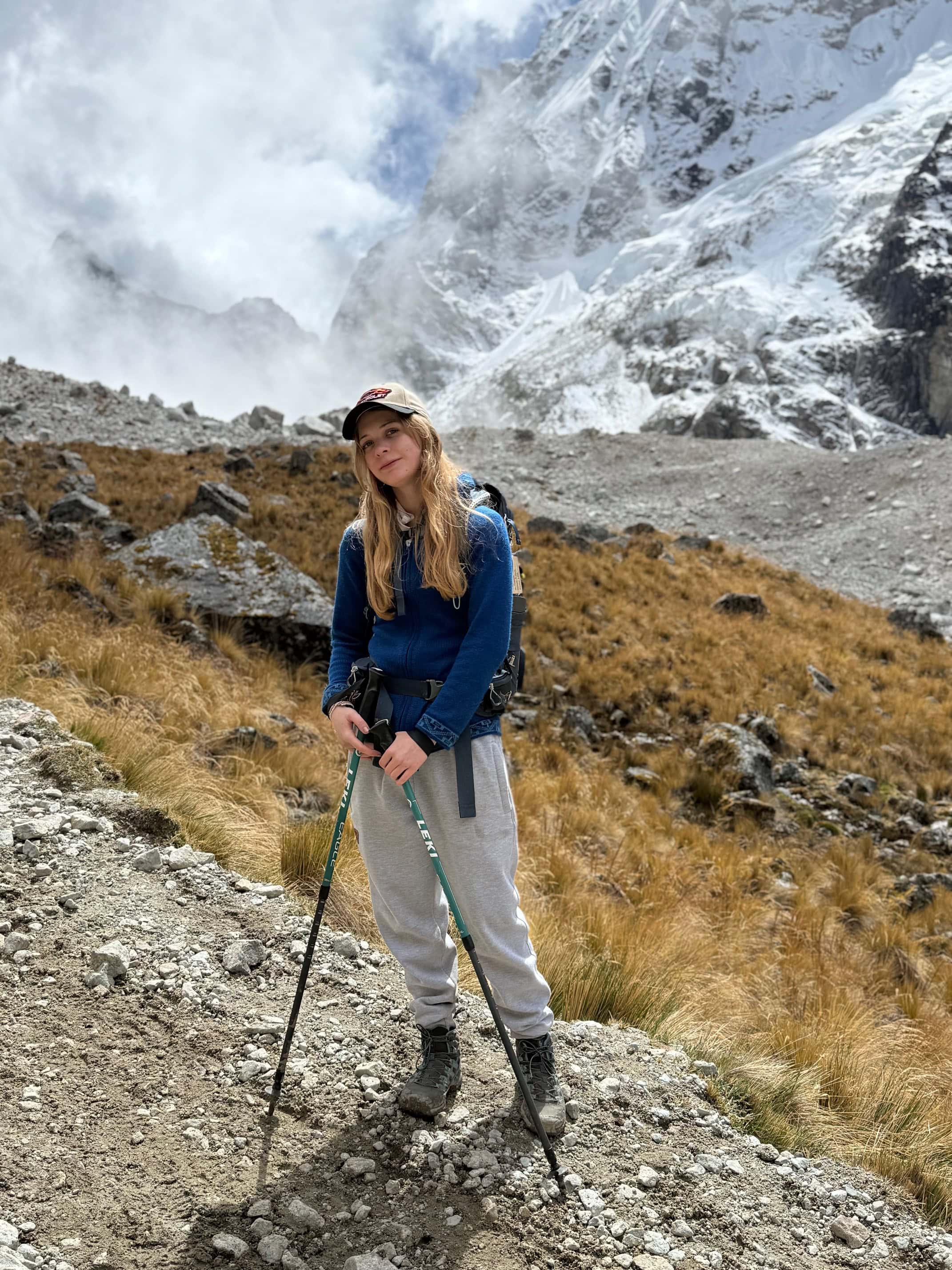
I felt really good and did not take altitude pills since I have not had any issues before with altitude. However, it was a challenge for my daughter as she had never been this high before and was struggling with her breathing. We took it slow, stopping frequently to catch our breath and take photos. The views were so spectacular that it helped.
We reached the pass around 11:30 am, taking 4.5 hours (with a half-hour stop for a snack before the final push). It was an exhilarating feeling to stand at the top of the highest point of the hike with my daughter. I was so proud of her! Especially since she has been suffering from unexplained migraines and lightheadedness for several months. Even her doctor, treating her for this condition, was amazed.
Clouds coming over the mountains at the pass. We timed it right as it would cloud up soon taking away the stunning views of the mountains
After the pass, we continued for another three hours hiking through rolling hills and boulders to reach the Wayra Lodge at Wayraccmachay. This is the only place to stay here – there are no campsites. If you are not hiking with Mountain Lodges of Peru, you have to continue to the next village. This is why we saw the other groups on horseback going up the switchbacks to reach the pass earlier. If they hiked it all in one day, it would be extremely difficult and almost impossible to make it before sunset.
It had clouded up, so I didn’t take many pictures after the pass. We were tired as well and ready to finish the hike.
Around 2:30 pm, we saw the lodge off in the distance. I could hardly wait!
This would be one of my favorite places we stayed during the hike. It was so isolated. I tried to imagine how hard it must have been to build this place, as there are no roads and it can only be reached on foot and with the help of mules.
If you go: We booked our trip through Mountain Lodges of Peru, the only outfitter who has lodges along the trail. From start to finish, they were absolutely incredible. I highly recommend them.
On the second day of our journey along the Salkantay Trek to Machu Picchu, we rose early for our hike to Lake Humantay, a picturesque turquoise glacial lake located at the foot of the Humantay glacier in the Cusco region of Peru. We were amply warned by our guides that the hike to Lake Humantay is one of the most popular day trips from Cusco (which accounts for the endless series of white vans filled with sleeping passengers that we saw on our drive to Mollepata the previous day). Many tourists come to celebrate the glorious colors of Lake Humantay, some hiking up the steep terrain from Soraypampa, while others ride horses. Unfortunately, it has also become a popular place for staged Instagram shots and other “influencers” who brought popularity, traffic, and overtourism to this beautiful natural place. If we wanted to see it in its glory, then we had to start early, and our guides were right.
Back in August, my daughter and I went on an incredible adventure together in Peru, completing the Salkantay Trek to Machu Picchu. Peru had been a place we were planning to visit in 2020 before the pandemic canceled our plans. We were finally able to do the trip together a month before she left home for college, and for me, after recovering from my second hip replacement surgery and becoming an empty nester. It was spectacular.
The last day of our hike along the Kumano Kodo was from the remote village of Koguchi to Nachi Taisha, one of the three Grand Shrines of the Kumano Kodo and the most stunning. It ended up being a grueling hike, taking 6 long hours with the first two hours being straight uphill. (Total hike: 9.2 miles/14.8 kilometers).
The hike ended with a bang and was much harder than I anticipated.
For some reason, this was harder than the 8.5-hour hike two days before. The weather was becoming a bit more humid (thank goodness it was only early June), and the incline up was much more difficult than it looked.
While I struggled through the tough, humid uphill grind (periodically wiping the sweat dripping off my face with my shirt), wy kids and husband whisked by me, not one bit bothered. I confess I was a bit grumpy, but decided to give myself some grace. I was 53 years old and had just had not one but two major surgeries in the past two years. My last surgery – my second hip replacement – was only six months ago, and I was still not back up to my prior fitness levels before. Continue reading →
The fourth day hiking the Kumano Kodo trail was a recovery day and only 13.2 km/8.2 miles. Our legs were sore but our souls were refreshed after a night at the Yunomine Onsen, where we dipped in the calming hot waters of the hotel’s onsen and enjoyed a traditional 12-course Japanese meal.
The hike today involved a short bus ride to the Kogumotori-goe section of the trail, where we had perhaps one of the best views of the velvety green forested mountains. The look out area is called Hyakken-gura looks out onto the “Kumano Sanzen Roppyaku-ho” – a local expression which literally translates as the “3,600 peaks of Kumano” per our guidebook.
A small Jizo statue guards a stunning backdrop of the Kumano mountains
Since much of the hike is through thick forests, we did not have many views of the mountains except on this day. The word “gura” means “high cliff,” and from the Hyakken-gura we could see velvet green-covered peaks as far as the eye could see. It certainly was magical. Continue reading →