

Salkantay Trek: Hike to Lake Humantay (2026)
What Is the Hike to Lake Humantay Like on the Salkantay Trek?
The hike to Lake Humantay on Day 2 of the Salkantay trek is a moderate, roughly 4-hour round trip that climbs from the Salkantay Lodge at 12,690 feet (3,869m) up to the turquoise glacial lake at 13,780 feet (4,200m). The ascent is steep and slow going at altitude, but the payoff, a glistening lake beneath the Humantay glacier, is genuinely breathtaking. Starting early is essential to beat the crowds of day-trippers arriving from Cusco. It was one of my favorite days of the Salkantay Trek to Machu Picchu.
On the second day of our journey along the Salkantay Trek to Machu Picchu(opens in new tab), we rose early for our hike to Lake Humantay, a picturesque turquoise glacial lake located at the foot of the Humantay glacier in the Cusco region of Peru. We were amply warned by our guides that the hike to Lake Humantay is one of the most popular day trips from Cusco (which accounts for the endless series of white vans filled with sleeping passengers that we saw on our drive to Mollepata the previous day). Many tourists come to celebrate the glorious colors of Lake Humantay, some hiking up the steep terrain from Soraypampa, while others ride horses. Unfortunately, it has also become a popular place for staged Instagram shots and other “influencers” who brought popularity, traffic, and overtourism to this beautiful natural place. If we wanted to see it in its glory, then we had to start early, and our guides were right.
Day 2 The Salkantay trek to Machu Picchu: Hike to Lake Humantay
We rose to a glorious day in the Andes with a brilliant blue sky and an amazing day of hiking ahead. We slept fairly well on full bellies yet constant waking due to the altitude. Today, we would start our hike at the base of the mountains from our lodge at Salkantay at 12,690’ / 3,869m) and continue up to reach the lake at 13,780 feet (4,200 meters). The up and down was preparing us for the next day where we would traverse the Salkantay Pass at 15,213 feet (4,636 m)(opens in new tab).
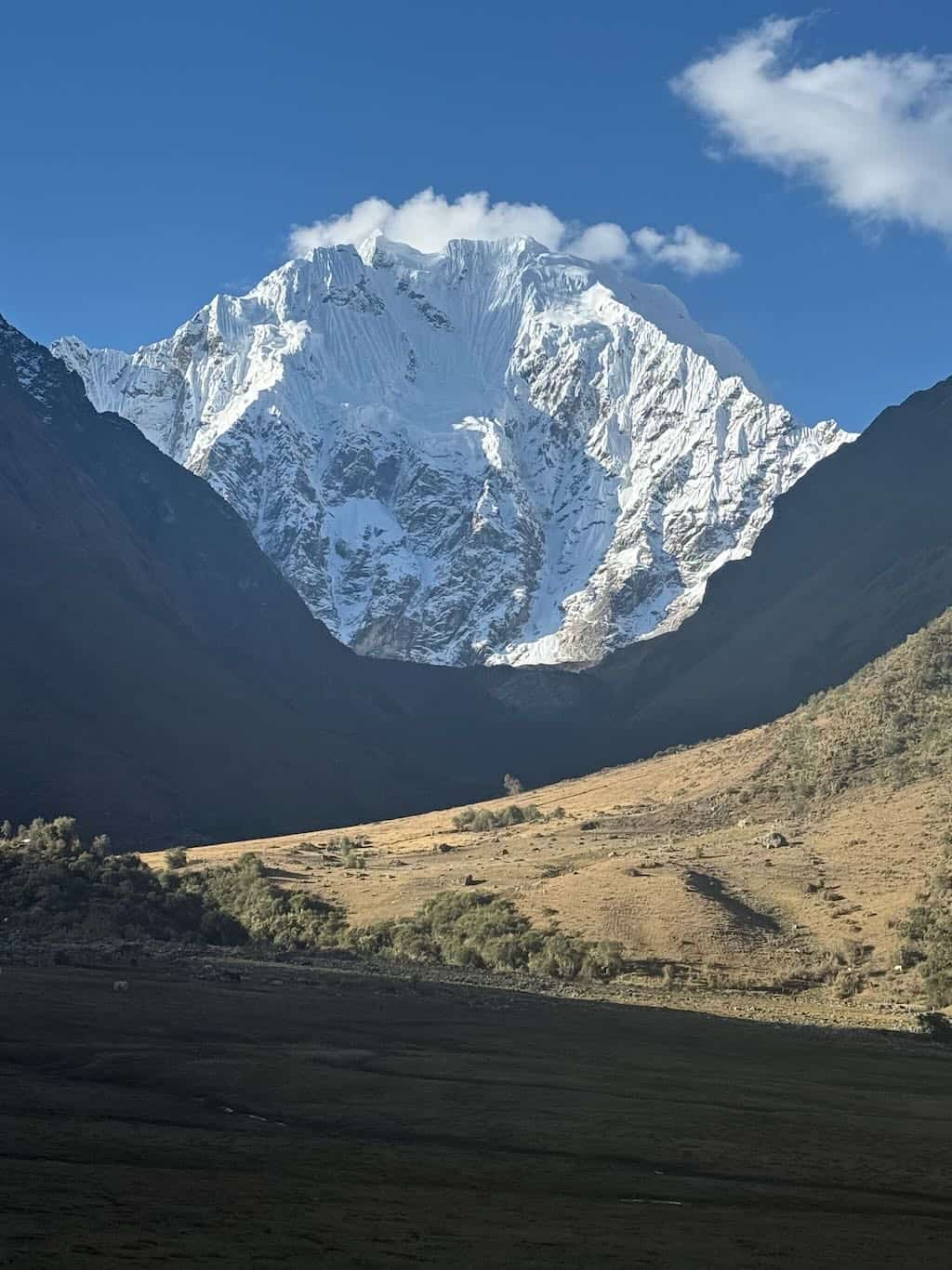
Looking out the window of the Sankantay Lodge
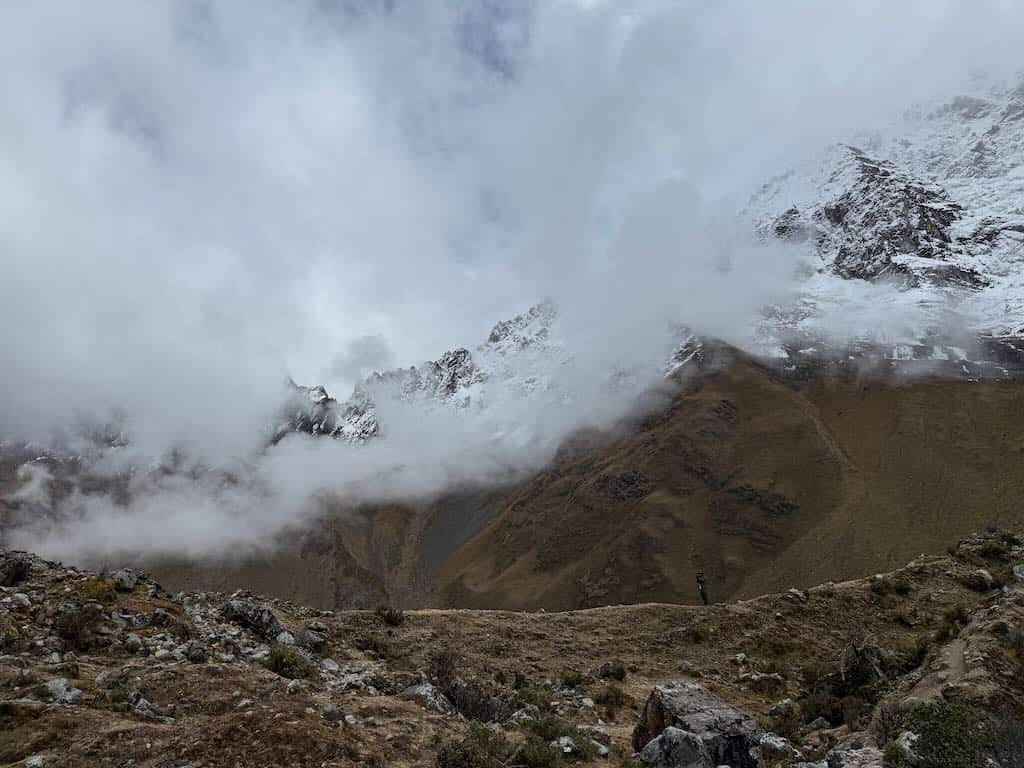
We began our hike after breakfast, ascending the slopes that border the plateau behind the Salkantay Lodge. The views were magnificent and the air was fresh and pure as we climbed higher and higher above the lodge. It was slow going as our lungs adjusted to the altitude, but the views were so serendipitously spectacular that it motivated us to continue.
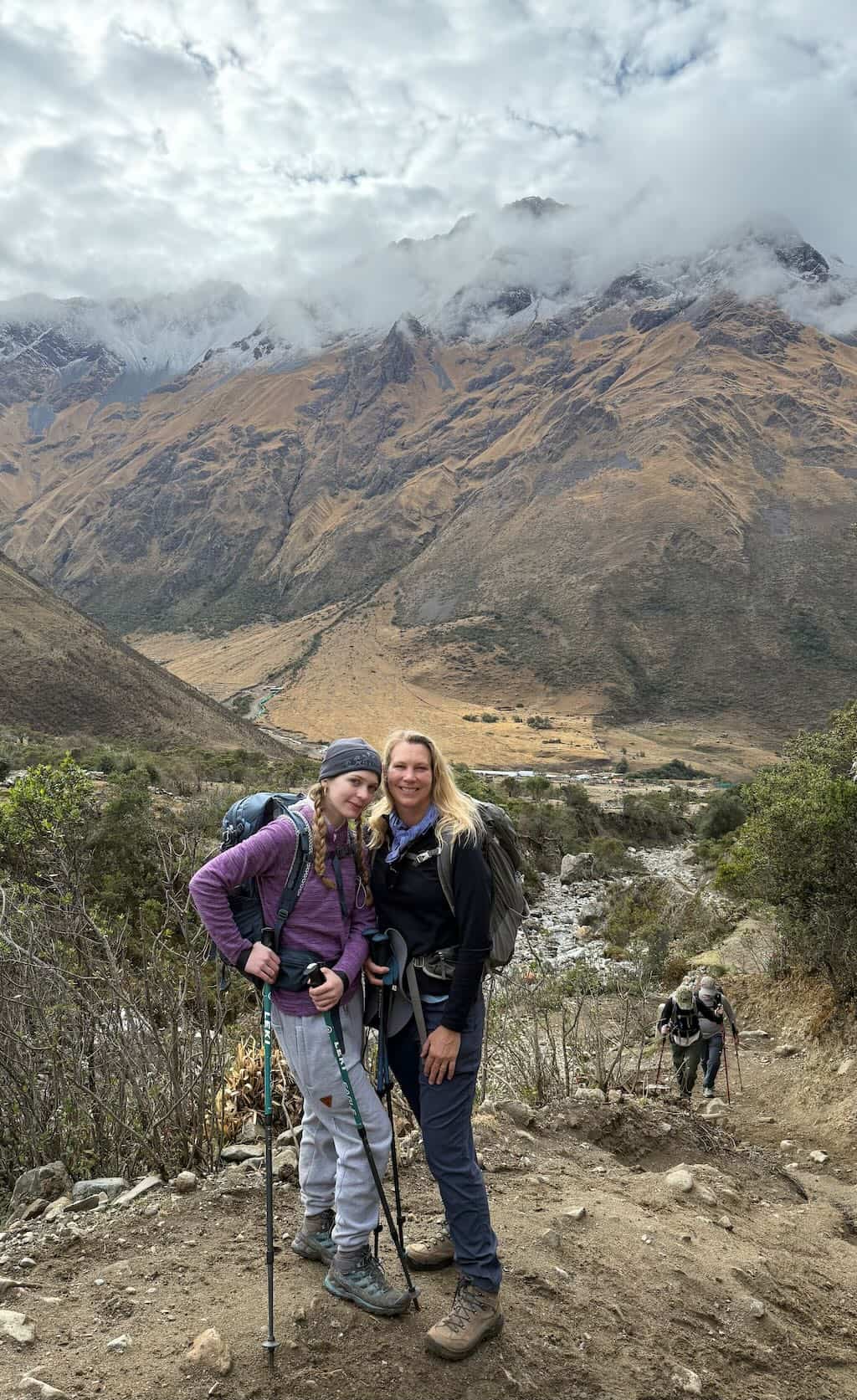


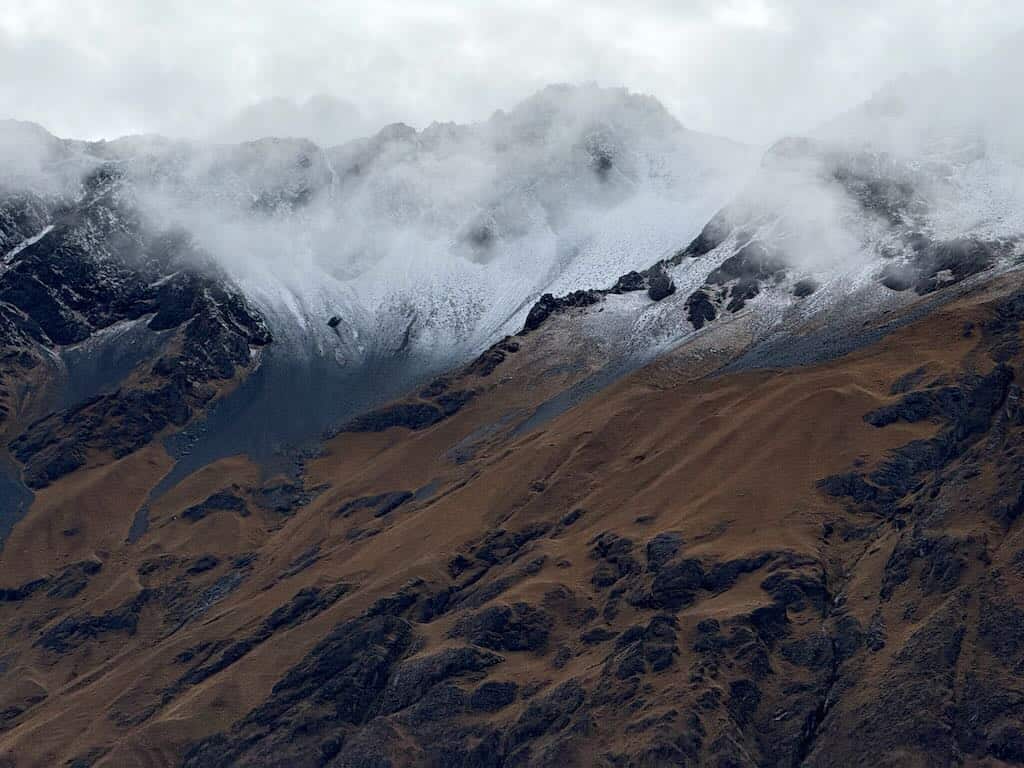
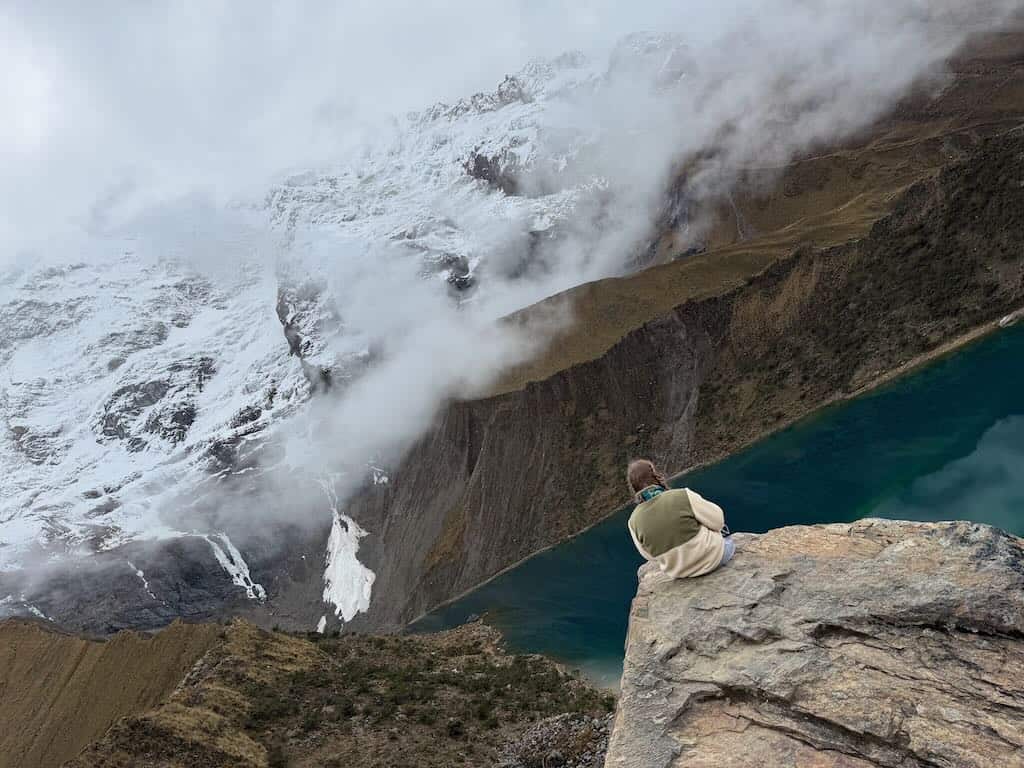
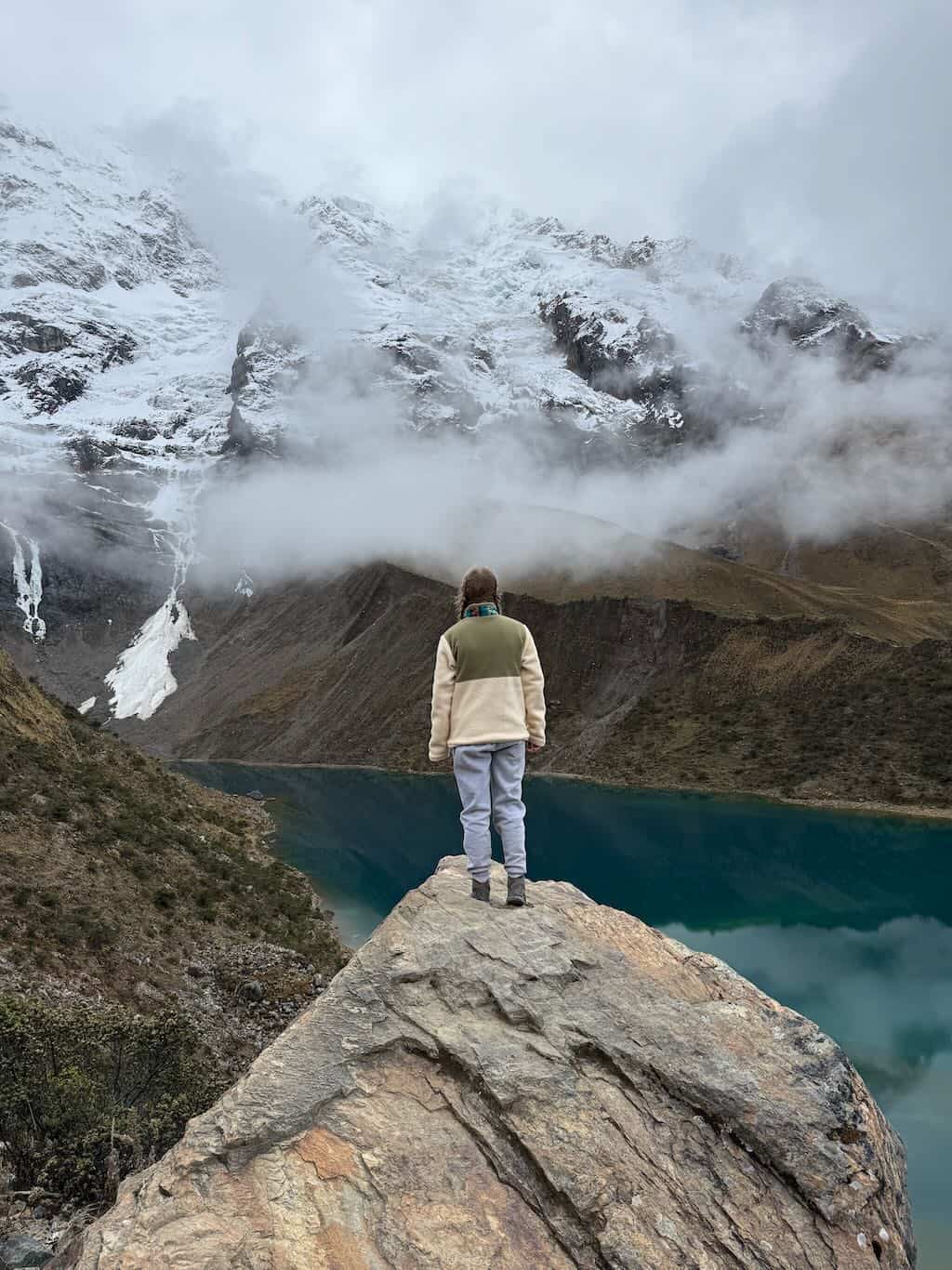
After an hour or so, we were rewarded with our first glimpse of Lake Humantay’s glistening turquoise waters and the Humantay glacier overhead. We were happy to be there early, before the herds of other hikers and have the place almost to ourselves.
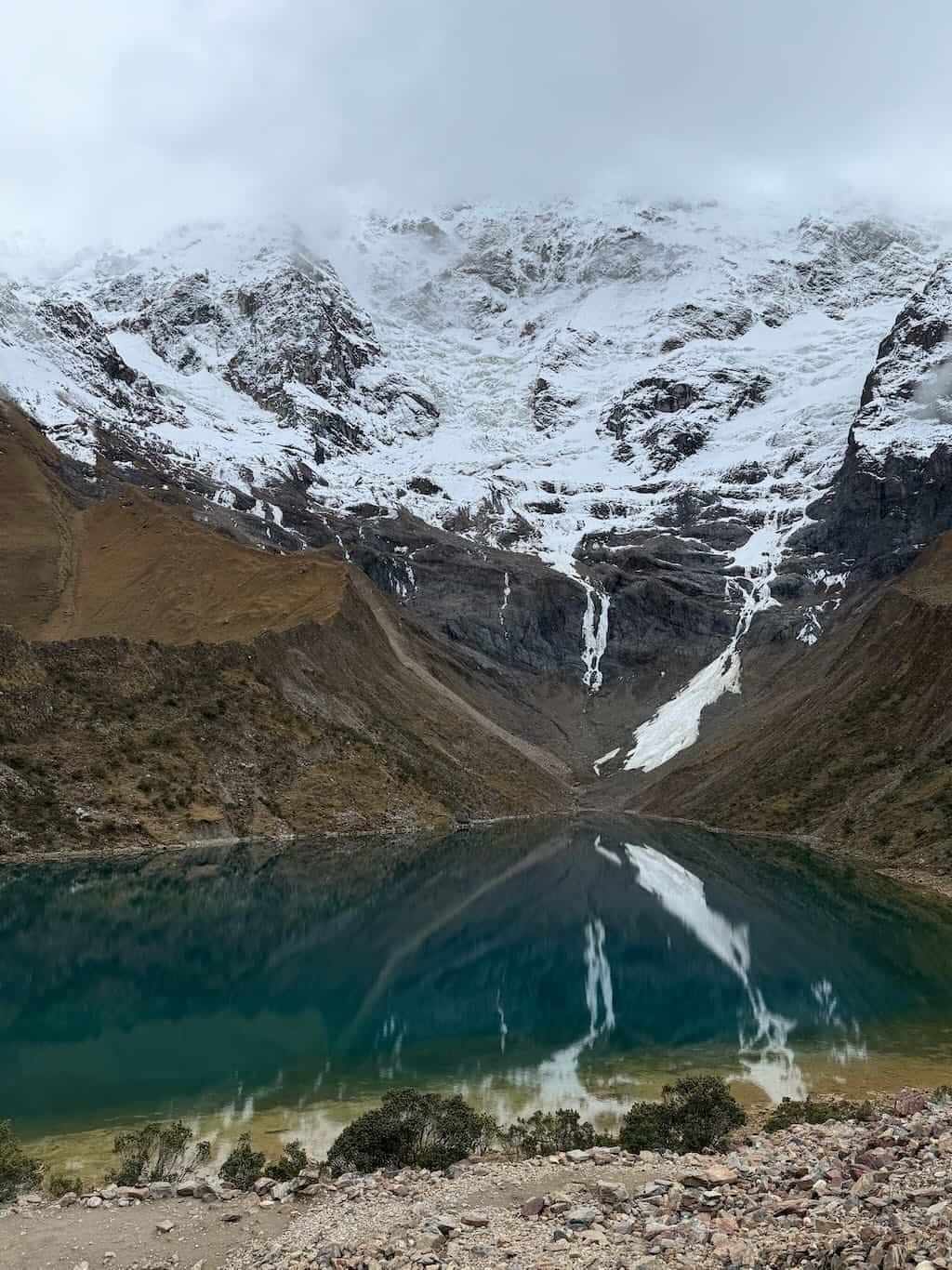
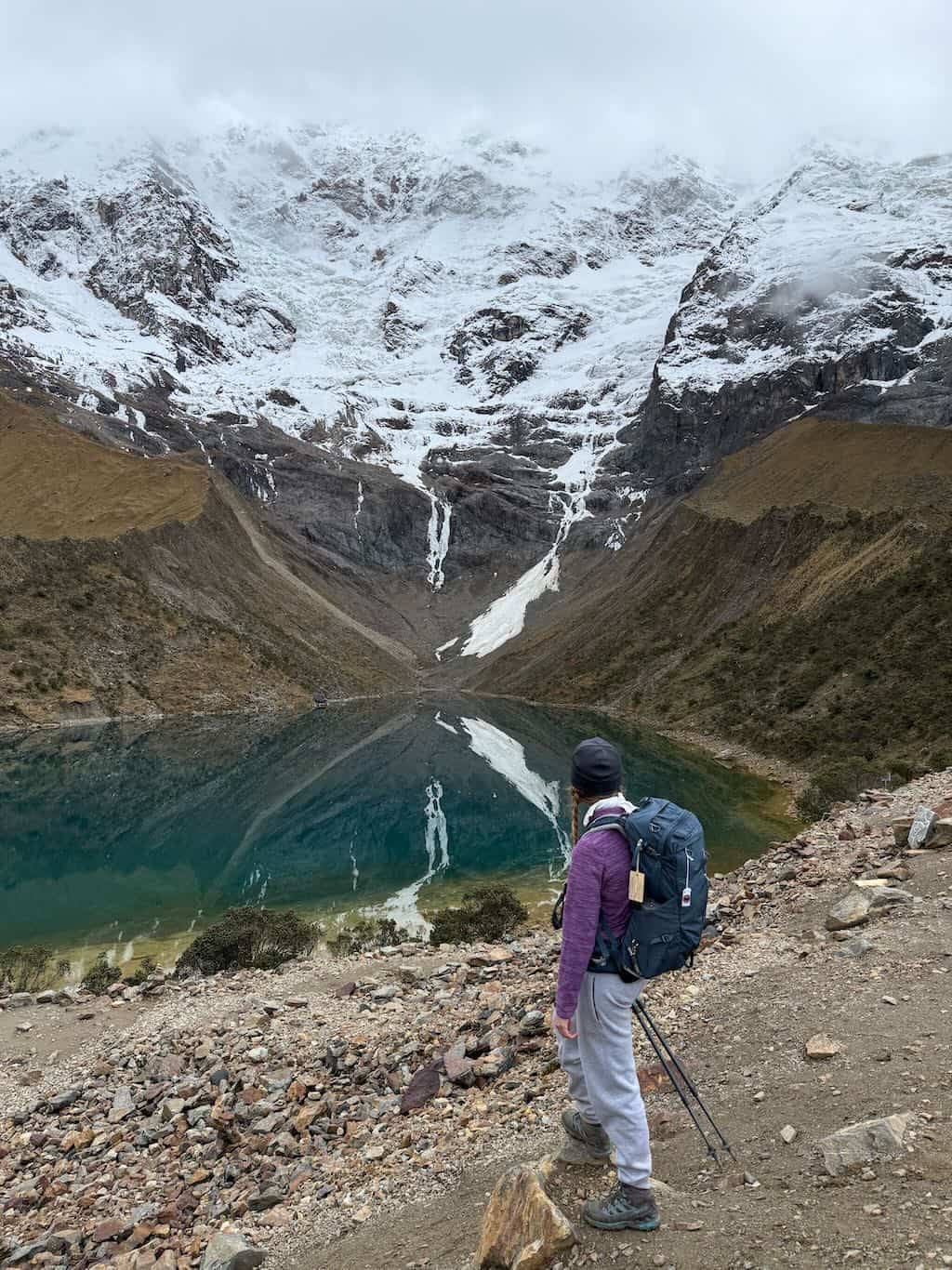
My daughter Sophia takes in the stunning view
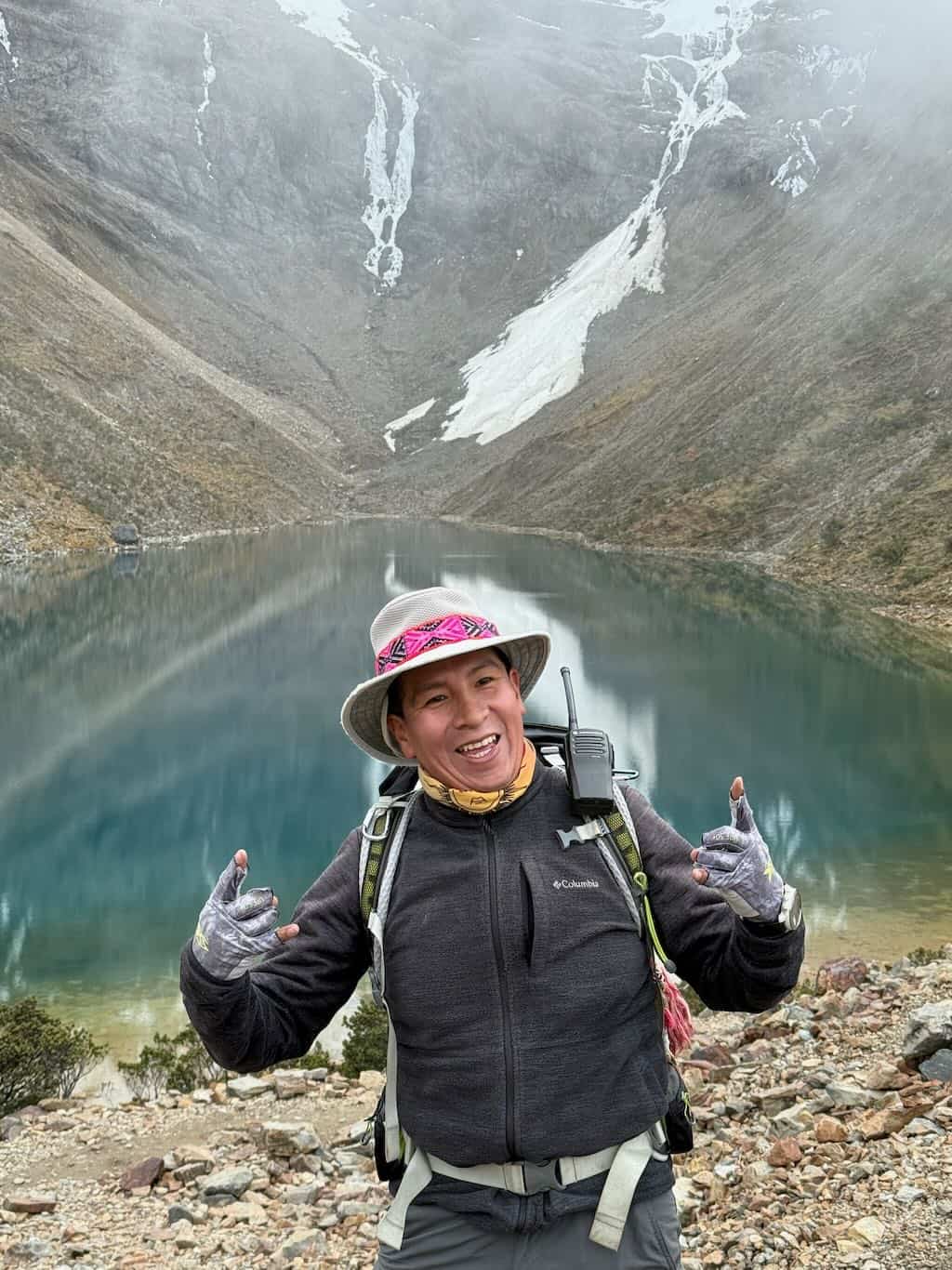
Our smiling guide, Claudio
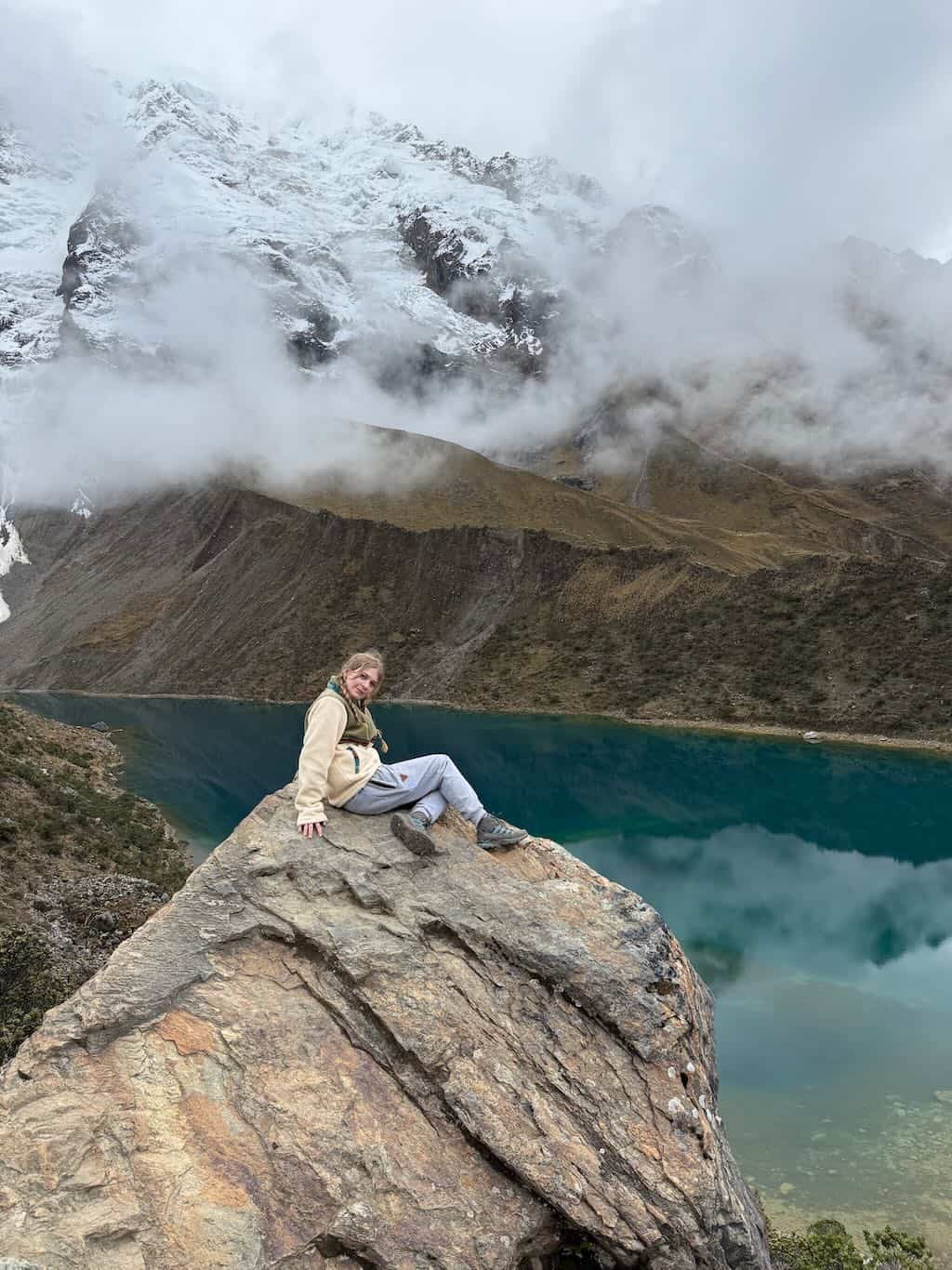
We climbed higher above, took several photos above the lake, and these of my daughter turned out to be my favorite photos of the entire trip.
Enjoying a traditional Pachamam Ceremony to honor Mother Earth
After our photos, we climbed down to a protected area behind the lake and participated in a special traditional Quechua ceremony to honor “la Pachamama” (Mother Earth). Our outfitter, Mountain Lodges of Peru, includes cultural elements throughout the hike, and this ceremony was quite magical.
Sebastian, a local Quechua elder, comes from a small village in the high Andes near the town of Mollepata and the Soraypampa community. His people consider themselves the last of the Incan ancestry. Their culture continues to keep these traditional ceremonies (dating back to Incan times) alive.
As Sebastian laid out the items for the ceremomy it started to drizzle, making it all the more mystical. Our guides Claudio and Gilberto translated for us as Sebastian chanted his prayers. The ceremony is an offering to say “thank you” to Mother Nature. August (the month we were there on the hike) is considered the month of Mother Earth.


At the end of the ceremony, each one of us are blessed with a cocoa leaf. I caught it all on film in this reel(opens in new tab), but it doesn’t do it justice. It was quite moving.
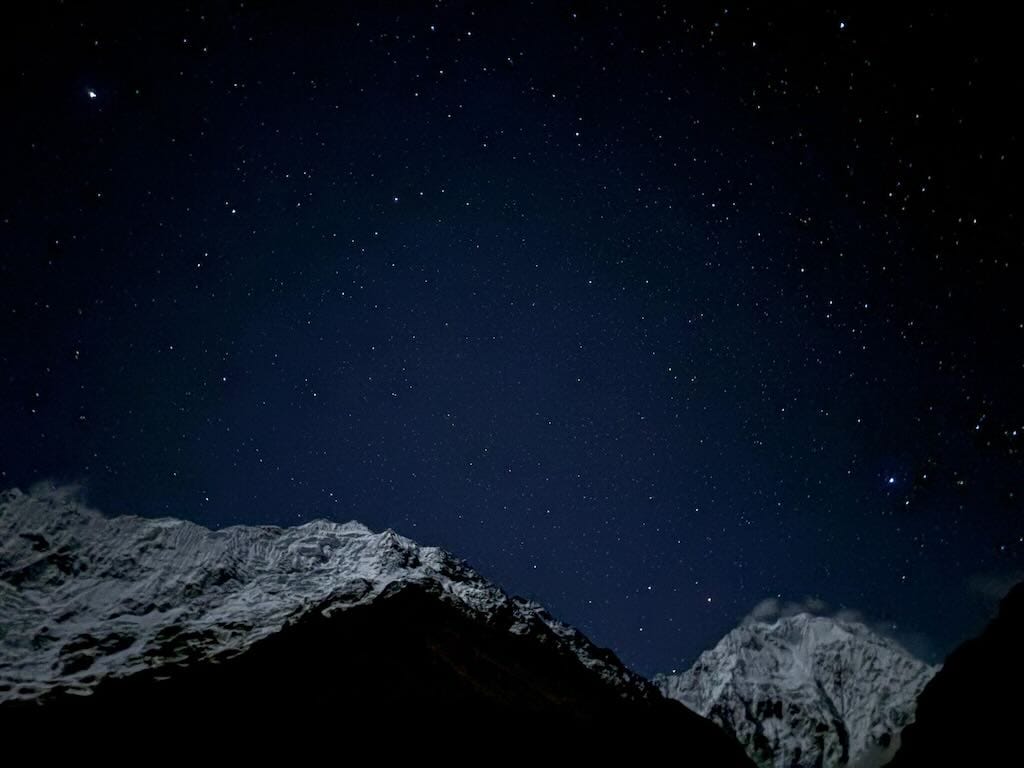
It was a stunning day on so many levels – the beauty of our hike, the magic of the ceremony and the time I got to spend with my daughter. That evening, after a delightul dinner we went out to see the stars and have one more ceremony where Sebastian blessed the offering he made earlier that day up on top of the mountain, and set it on fire to wish us a safe journey on our trek. What a magical day!

Details of the hike:
Trekking Time: Approximately 4 hours
Hiking Level: Moderate
Overnight: Salkantay Lodge (12,690’ / 3,869m)
Outfitter: Mountain Lodges of Peru(opens in new tab)
How Hard Is the Hike to Lake Humantay?
The short answer: harder than it looks on the map, but absolutely doable for someone who is relatively fit. The hike gains roughly 1,090 feet (330 meters) of elevation over a relatively short distance, which sounds manageable until the altitude reminds you that you are already above 12,000 feet before you take a single step. Our lungs were working overtime even at a gentle pace, and there is no shame in stopping every few minutes to catch a breath and take in the view.
The terrain is a mix of rocky switchbacks and grassy slopes, well-worn but uneven underfoot. Poles help. Horses are available for those who need or want them, and there is no judgment in that choice. The hike is graded moderate, and that rating feels honest. It is not a technical climb, but the altitude makes it significantly more demanding than the distance alone would suggest.
The key is pace. Our guides kept us moving slowly and deliberately, and that discipline paid off. By the time we reached the lake, our legs felt the effort but we were not destroyed, which mattered because the full Salkantay Pass crossing at 15,213 feet (4,636m) was still waiting for us the next day.
Practical Tips for Day 2 of the Salkantay Trek
A few things that made our Day 2 go smoothly, which, thanks to our amazing team at Mountain Lodges of Peru and our fabulous guides, we were ready :
- Start as early as possible. The white vans filled with day-trippers and Instagram wannabes from Cusco begin arriving at Soraypampa by mid-morning. We had the lake nearly to ourselves for the first hour, which felt like a gift.
- Drink water constantly. Altitude dehydration sneaks up fast. Our guides reminded us repeatedly, and they were right
- Bring layers. We started in sunshine at the lodge and hit drizzle near the lake. The Andes make their own weather on their own schedule.
- Permit yourself to go slow. This is not a race. The slower you climb, the better your body adjusts, and the more you actually see.
- Respect the ceremony space. If your outfitter includes a Pachamama ceremony, treat it as the privilege it is. Put your phone away unless explicitly invited to photograph. We were, and it was one of the most moving moments of the entire trip.
- Carry coca leaves or coca tea(opens in new tab). Widely available in the region, and genuinely helpful for altitude nausea. Our guides and lodge provided both throughout.
Key Takeaways
- Lake Humantay sits at 13,780 feet (4,200m) and is reached on Day 2 of the Salkantay trek.
- The hike is approximately 4 hours round trip and rated moderate in difficulty.
- The altitude makes it significantly harder than the distance alone suggests, as you begin above 12,000 feet before taking a single step uphill.
- If you take altitude sickness pills, you should have started before you left home! (I did not and have never needed them yet I have been at high altitude many times before).
- Starting early is essential to experience the lake before the Cusco day-tripper crowds arrive by mid-morning.
- The Pachamama ceremony at the lake, led by a local Quechua elder, is a rare and deeply moving cultural highlight that sets this trek apart.
- The Salkantay Pass at 15,213 feet (4,636m) awaits on Day 3, making pacing and recovery on Day 2 genuinely important.
Frequently Asked Questions:
What is the altitude of Lake Humantay on the Salkantay Trek?
Lake Humantay sits at 13,780 feet (4,200 meters) above sea level. Hikers begin the Day 2 ascent from the Salkantay Lodge at 12,690 feet (3,869m), gaining roughly 1,090 feet (330 meters) of elevation on the way up. That gain feels modest on paper, but the already-high starting elevation means the altitude is working against you from the very first step.
How hard is the Salkantay Trek to Machu Picchu?
The Salkantay Trek is a challenging multi-day hike(opens in new tab) rated difficult overall. The route covers roughly 70 to 74 km over 4 to 5 days and reaches a maximum altitude of 15,213 feet (4,636m) at the Salkantay Pass. It is not a technical climb, but the sustained altitude and daily elevation gain make it physically demanding.(opens in new tab) The Lake Humantay section on Day 2 is rated moderate on its own, but it is best understood as preparation for the harder terrain still ahead.
Which is harder, the Inca Trail or the Salkantay Trek?
Most trekkers and guides rate the Salkantay Trek as harder than the classic Inca Trail. The Salkantay Pass at 15,213 feet (4,636m) sits significantly higher than the Inca Trail’s highest point at Dead Woman’s Pass (13,780 feet / 4,200m). The Salkantay route also tends to be longer and more exposed. Both lead to Machu Picchu, but the Salkantay Trek demands more aerobic fitness and altitude acclimatization. I have done both, and I agree that the Salkantay Trek is much harder.
What is the Pachamama ceremony on the Salkantay Trek?
The Pachamama ceremony is a traditional Quechua ritual offered as a thanksgiving to Mother Earth (Pachamama). On the Salkantay Trek, some outfitters including Mountain Lodges of Peru arrange a ceremony at Lake Humantay led by a local Quechua elder. August is considered the month of Mother Earth in Andean tradition, making the timing especially meaningful. Participants receive a coca leaf blessing and witness the elder’s chanted prayers and offerings, and that evening the offering is set alight to wish the trekking group a safe journey.
What is the hike to Lake Humantay Like on the Salkantay Trek?
The hike to Lake Humantay on Day 2 of the Salkantay trek is moderate, roughly a four-hour round trip for fit hikers and acclimated hikers.
How do you avoid crowds at Lake Humantay?
Start hiking as early as possible. Lake Humantay is one of the most popular day trips from Cusco(opens in new tab), and tour vans begin arriving at Soraypampa by mid-morning. Trekkers doing the full Salkantay Trek have a built-in advantage: they sleep at a lodge near the trailhead and can set out before the day-trippers arrive, reaching the lake while it is still quiet and the light is at its best. Sadly, the day trippers are adding to the issues of overtourism in the area and cutting out local guides from making much money, given the van trips are from Cusco.
Are horses available for the hike to Lake Humantay?
Yes, horses are available for trekkers who need or want them on the ascent to Lake Humantay, and there is no judgment in that choice. The hike’s altitude makes it deceptively demanding, and riding rather than walking does not diminish the experience of arriving at one of the most beautiful glacial lakes in the Cusco region.
opening pict is sensational… s
The early bird, Nicole… Good to see you still hiking together. My very best wishes for 2026! xx
Thank you Jo! Yes now that I have two new hips (second one done November 2024) I am back to doing what I love so much. Happy New Year to you as well Jo! 🙂 Hope you are doing very well!
Thanks for taking us there – even if it’s only virtual.
The Fab Four of Cley
🙂 🙂 🙂 🙂
Thanks for reading and commenting! I always appreciate it! 🙂
Pingback: 2025 A Year in Review - Thirdeyemom