

After crossing the Salkantay Pass (the highest point on the trek at 15,213 ft/4,636m), the next day was relatively easy with only a four-hour hike descending down into the cloud forest of the Andes mountains until we reached the Colpa Lodge at 9,414 feet/2870 m, where we would spend the night. It was our fourth day hiking the Salkantay Trek to Machu Picchu and we were halfway there.
We woke up to brilliant sunlight and sore legs after our long hike the day before over the pass. However, we were excited to continue our journey into warmer temperatures and felt the growing anticipation of getting closer to our goal.
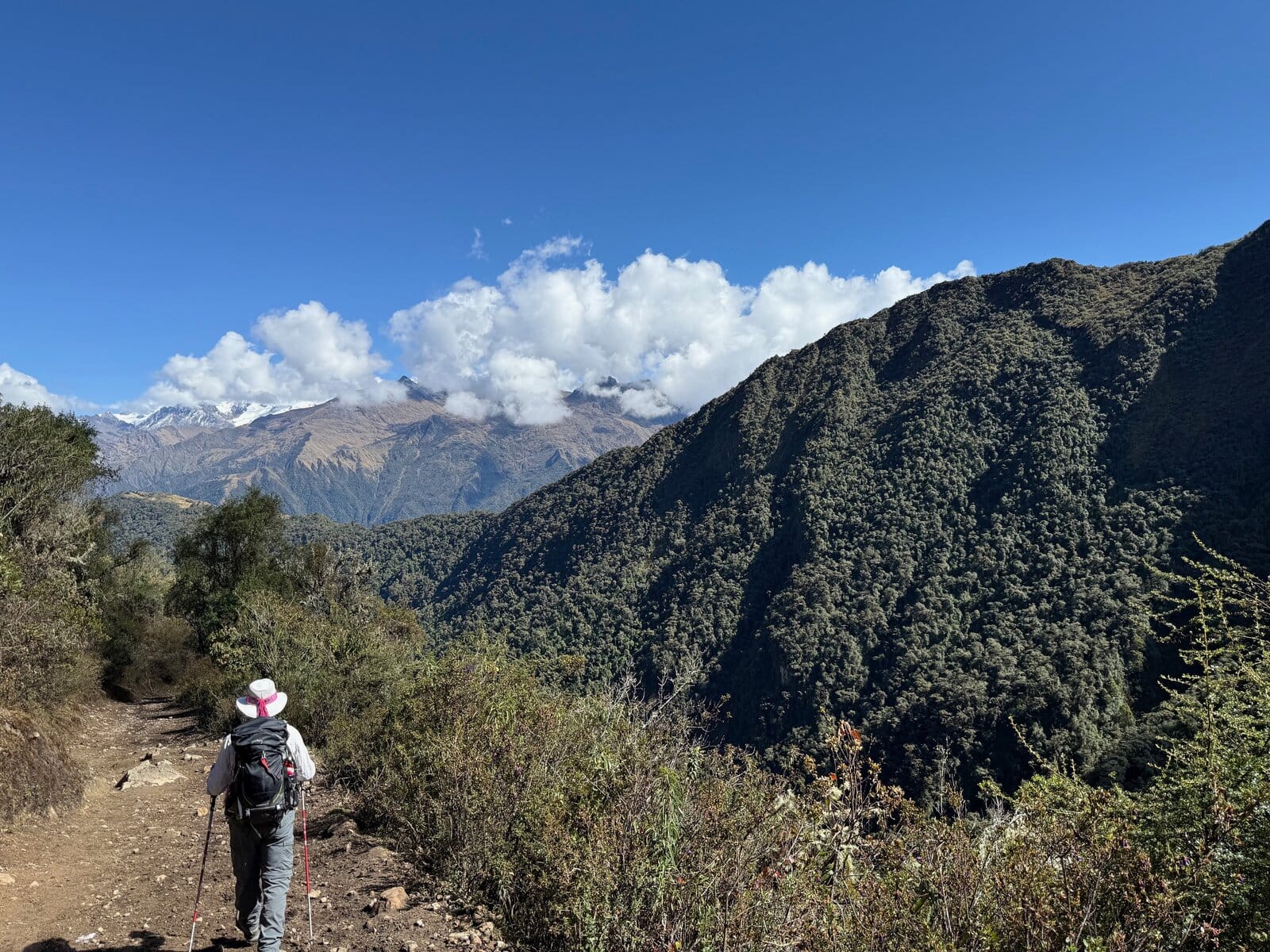
One reason why I loved the Salkantay trek to Machu Picchu so much is that the ecosystem changed every single day. Beginning in the highlands of the Andes with breathtaking views of the Salkantay peak and aquamarine glacial lakes, the hike continues down into the lush cloud forest surrounded by trees, shrubs, and flowers. There are orchids everywhere as well as hummingbirds and butterflies, and you can hear the roar of the Salkantay River below. It was quite a contrast from the day before.

While we hiked, our amazing guide Claudio stopped to show us the different orchids and shrubs that line the trail, and it was really hard to believe that the day before, we were hiking in wind, cold, and glaciers as we crossed the path.


We passed several Andean stone homes along the trail, and farms lined with flowers and greenery. As the day before, we were the only hikers and travelers around. In today’s world, that is a very rare gift. It was serene.


Crossing the river to reach our lodge for the night
Shortly after midday, we arrived at our lodge, the Colpa Lodge, located on a high promontory at the confluence of three rivers. We met the staff who prepared a famous Pachamanca lunch, a traditional Peruvian meal cooked below ground with hot stones that create a natural oven. The Pachamanca barbecue dates back to ancient times, and in Quecha it means “earth pot”. Inside were root vegetables such as potatoes of various varieties and different marinated meats. When they unveiled the meal, and we sat down to eat, we were overjoyed by its deliciousness.


Since we ended early that day, in the evening our guides Claudio and Gilbert put on some traditional Peruvian music and we danced, learned how to make real Pisco Sours, and enjoyed the company of our fellow travelers. There is something unique and special about sharing a journey on foot with strangers. By the end of the trip, we always leave as friends with our own special memories of the laughter, struggles, and rewards of such a magical trip. Perhaps that is why I love to do this kind of travel the best.


We had come so far and didn’t have much time left, but it was already an adventure to remember. The food, the lodges, the people, the views, and most of all the incredible staff at Mountain Lodges of Peru (Claudio and Gilbert, our guides, were fantastic!) made our trip a trip of a lifetime.
RUT! and the countdown has already begun for you’re next adventure,,, :}
The contrast from glaciers to lush cloud forest in just a day is amazing. And that Pachamanca lunch plus dancing in the evening and such a perfect mix of adventure and culture!
Thank you! It was pretty magical!
So pretty! And the lodges have looked amazing. So many treks, too little time (and money – haha)!
Yes I hear you! The lodges on this trip were absolutely amazing. I have never stayed at places like this in the mountains.
Pingback: Days 5 and 6 of the Salkantay Trek to Machu Picchu - Thirdeyemom