Is a Quechua Weaving Day Trip From Cusco Worth It?
A traditional Quechua weaving day trip from Cusco is worth every penny, and it stands out as one of the most meaningful cultural experiences in Peru. My daughter and I spent a half-day with a multi-generational weaving family in Amaru Village, about 1.5 hours northeast of Cusco, learning how alpaca and sheep wool is sheared, cleaned, naturally dyed, spun, and finally woven. The whole process, from raw fiber to finished textile, is done entirely by hand using techniques passed down for thousands of years. It was a beautiful, hands-on, and deeply moving experience. Here’s why you should do a day trip from Cusco to see traditional weavers.

Our amazing guide Martin holding Betsy’s little boy, Samir, who stole the show with his cuteness.
Last August, my daughter and I completed the Salkantay Trek to Machu Picchu, an unforgettable adventure through the soaring Andes to one of the most iconic treasures of the Inca civilization. While visiting Cusco, the historic heart of the Inca Empire, I was eager to experience another important part of Peruvian culture: the ancient weaving traditions of the Quechua people.
The Quechua people of Peru are renowned for their extraordinary textiles, colorful handwoven fabrics created and preserved for thousands of years in the Andes. More than simply beautiful souvenirs, these traditional Andean textiles are deeply connected to Quechua history, spirituality, and daily life. Because the Quechua language was historically passed down orally rather than through written texts, weaving became an essential way to preserve ancestral stories, mythology, cultural identity, and regional traditions.
Today, Quechua weaving remains a sacred art form passed from one generation to the next. Every pattern, color, and symbol woven into the fabric carries meaning, telling stories of family, nature, and life in the Andes. Visiting a Quechua weaving community near Cusco offered us a rare opportunity to learn firsthand about one of Peru’s most enduring and meaningful cultural traditions.
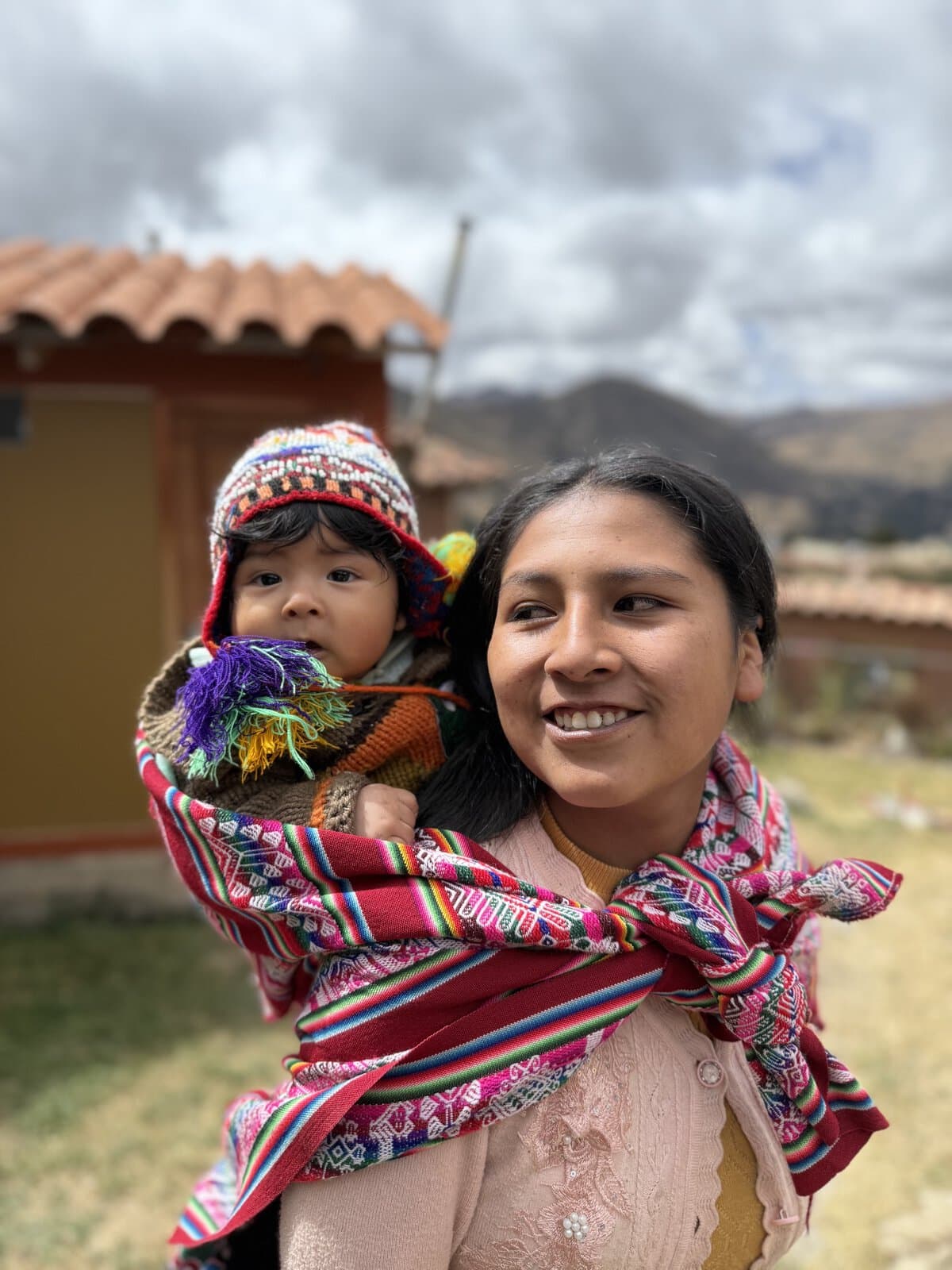
Beautiful mama and baby (Betsy and her son, Samir) who showed us how to thread wool – not an easy thing to do – with a baby on her back.