Na’atik Language and Culture Institute

The Best Way to Learn Spanish: Immersion, Culture, and Connection in Quintana Roo, Mexico

Finding the right Spanish language school can make all the difference in how quickly and how deeply you learn a new language. While apps and textbooks have their place, nothing compares to learning directly from native speakers, especially in an immersive, in-person environment. That’s where Na’atik Language and Culture Institute stands out. Nestled in the heart of stunning Quintana Roo, Mexico, Na’atik offers a unique opportunity to study both Spanish and Maya with local instructors who bring language to life through culture, conversation, and real-world connection.

Whether you choose to learn on-site or join their flexible online programs, you’ll experience a more meaningful, authentic path to fluency. Best of all, Na’atik Language and Culture Institute gives back to the local Maya community, making this program a win-win situation for both the traveler and the locals (which rates high in my books). While I’m a huge fan and daily user of Duolingo, nothing is better than practicing with a live person.  Learn more in this Q&A with Na’atik Language and Culture Institute founder Catherine Gray.

Na’atik Language and Culture Institute

A student group visiting Na’atik Language and Culture Institute in Mexico

CULTURE

Days 5 and 6 of the Salkantay Trek to Machu Picchu

Days 5 and 6 of the Salkantay Trek to Machu Picchu continued down the Santa Teresa River Valley, through ribbons of emerald-covered mountains, until we got our first view of Machu Picchu nestled into the mountainside. By this time in the journey, we were all fast friends, and our hiking was filled with laughter, gratitude, and friendship after sharing such an incredible experience.

It had been over 25 years since I first laid eyes on Machu Picchu, and I wondered how I would feel seeing it once again. I had heard over and over again about the challenges of overtourism to this UNESCO World Heritage Site and was curious to see how the Peruvian government was managing it.

Adventure Travel Peru South America TRAVEL TRAVEL BY REGION Trekking/Hiking

Salkantay Trek: Descending from the Salkantay Pass into a Cloud Forest

After crossing the Salkantay Pass (the highest point on the trek at 15,213 ft/4,636m), the next day was relatively easy with only a four-hour hike descending down into the cloud forest of the Andes mountains until we reached the Colpa Lodge at 9,414 feet/2870 m, where we would spend the night. It was our fourth day hiking the Salkantay Trek to Machu Picchu and we were halfway there.

We woke up to brilliant sunlight and sore legs after our long hike the day before over the pass. However, we were excited to continue our journey into warmer temperatures and felt the growing anticipation of getting closer to our goal.

One reason why I loved the Salkantay trek to Machu Picchu so much is that the ecosystem changed every single day. Beginning in the highlands of the Andes with breathtaking views of the Salkantay peak and aquamarine glacial lakes, the hike continues down into the lush cloud forest surrounded by trees, shrubs, and flowers. There are orchids everywhere as well as hummingbirds and butterflies, and you can hear the roar of the Salkantay River below. It was quite a contrast from the day before.

Salkantay trek, Peru

Adventure Travel Peru South America TRAVEL TRAVEL BY REGION Trekking/Hiking
The Salkantay Trek to Machu Picchu climbing up to Salkantay Pass

The Salkantay Trek to Machu Picchu: Hiking over the Salkantay Pass

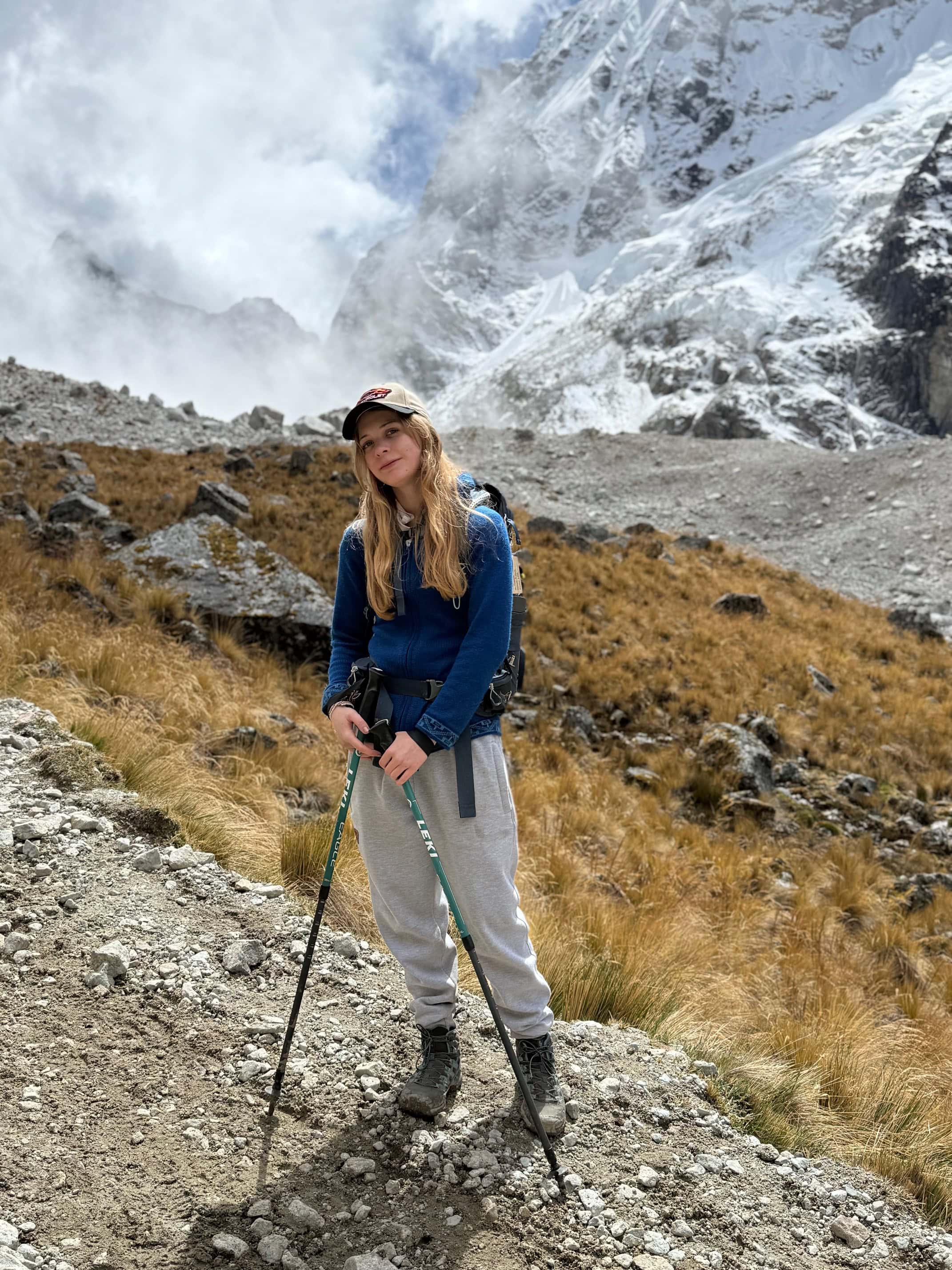
The third day of the Salkantay Trek to Machu Picchu is by far the most challenging day of the entire hike, taking you up a series of switchbacks to reach the Salkantay Pass, the highest point of the trek at 15.213 feet/4636m. This is the biggest test for hikers to see how well they have acclimatized to the high altitude. Yet in my opinion, it is one of the most rewarding days of the journey for its awe-inspiring views and feeling of accomplishment.

We rose early after a fabulous dinner at the Salkantay Lodge, Mountain Lodges of Peru’s hallmark lodge in Soraypampa. Since we were traveling with Mountain Lodges of Peru (MLP), we would be the only hikers ascending to the pass on foot, since MLP is the only outfitter that has accommodations in Wayraccmachay, a plateau located three hours after reaching the pass. There are no campgrounds there so everyone else hiking normally ascends the pass on horseback and then continues past Wayraccmachay to the next village, where we would hike the following day.

For us, it was magnificent because it meant we would have the entire trail to ourselves for two days.  As an avid hiker, this is a very special treat!

We started our hike at 7 am and were blessed with an absolutely stunning day. Had it been cloudy, we would have seen nothing.

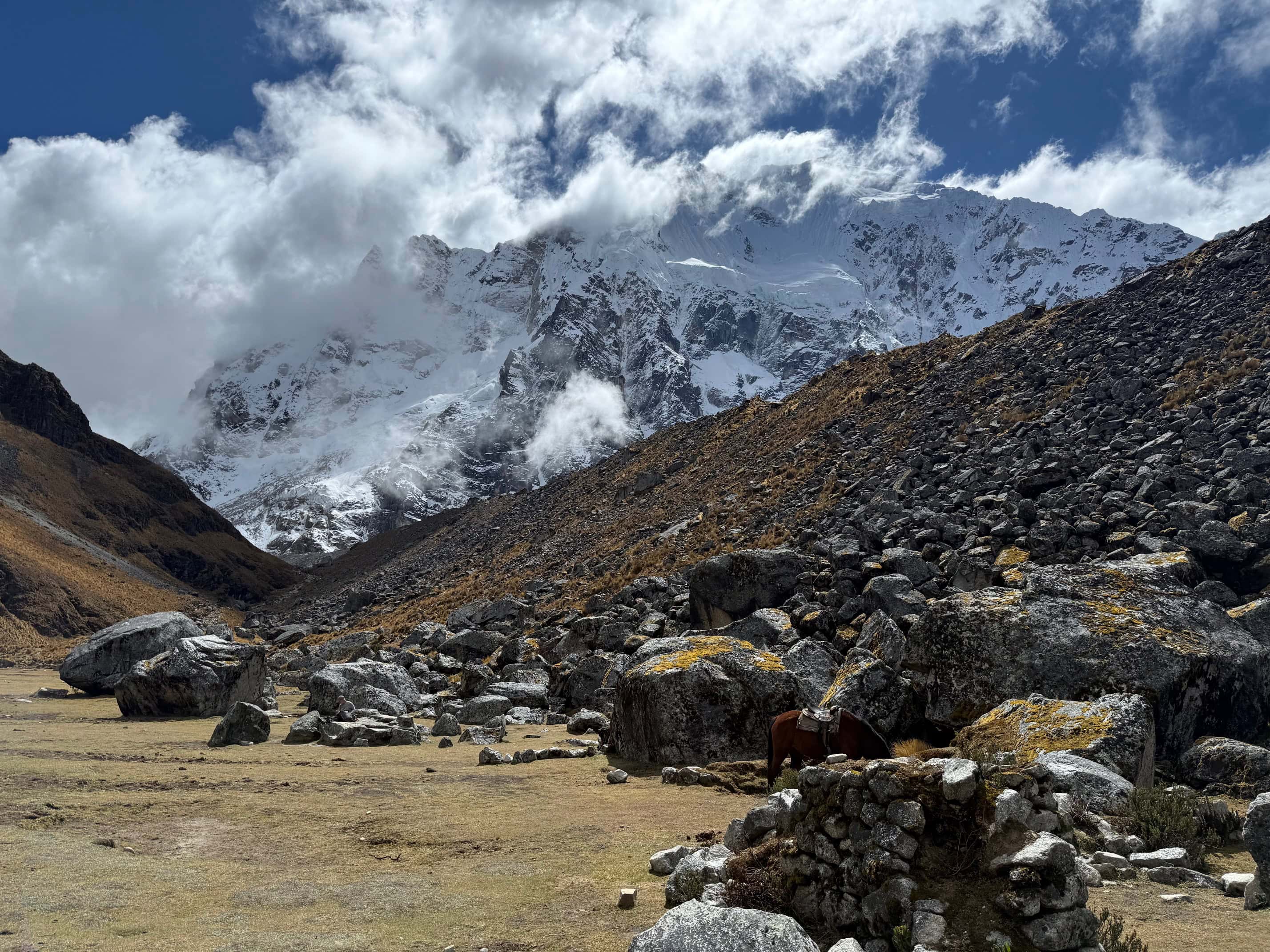
We were incredibly lucky to have surreal views of the snow-capped Humantay Peak.

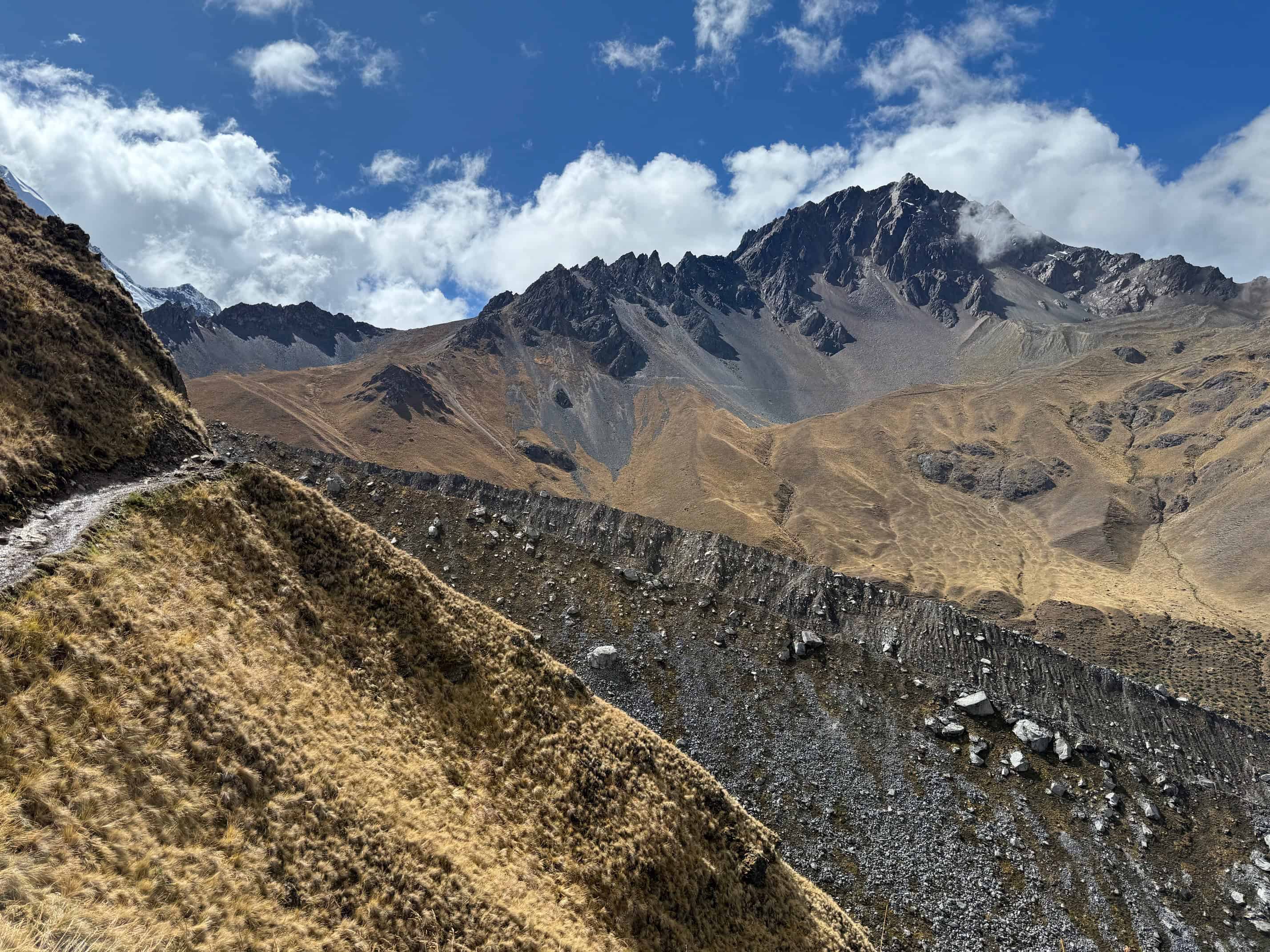
As we climbed up, our lungs pounded as we acclimatized to the higher altitude. We circled Humantay Peak, with stunning views of expansive plateaus connected by enormous boulders, and remnants of the Rio Blanco Valley.

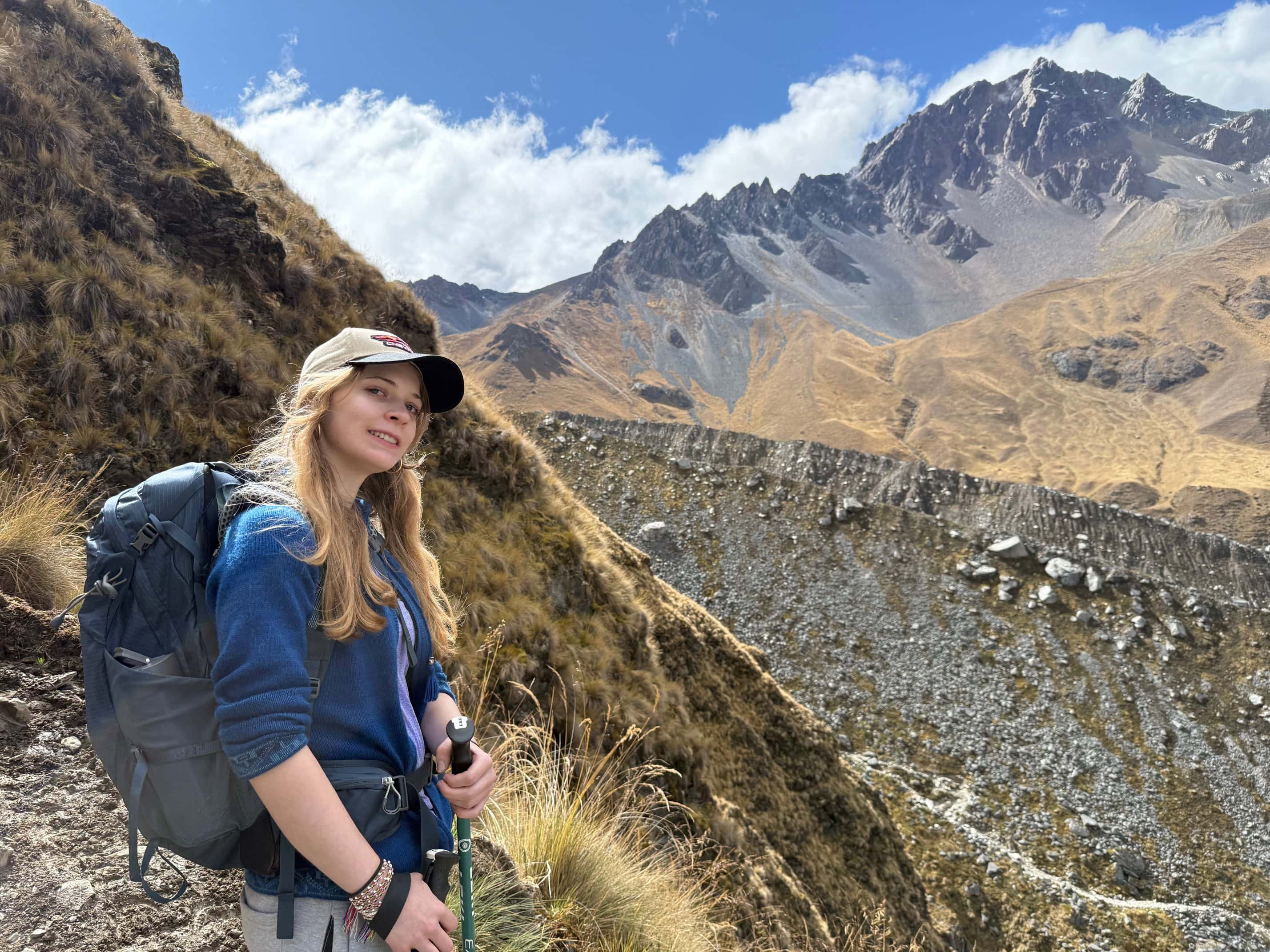
I felt really good and did not take altitude pills since I have not had any issues before with altitude. However, it was a challenge for my daughter as she had never been this high before and was struggling with her breathing. We took it slow, stopping frequently to catch our breath and take photos. The views were so spectacular that it helped.

The Salkantay Trek to Machu Picchu climbing up to Salkantay Pass

The Salkantay Trek to Machu Picchu climbing up to Salkantay Pass

The Salkantay Trek to Machu Picchu climbing up to Salkantay Pass

 The Salkantay Trek to Machu Picchu climbing up to Salkantay Pass

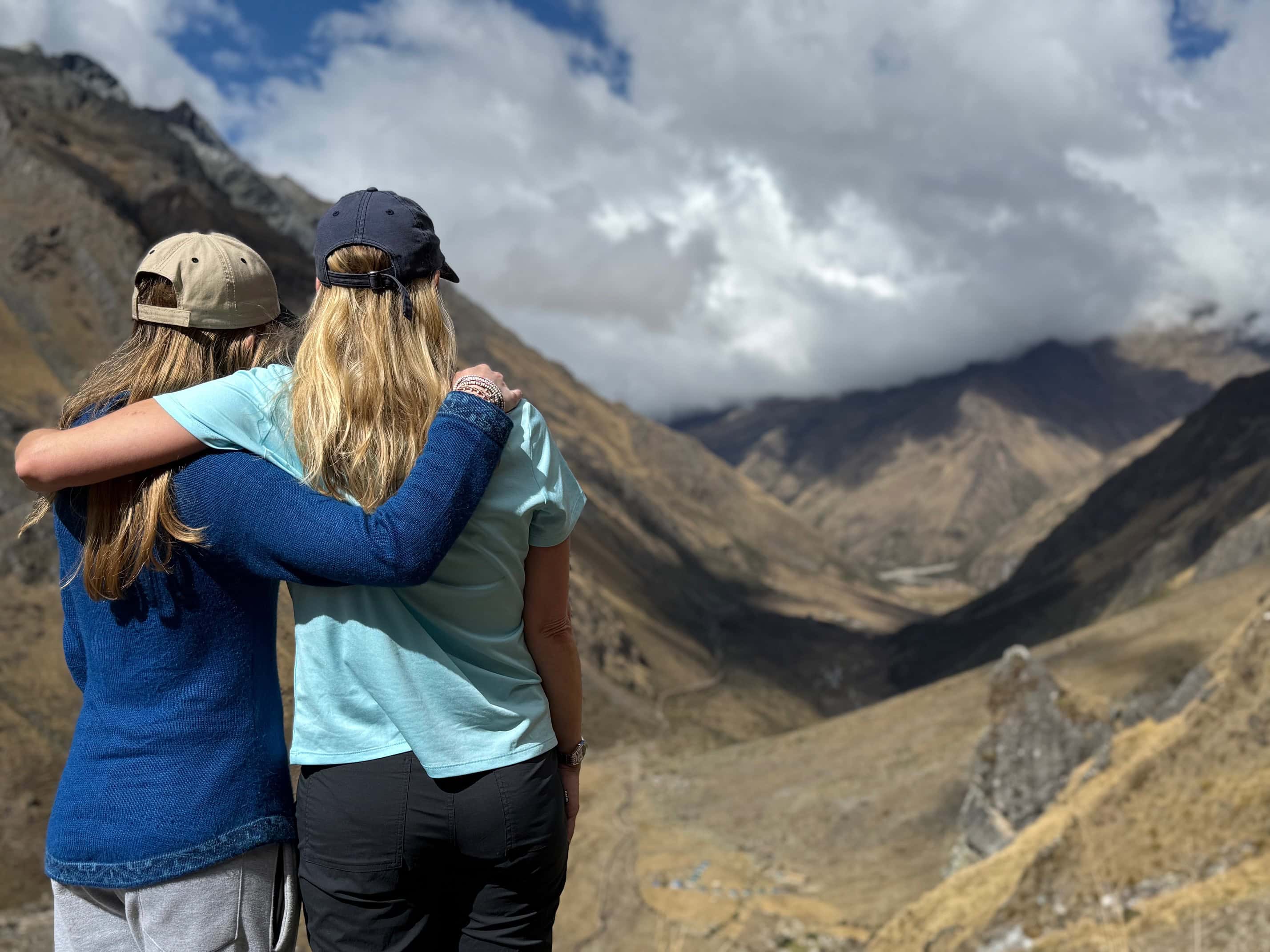
We reached the pass around 11:30 am, taking 4.5 hours (with a half-hour stop for a snack before the final push). It was an exhilarating feeling to stand at the top of the highest point of the hike with my daughter. I was so proud of her! Especially since she has been suffering from unexplained migraines and lightheadedness for several months. Even her doctor, treating her for this condition, was amazed.

The Salkantay Trek to Machu Picchu climbing up to Salkantay Pass

The Salkantay Trek to Machu Picchu climbing up to Salkantay Pass

Clouds coming over the mountains at the pass. We timed it right as it would cloud up soon taking away the stunning views of the mountains

After the pass, we continued for another three hours hiking through rolling hills and boulders to reach the Wayra Lodge at Wayraccmachay. This is the only place to stay here – there are no campsites. If you are not hiking with Mountain Lodges of Peru, you have to continue to the next village. This is why we saw the other groups on horseback going up the switchbacks to reach the pass earlier. If they hiked it all in one day, it would be extremely difficult and almost impossible to make it before sunset.

It had clouded up, so I didn’t take many pictures after the pass. We were tired as well and ready to finish the hike.

Around 2:30 pm, we saw the lodge off in the distance. I could hardly wait!

 The Salkantay Trek to Machu Picchu climbing up to Salkantay Pass

The Salkantay Trek to Machu Picchu climbing up to Salkantay Pass

This would be one of my favorite places we stayed during the hike. It was so isolated. I tried to imagine how hard it must have been to build this place, as there are no roads and it can only be reached on foot and with the help of mules.

If you go: We booked our trip through Mountain Lodges of Peru, the only outfitter who has lodges along the trail. From start to finish, they were absolutely incredible. I highly recommend them.

Adventure Travel Peru South America TRAVEL TRAVEL BY REGION Trekking/Hiking

In Minnesota, We Are Not Ok

Despite the trauma and tragedy of being under a federal ICE occupation for over two months, the immense need to restore our community will be here for months to come. Here are some ways you can help our immigrants and our community. 

With this piece, I hope to spread the awareness a little bit further. Keep reading to see how you can help. (Author’s note: This piece was first published on Going Places.

For the past month, I’ve been volunteering at a tiny church in South Minneapolis that is providing food for over 29,000 families and counting.

While looking around at the makeshift assembly line of rice, beans, pasta, canned tuna, mac and cheese, and soup on a recent evening, the church pastor said, “It looks like we’re responding to the aftermath of a hurricane here.”

I can attest – it does.

Humanitarian SOCIAL GOOD

The Crisis Happening in Minneapolis: Reflections and Action on MLK Jr. Day

The immigration crisis happening in Minneapolis is a crisis for all Americans. The past few weeks have been brutal in our city, and as of now, we have more federal ICE agents in the Twin Cities than the combined police forces of Minneapolis and St. Paul.

In honor of Martin Luther King, Jr. there is no time than ever before in my life that his words of justice and freedom ignite my soul. I was born in Minnesota and have lived in the glorious city of Minneapolis for the past 25 years. I am a true Minnesotan, and I have never been prouder of my community than ever before. The past month has been absolute chaos, fear, anxiety, and heartbreak for those of us living in Minneapolis and the surrounding suburbs. We have seen people we care about and love being attacked, detained, and even killed in our community. No one in this city is living a normal life – we all are in fear and traumatized by what is happening to us by our own government.

Yes, these words may sound harsh to those who support the federal government. But as the Star Tribune’s editor in chief Steve Grove aptly says,” No matter your view of immigration policy or enforcement, the chaos unfolding here should concern everyone”. For it is no longer simply about immigration, it is about human rights, justice, nd our freedom as a country. 

I have been peacefully protesting what is happening, following the law and using the Fourth Amendment to stand up to the injustices happening in my city and state. Many of my friends near and far have thanked me for using my voice to share information that is happening here on the ground in my city. There are so many horrific things happening that I hear about daily from my friends, neighbors, and community that are not being reported. I am trying my best to curate the news I read, examine, and hear on my Instagram stories. Yet it is a struggle to keep up. I’ve attended trainings to know my and our immigrant neighbors’ rights, have marched in the bone-chilling winds and cold of a Minnesota winter. Yet I know that I can and must do more.

In effort to get a better picture of what is happening in my city, I will share a few resources here on my blog for those who want to learn more and participate.

First, I’d like to share some content from this article written by Star Tribune’s Editor in Chief, Steve Grove: “Minnesota’s Crisis is America’s Crisis:”

Here are a few points that Grove makes:

“As the crisis between federal law enforcement and people in Minnesota has continued. No matter your view of immigration policy or enforcement, the chaos unfolding here should concern everyone.

The view from Minnesota is this: the stunning set of events in our state is calling into question some of the basic principles of life in America.

A quick summary of the most serious developments:

This gives a very basic summary of what is happening on the ground daily in Minneapolis. To read more, click on his article here.  

These are some of the stories I’ve been sharing on my Instagram account (@thirdeyemom).

What I love about this article is the call to action. This content again is copied from Grove’s article.

How you can help

Per Grove, “There are lots of ways to help Minnesota right now, but if you’re looking for ways to support journalism specifically, here are a few things I shared with readers in my Publisher’s Note this week”:

  • Pay attention to the coverage. Simply spending time with our report is an act of service. It can be tempting to ignore the media blitz, shrug off inconvenient truths, or let it all wash by you and hope it goes away. But reading local news coverage, from us and others, makes a difference. An informed public is a powerful force in our democracy.
  • Amplify great journalism. Please consider sharing our coverage across social media, group chats, or any other communities you’re a part of – it makes a difference. The more we can amplify the truth, the better we can fight back disinformation.
  • Donate or subscribe – to us or others. A free press comes at a real cost. We’re keeping as much of our journalism outside the paywall as we can right now. You can donate to the Minnesota Star Tribune Local News Fund, or to any other local media outlet you trust.

A huge thank you to the Star Tribune for your coverage of this crisis and for keeping a lot of these stories free for everyone to read, access, and make their own decisions.

My second shout-out is to MPR (Minnesota Public Radio) and the work of photojournalist Ben Jovland (@benjovland). I have been following MPR throughout it all to learn as much as I can about the situation around me. Their reporting has been incredible.

For other national outlets, the coverage has been ok. There has been a tremendous amount of fake news and AI-generated videos out there, so I’ve learned to be careful and fully research what is happening before jumping to conclusions. This is a highly divisive time in our country. Perhaps one of the most divisive times I ever have ever known. That alone is heartbreaking to me. We are not only losing our community, but we are losing our freedom and our country.

However, like Martin Luther King, Jr., I still have hope. No matter how bleak the situation, we still have our freedom of speech and beliefs. We still have the right to stand up for what we believe is right and wrong. Until that is taken away from me, I will not be silenced.

We in Minneapolis are still traumatized from the murder of George Floyd, followed by the politically-motivated murders of our elected officials and the school shooting at Annunciation right down the street this past Autumn. And now we are dealing with one of the largest threats to democracy we have ever experienced at our doorstep.

Despite the cold, legal citizens are being detained and are being taken in brutal ways often at gunpoint and in this case in his underwear at -0 temperatures.

Yet I have faith. We as Minnesotans are resilient, strong, and we persevere in our long Minnesota winters and our kindness. We will resist.


If you want some hope to see what our community can do to heal after trauma, read my post here: George Floyd Murals of Minneapolis: A Demand for Justice, Hope and a Better Humanity.

Screenshot

SOCIAL GOOD
Lake Humantay, Cusco, Peru

2025 A Year in Review

I haven’t done one of these reflective posts in a while, but for some reason, as I sit inside by a warm fire and the snow blankets the trees outside, I feel compelled to write. As with every year in life, 2025 was one of plenty of highs and lows. Yet, it was also a year of immense change and transformation, as I transitioned from being the matriarch at home to an empty nester. Combine that with a lot of travel and another new hip, and it certainly has been a year for the books.

Lake Humantay, Cusco, Peru

Just as it has been physically tiring (with the hip replacement surgery and lots of hikes), it has also been emotionally draining. With painful complications following my hip surgery to my mother’s unexpected illness, which nearly brought me to my knees. My daughter’s last few months at home until she left for college on the other side of the country, and my own deeper dive back into my career. Then last but not least, the emotional distress that this last year has caused me to be angry, deeply sad, and devastated at the direction that our country has taken. One filled with racism, misogyny, and entitlement, and greed, along with everyday violence, including a school shooting killing two innocent children right down the street from my home. It is easy to curl up in a ball and cry, but that is the easy way out. Not doing anything, letting this happen, would be a hypocrisy to everything I believe in. So I fight. At least we still have the freedom of speech (somewhat) in this country and the ability to protest and stand up for what we believe in. At least for now. I’ve been to many countries where it is not possible, and I feel fortunate to have this basic human right still.

It has been a lot, but I feel this time around, I’ve taken the highs and lows in stride and grace. I’ve learned after all these years how to manage my emotional anxiety that has come and gone throughout the years, and I have found ways to ground my racing, wanderlust soul. It hasn’t been easy – but then again, perhaps now at age 54, I’ve gained some wisdom throughout it all. As much as I miss the hustle and bustle of the kids, having more time to myself and less stress has been amazingly therapeutic. I’ve finally learned to calm down, embrace the day, and take walks with no phone, no sound, and just spend my time noticing. With all the chaos in the world (not to mention the 24/7 news frenzy of horrific daily news), it is a must to slow down. Turn off the noise and dig deep into the fleetingness of life. For each day, each month, and each year seems to go faster and faster.  It is up to us to take a breath.

CULTURE
Lake Humantay, Cusco, Peru

The Salkantay Trek to Machu Picchu: Hike to Lake Humantay

Salkantay Trek: Hike to Lake Humantay (2026)

What Is the Hike to Lake Humantay Like on the Salkantay Trek?

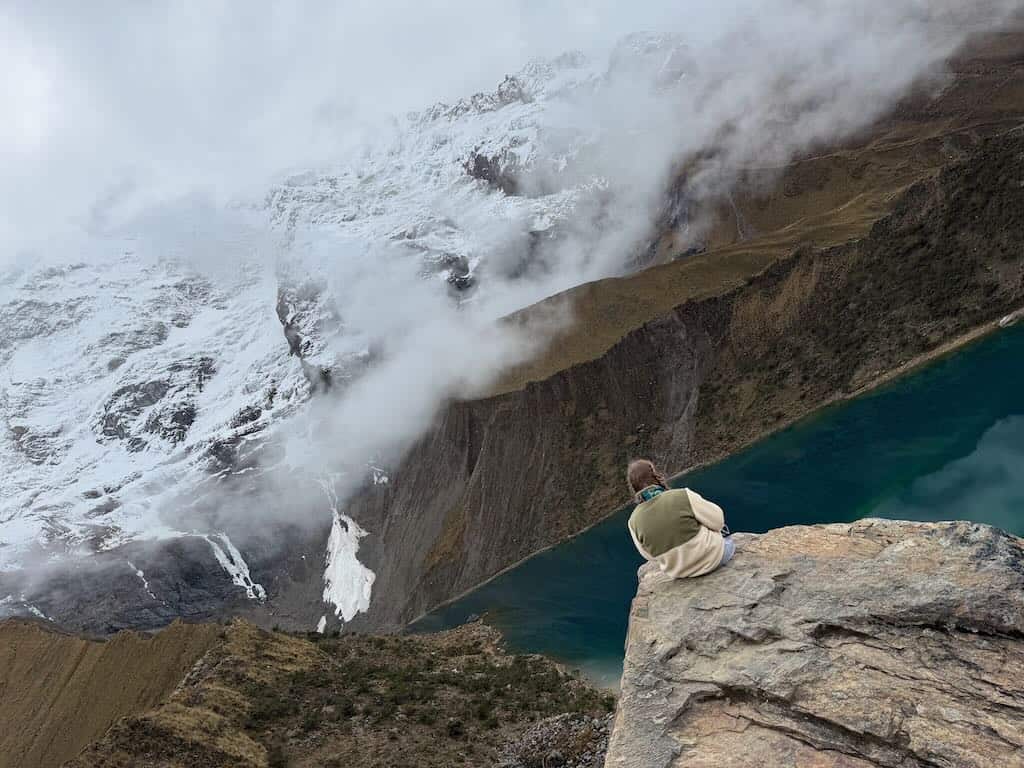
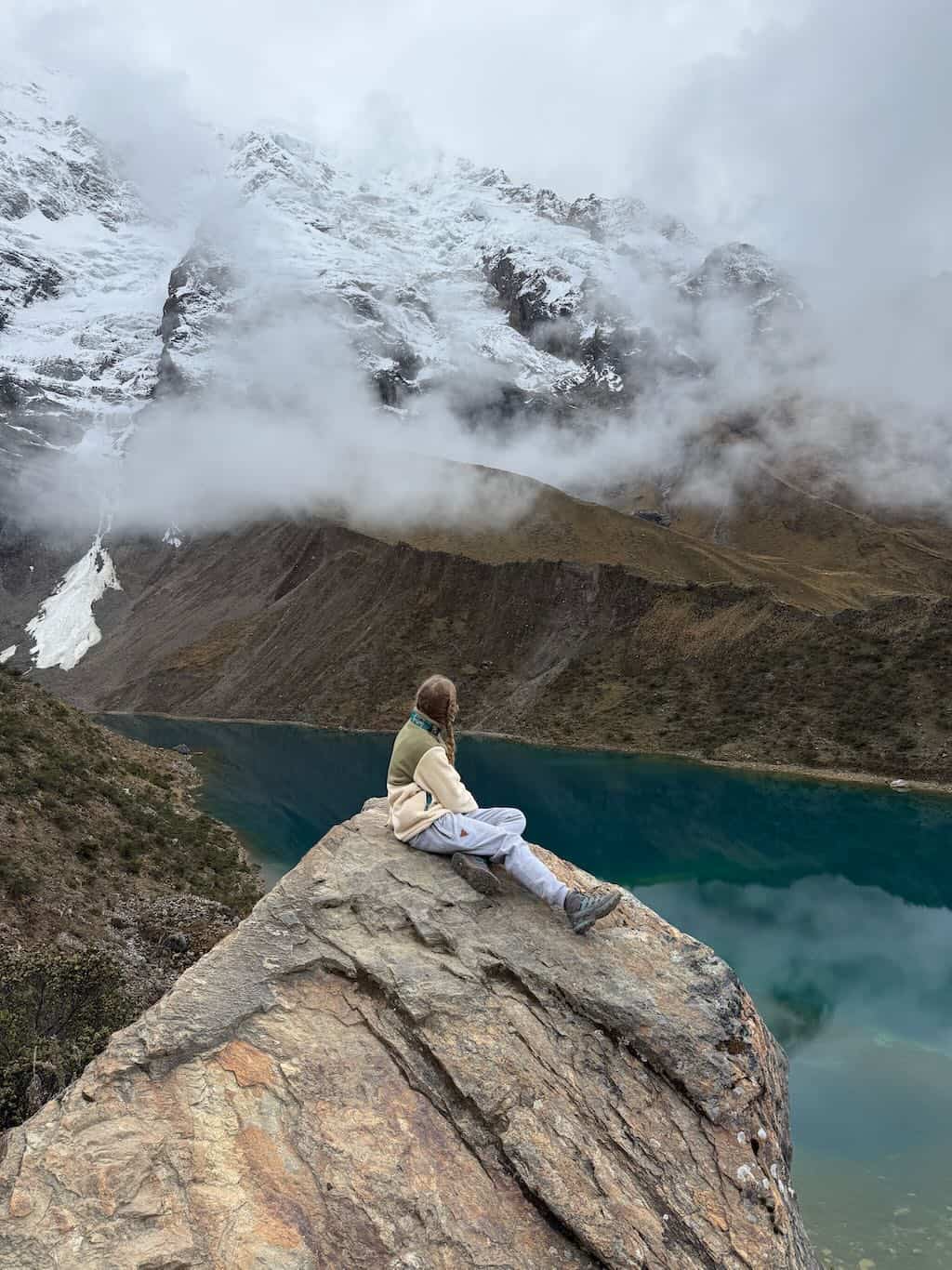
The hike to Lake Humantay on Day 2 of the Salkantay trek is a moderate, roughly 4-hour round trip that climbs from the Salkantay Lodge at 12,690 feet (3,869m) up to the turquoise glacial lake at 13,780 feet (4,200m). The ascent is steep and slow going at altitude, but the payoff, a glistening lake beneath the Humantay glacier, is genuinely breathtaking. Starting early is essential to beat the crowds of day-trippers arriving from Cusco. It was one of my favorite days of the Salkantay Trek to Machu Picchu.

On the second day of our journey along the Salkantay Trek to Machu Picchu(opens in new tab), we rose early for our hike to Lake Humantay, a picturesque turquoise glacial lake located at the foot of the Humantay glacier in the Cusco region of Peru. We were amply warned by our guides that the hike to Lake Humantay is one of the most popular day trips from Cusco (which accounts for the endless series of white vans filled with sleeping passengers that we saw on our drive to Mollepata the previous day).  Many tourists come to celebrate the glorious colors of Lake Humantay, some hiking up the steep terrain from Soraypampa, while others ride horses. Unfortunately, it has also become a popular place for staged Instagram shots and other “influencers” who brought popularity, traffic, and overtourism to this beautiful natural place. If we wanted to see it in its glory, then we had to start early, and our guides were right.

Lake Humantay, Cusco, Peru

Adventure Travel Family Travel Peru South America TRAVEL TRAVEL BY REGION Trekking/Hiking

The Salkantay Trek to Machu Picchu: En Route to Soraypampa

Back in August, my daughter and I went on an incredible adventure together in Peru, completing the Salkantay Trek to Machu Picchu. Peru had been a place we were planning to visit in 2020 before the pandemic canceled our plans. We were finally able to do the trip together a month before she left home for college, and for me, after recovering from my second hip replacement surgery and becoming an empty nester. It was spectacular.

Morning sun looking out from the Salkantay Lodge

Adventure Travel Family Travel Peru South America TRAVEL TRAVEL BY REGION Trekking/Hiking
Icalama, Chile

Ancestral Paths to Mountain Biking Trails in Icalma, Chile

A small dedicated group of local people in the remote Aracauria region of Chile has turned ancient ancestral paths into sustainable tourism through mountain biking as a way to keep their indigenous traditions and culture alive. Here is their story. Note: This article was written by me for the Chile Tourism Board and was published on GLP Films. 

Beneath a towering canopy of ancient Araucanía trees, Victor Abarzua and Aldo Torres snap on their helmets and mount their bikes. As they glide down the age-old trail, sunlight filters through the forest, casting their silhouettes in a golden ray of light. Every twist and turn of the ride feels like magic. For this forest is not just a path to be ridden; it’s a living history, its roots entwined with the stories of the Mapuche people and the sacred wisdom of the past. As their tires carve into the earth, a plume of dust rises like smoke, drifting toward the treetops. Adrenaline surges through them, but so does a deep sense of reverence. Here, mountain biking becomes more than a sport—it’s a ritual, a celebration that bridges past and future, and builds connection between man and nature.

For the past ten years, Victor has been working with the local Indigenous Mapuche community to transform Icalma, a relatively remote and unknown region of Chile, into a sustainable tourism destination offering Mountain biking as the primary tool. It has not been an easy journey as Victor came to Icalma—a community that is 99% Indigenous—as an outsider and had to take time to develop relationships and, more importantly, to build trust. For Icalma is not just any place; it is a sacred place, one that is worth protecting, adding an extra layer of complexity to sustainably and responsibly developing tourism in this part of Chile.

Mountain biking in Icalma Chile

Photo by Hass Salum/GLP Films

Chile South America TRAVEL TRAVEL BY REGION

Hiking the Kumano Kodo: The last leg to the Nachi Grand Shrine

The last day of our hike along the Kumano Kodo was from the remote village of Koguchi to Nachi Taisha, one of the three Grand Shrines of the Kumano Kodo and the most stunning. It ended up being a grueling hike, taking 6 long hours with the first two hours being straight uphill. (Total hike: 9.2 miles/14.8 kilometers).

The hike ended with a bang and was much harder than I anticipated.

For some reason, this was harder than the 8.5-hour hike two days before. The weather was becoming a bit more humid (thank goodness it was only early June), and the incline up was much more difficult than it looked.

While I struggled through the tough, humid uphill grind  (periodically wiping the sweat dripping off my face with my shirt),  wy kids and husband whisked by me, not one bit bothered. I confess I was a bit grumpy, but decided to give myself some grace. I was 53 years old and had just had not one but two major surgeries in the past two years. My last surgery – my second hip replacement –  was only six months ago, and I was still not back up to my prior fitness levels before.

Asia Family Travel Japan TRAVEL TRAVEL BY REGION Trekking/Hiking

Hiking the Kumano Kodo: Ukegawa to Koguchi

The fourth day hiking the Kumano Kodo trail was a recovery day and only 13.2 km/8.2 miles. Our legs were sore but our souls were refreshed after a night at the Yunomine Onsen, where we dipped in the calming hot waters of the hotel’s onsen and enjoyed a traditional 12-course Japanese meal.

The hike today involved a short bus ride to the Kogumotori-goe section of the trail, where we had perhaps one of the best views of the velvety green forested mountains. The look out area is called Hyakken-gura looks out onto the “Kumano Sanzen Roppyaku-ho” – a local expression which literally translates as the “3,600 peaks of Kumano” per our guidebook.

A small Jizo statue guards a stunning backdrop of the Kumano mountains

Since much of the hike is through thick forests, we did not have many views of the mountains except on this day. The word “gura” means “high cliff,” and from the Hyakken-gura we could see velvet green-covered peaks as far as the eye could see. It certainly was magical.
Adventure Travel Asia Japan TRAVEL TRAVEL BY REGION Trekking/Hiking