Eagle River, Keweenaw Peninsula, Michigan

Health and Travel Woes: How to Treat Chronic Hives (Urticaria)

My Eight Weeks With Chronic Hives

Important note: I am not a doctor! This is just my personal experience with chronic hives. Please, if you are experiencing a bad case of hives, seek medical attention immediately, as it can be life-threatening! If you have any of these symptoms: trouble breathing, throat tightness, swelling of the lips or tongue, dizziness, or vomiting, call 911 immediately.(opens in new tab)

It all began with an allergic reaction to a drug (Doxycycline)(opens in new tab) I was prescribed, ironically to treat a skin rash on my face, called Perioral Dermatitis(opens in new tab) (inflamed itchy rash on face near mouth).

I have always had sensitive skin and allergies to certain ingredients in medications and fragrances, and I have unpleasant reactions to bug bites and bee stings. Normally, for me, the first sign of an allergic reaction to a medication or ingredient in a product is a cluster of small, red, itchy hives, usually on my chest, back, or midsection. For bees and sandflies, it is worse. Insane, rapid swelling to the point where, once, when I was in remote Chile for work, I had to use a horse tool to cut off my wedding ring to save my finger!
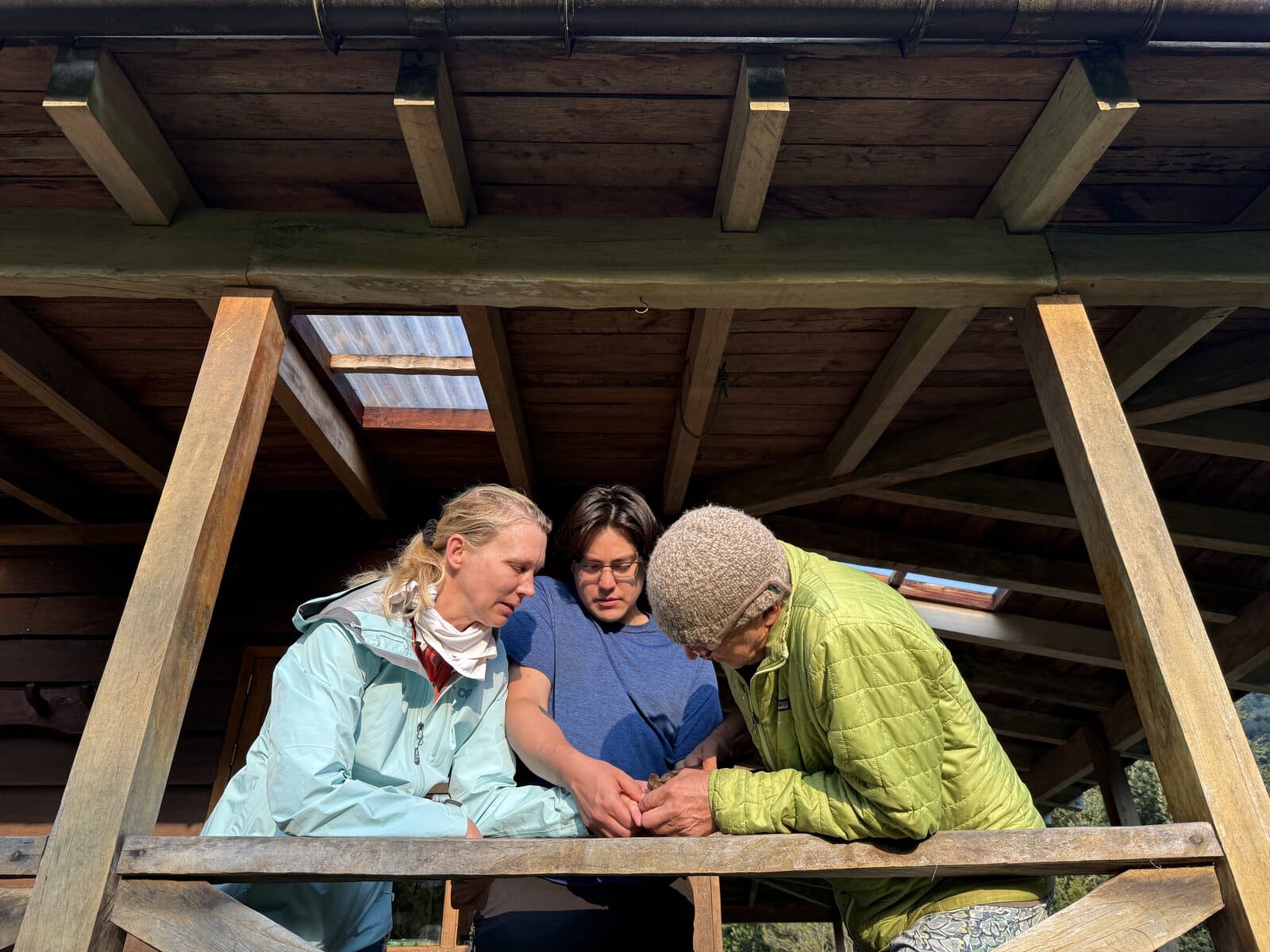
Getting my room removed by a horse tool in Chile after a yellow jacket sting

Getting my room removed by a horse tool in Chile after a yellow jacket sting

Seasonal allergies are something I deal with every single spring, making it miserable to do the one thing I love after a long, cold Minnesota winter: be outside! But I do it anyway, and I leave the windows open for fresh spring air and breathe in the lovely fragrant tree pollen from blossoming crab apple trees and lilacs despite the negative consequences. Usually by late summer, the headaches, runny nose, itchy eyes, and throat are gone.  I can finally stop taking daily allergy pills, nose and eye sprays, and be done with it.

How hives can upend your life

But the hives are another thing. They can attack at any time, due to an allergic reaction to food, medicine, ingredients in products, and sometimes even stress.

Normally, they go away in a day after taking Benadryl and stopping the offending medication or product (if I am aware of what it is that is causing the allergic reaction). This time, however, it was different. What started as a drug allergy while filming on location for my job in Northern Europe turned into a full-blast 8-week mess of itchy, prickly masses of quarter-size hives and welts, flaring up after walking outside in the heat, humidity, sleeping, or even taking a shower!

It was like a ridiculous, agitating mess that took five doctor visits, lots of trial and error on medications to stop the hives, hyperactivity from too much medicine making it hard to focus, and worse, insomnia for hours on end with no relief.

Finally, after eight long, miserably itchy weeks, the illness had run its course through my body. I am hopefully hive-free but am aware that it could come back, and if it does, this time I will be prepared. During these eight long weeks and five different doctor appointments, I did a fair amount of my own research to try to figure out what was happening, how to treat it, and why.

While I am no doctor (Please, if you are experiencing a bad case of hives, seek medical attention immediately, as it can be life-threatening! If you have any of these symptoms: trouble breathing, throat tightness, swelling of the lips or tongue, dizziness, or vomiting, call 911 immediately.(opens in new tab)

With chronic hives, also known as urticaria, the immune system goes into overdrive, and at times I felt like my own body was attacking itself. For me, heat, humidity, stress, and fatigue made it the perfect storm for chronic hives.

What Is Chronic Hives (Chronic Urticaria)

Per the American Academy of Dermatology, Chronic urticaria(opens in new tab) are hives that persist or recur for more than 6 weeks. If no specific cause can be identified, it may be called chronic spontaneous urticaria (CSU). For me, while it cannot be fully proven without being tested by an allergist, my hives started after an allergic reaction to  Doxycycline (opens in new tab) a low-level antibiotic prescribed by my dermatologist, ironically to treat a skin rash on my face, called Perioral Dermatitis(opens in new tab) (inflamed itchy rash on face near mouth).

I have had allergic reactions to medications before, so I knew the signs: 24-hours after taking the medication, I normally break out in tiny itchy red hives. But at the time I realized that I was having a reaction, I was traveling in Lithuania and Germany for work. The itching from the hives was less than the horrible itching from the face rash. So I took my chances and would visit the dermatologist once I was back home in early July.
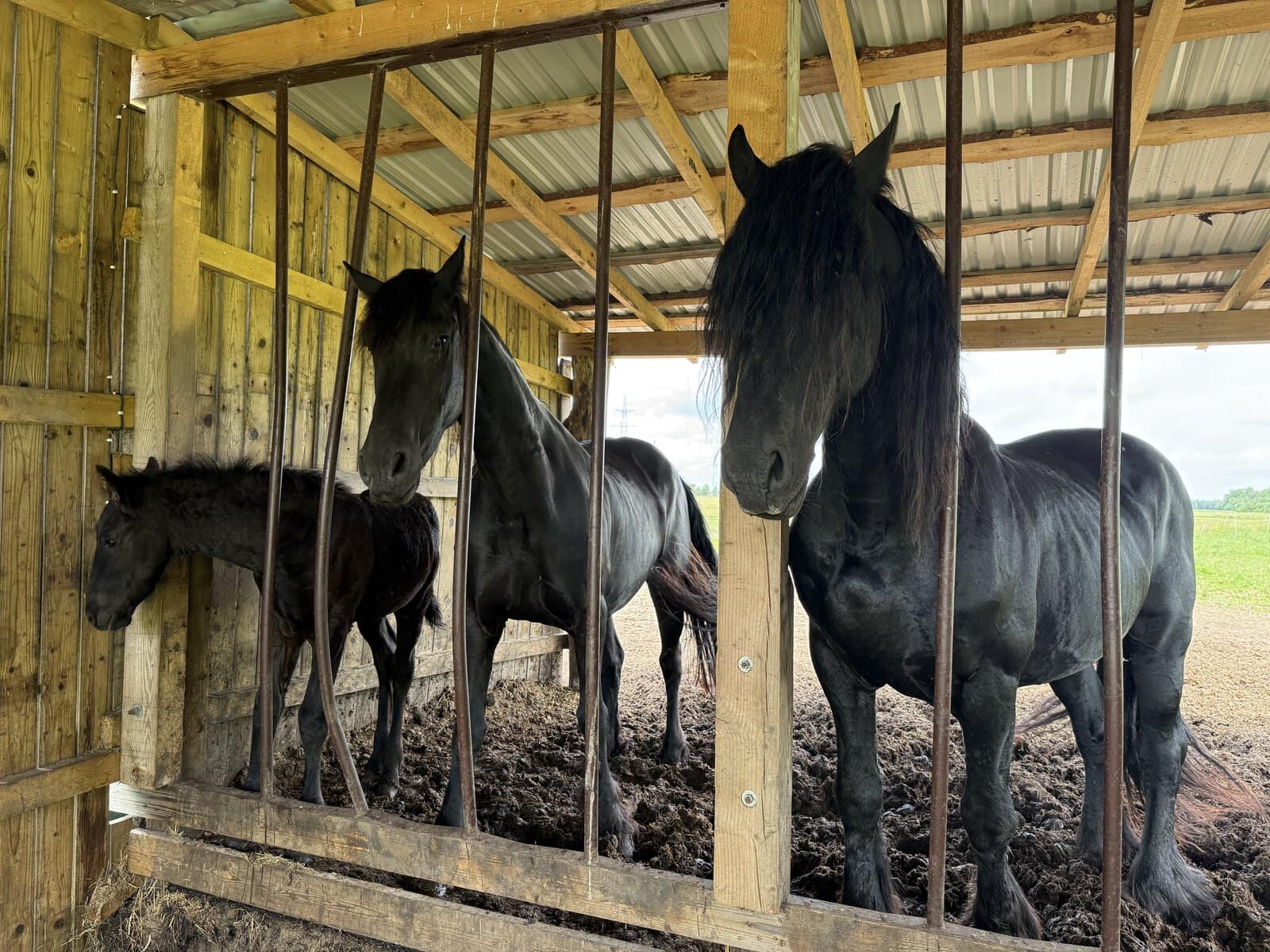
Being on location filming in Lithuania and East Germany in June had many perks like these gorgeous horses. Yet long, demanding hours of work.

How the Hives started

First started as red polka dots of itchy little hives on my chest, stomach, back, and under my armpits and bra area. This continued for two weeks while I was traveling with work. Once I got home to the US, I quit the medication and went to the dermatologist (visit #1) and was prescribed prednisone (a steroid that can make you hyper) and took two Benadryl a day.  Meanwhile, life was hectic, stressful, and we were experiencing unusually hot, humid weather for weeks (reaching 100 F/40C ). The hives persisted, and I was back at the dermatologist again looking for answers (doctor visit #2)

The Perfect Storm: Heat, Humidity, Stress and Fatigue

“It was the perfect storm,” the dermatologist informed me. “Heat, humidity, fatigue, and stress” all push up your adrenaline, combined with the prednisone. It was making me crazy! Already a high-energy human, at the age of 54 I felt like I could run a marathon and was on fire. I was super productive with work, accomplishing tasks faster than ever, yet my sleep was a nightmare. I felt so hyper at times it hurt, and at night I’d wake up at 3 am with hours of insomnia. It was terrible! I was so exhausted that I’d hit my rut around 1 pm after lunch and have to sleep for an hour or so to make it through the day. Then, if I got stressed out, went on a walk or took a shower, my body would reinforce this vicious cycle and my hives would flare up.

Trying to Treat the Hives

By week five, I felt I could hardly stand it anymore. I had a headache, my skin felt like sandpaper, and I was exhausted. So on a Sunday afternoon, I went straight to urgent care for doctor visit number 4. (I had snuck in another dermatologist visit, but they told me to suck it up). The hives continued to get worse and more frequent. At this stage, I moved to flare-ups of quarter-sized groups of hives which would come after showering, walking outside in the heat and humidity, and stress. Near the end of my bout with chronic hives, the outbreaks were giant, patchy, itchy welts. I felt my skin prickle all the way up to my hairline. And I’d have a huge headache and so much fatigue that I would have to listen to my meditation on Insight Timer and then nap every day after lunch. Chronic Hives were taking its toll on my life! I couldn’t do anything without itching. I walked around the house unshowered and wearing ice packs to relieve the itching. Sometimes it would feel an itch, and there were no hives visible.  I was a train wreck!

The urgent care doctor explained a little bit more about what was happening to my body. My immune system was in overdrive, and I had to calm it down. He recommended taking the antihistamine Zyrtec -24-hour strength twice a day (morning and night) and combining it with 2 doses of 20 mg (morning and night) of Pepcid (famotidine). I was surprised to learn that Pepcid, which is primarily an acid-reducing medication, is also an H2 antihistamine. Because histamine contributes to allergic reactions, famotidine is sometimes used alongside an H1 antihistamine (such as cetirizine, loratadine, or diphenhydramine) for certain allergic symptoms, particularly hives/urticaria.

I was also prescribed another round of prednisone (look out world) along with hydroxyzine ( a prescription antihistamine that can be used to treat itching associated with hives (urticaria). It can cause drowsiness. I was super hyper from the prednisone, and I felt like I was flying and soaring and 20 years old again. It was problematic as it started insomnia where I’d wake up in the middle of the night and toss and turn, restless for hours. I was so exhausted I felt dizzy and had rings around my eyes, which prolonged the hives since fatigue, stress, heat, and humidity are known to be stressors that keep the flare-ups going.

The Role of Stress and Lack of Sleep

At the same time, stress played another role. My body is telling me something. Too slow down. Skin is the largest organ we have. My immune system was attacking my body at this point. I needed to calm down and relieve stress, yet the things I normally do to de-stress (like exercise, take a walk, or a shower or bath) made the hives worse.

Furthermore, having two stressful, sad events happen at the same time did not help.  I lost someone I knew who was my age, and another friend’s brother received some very difficult news.

This put it all into perspective. Life is short. What matters most is these four things: Health, Happiness, Love (family), and Community (friends). Everything else – the crazy state of our damn world, our horrible politics, the sadness and tragedy of climate change -keeps me up at night and terrifies me, yet for the most part it is out of my control.

Finally, Eight Weeks Later

Finally, August 15, almost 8 weeks later, my bout with chronic hives had come to an end. I had been to the dermatologist four times (seeing a different Nurse Practitioner who recommended a different way to treat it), then urgent care, and a last follow-up with my general practitioner. He saved my sanity that “Yes, he has seen this happen before (I wasn’t crazy)” and while stress and the other factors may have had a role in my illness, it is often hard to nail down.  I could go to an allergist for yet another series of testing but at that point I simply am worn down. I will save that for another time if I get this horrible condition again (which I surely hope not!).

What I Learned

I wrote this piece because I was looking for answers on why I was getting hives, what to do and how to treat them. I was extremely frustrated and wanted to learn as much as possible about this illness that I had never heard of before. In my searching online, I found some helpful things and many other unhelpful tidbits. My hope is this post is somewhere in between and points others in this situation in the right direction.

For me, I did the following to relieve and get rid of chronic hives:

  • Stopped the offending medication that caused the initial allergic reaction (thankfully it was pretty obvious what started my hives and sometimes it is not).
  • Visited my dermatologist ASAP
  • Began a series of medications such as prednisone, Zyrtec and Pepcid combination for a powerful antihistimine, and added in hydroxicine to help even more. It was a lot of meds!
  • Took naps
  • Avoided showering or bathing and only did cold sponge baths
  • Avoided being outside when it was hot
  • Avoided sweating
  • Tried to reduce and manage stress for things within my control
  • Visited the doctor who understood everuthing happening to my entire body besides my skin.

Check out the American Academy of Dermatology Association’s list of 10 ways to get relief from chronic hives(opens in new tab). The first thing they recommend is to make an appointment with a board-certified dermatologist. For me, my hives started because of going to the dermatologist for a skin rash and turned into chronic hives after I quit the aggravating medication and the “perfect storm” of high heat (we had weather up to 100 F/40C for days on end), high humidity, stress (way too much going on to handle), and fatigue.

A Wake-Up Call to Slow Down

This bout with 8 weeks of chronic hives is a wake-up call to slow down. To remember to stop and breathe. To be present and to mindful. In today’s crazy world, it is hard to remember these rules of mindfulness and being present. Yet it is essential to embrace the fleeting speed of life.

Important Medical Note

I am not a doctor, and if you are experiencing hives, please seek medical attention immediately, as some hives and allergic reactions can be life-threatening. What to look for:

  • Trouble breathing: Wheezing, shortness of breath, or chest tightness.
  • Swelling (Angioedema): Puffy eyes, or swelling in the lips, tongue, mouth, or throat.
  • Low blood pressure: Feeling very weak, dizzy, lightheaded, or fainting.
  • Stomach distress: Sudden severe belly cramps, vomiting, or diarrhea.
  • Sense of doom: An intense, sudden feeling of panic or impending danger.

SOCIAL GOOD

In Minnesota, We Are Not Ok

Despite the trauma and tragedy of being under a federal ICE occupation for over two months, the immense need to restore our community will be here for months to come. Here are some ways you can help our immigrants and our community. 

With this piece, I hope to spread the awareness a little bit further. Keep reading to see how you can help. (Author’s note: This piece was first published on Going Places.

For the past month, I’ve been volunteering at a tiny church in South Minneapolis that is providing food for over 29,000 families and counting.

While looking around at the makeshift assembly line of rice, beans, pasta, canned tuna, mac and cheese, and soup on a recent evening, the church pastor said, “It looks like we’re responding to the aftermath of a hurricane here.”

I can attest – it does.

Humanitarian SOCIAL GOOD

The Crisis Happening in Minneapolis: Reflections and Action on MLK Jr. Day

The immigration crisis happening in Minneapolis is a crisis for all Americans. The past few weeks have been brutal in our city, and as of now, we have more federal ICE agents in the Twin Cities than the combined police forces of Minneapolis and St. Paul.

In honor of Martin Luther King, Jr. there is no time than ever before in my life that his words of justice and freedom ignite my soul. I was born in Minnesota and have lived in the glorious city of Minneapolis for the past 25 years. I am a true Minnesotan, and I have never been prouder of my community than ever before. The past month has been absolute chaos, fear, anxiety, and heartbreak for those of us living in Minneapolis and the surrounding suburbs. We have seen people we care about and love being attacked, detained, and even killed in our community. No one in this city is living a normal life – we all are in fear and traumatized by what is happening to us by our own government.

Yes, these words may sound harsh to those who support the federal government. But as the Star Tribune’s editor in chief Steve Grove aptly says,” No matter your view of immigration policy or enforcement, the chaos unfolding here should concern everyone”. For it is no longer simply about immigration, it is about human rights, justice, nd our freedom as a country. 

I have been peacefully protesting what is happening, following the law and using the Fourth Amendment to stand up to the injustices happening in my city and state. Many of my friends near and far have thanked me for using my voice to share information that is happening here on the ground in my city. There are so many horrific things happening that I hear about daily from my friends, neighbors, and community that are not being reported. I am trying my best to curate the news I read, examine, and hear on my Instagram stories. Yet it is a struggle to keep up. I’ve attended trainings to know my and our immigrant neighbors’ rights, have marched in the bone-chilling winds and cold of a Minnesota winter. Yet I know that I can and must do more.

In effort to get a better picture of what is happening in my city, I will share a few resources here on my blog for those who want to learn more and participate.

First, I’d like to share some content from this article written by Star Tribune’s Editor in Chief, Steve Grove: “Minnesota’s Crisis is America’s Crisis:

Here are a few points that Grove makes:

“As the crisis between federal law enforcement and people in Minnesota has continued. No matter your view of immigration policy or enforcement, the chaos unfolding here should concern everyone.

The view from Minnesota is this: the stunning set of events in our state is calling into question some of the basic principles of life in America.

A quick summary of the most serious developments:

This gives a very basic summary of what is happening on the ground daily in Minneapolis. To read more, click on his article here.  

These are some of the stories I’ve been sharing on my Instagram account (@thirdeyemom).

What I love about this article is the call to action. This content again is copied from Grove’s article.

How you can help

Per Grove, “There are lots of ways to help Minnesota right now, but if you’re looking for ways to support journalism specifically, here are a few things I shared with readers in my Publisher’s Note this week”:

  • Pay attention to the coverage. Simply spending time with our report is an act of service. It can be tempting to ignore the media blitz, shrug off inconvenient truths, or let it all wash by you and hope it goes away. But reading local news coverage, from us and others, makes a difference. An informed public is a powerful force in our democracy.
  • Amplify great journalism. Please consider sharing our coverage across social media, group chats, or any other communities you’re a part of – it makes a difference. The more we can amplify the truth, the better we can fight back disinformation.
  • Donate or subscribe – to us or others. A free press comes at a real cost. We’re keeping as much of our journalism outside the paywall as we can right now. You can donate to the Minnesota Star Tribune Local News Fund, or to any other local media outlet you trust.

A huge thank you to the Star Tribune for your coverage of this crisis and for keeping a lot of these stories free for everyone to read, access, and make their own decisions.

My second shout-out is to MPR (Minnesota Public Radio) and the work of photojournalist Ben Jovland (@benjovland). I have been following MPR throughout it all to learn as much as I can about the situation around me. Their reporting has been incredible.

For other national outlets, the coverage has been ok. There has been a tremendous amount of fake news and AI-generated videos out there, so I’ve learned to be careful and fully research what is happening before jumping to conclusions. This is a highly divisive time in our country. Perhaps one of the most divisive times I ever have ever known. That alone is heartbreaking to me. We are not only losing our community, but we are losing our freedom and our country.

However, like Martin Luther King, Jr., I still have hope. No matter how bleak the situation, we still have our freedom of speech and beliefs. We still have the right to stand up for what we believe is right and wrong. Until that is taken away from me, I will not be silenced.

We in Minneapolis are still traumatized from the murder of George Floyd, followed by the politically-motivated murders of our elected officials and the school shooting at Annunciation right down the street this past Autumn. And now we are dealing with one of the largest threats to democracy we have ever experienced at our doorstep.

Despite the cold, legal citizens are being detained and are being taken in brutal ways often at gunpoint and in this case in his underwear at -0 temperatures.

Yet I have faith. We as Minnesotans are resilient, strong, and we persevere in our long Minnesota winters and our kindness. We will resist.


If you want some hope to see what our community can do to heal after trauma, read my post here: George Floyd Murals of Minneapolis: A Demand for Justice, Hope and a Better Humanity.

Screenshot

SOCIAL GOOD
Dharma Expeditions Los Cabos, Mexico

How a Cactus Cooking Class is helping preserve Los Cabos’ last rancheros

Danny Perez, the founder of Dharma Expeditions, is on a mission to bring sustainable tourism to threatened indigenous Ranchero Californio communities off the tourist map in Los Cabos by providing cactus cooking classes for travelers

Local tour guide Danny Perez was out rock climbing one day along the outskirts of the vast UNESCO-protected Sierra de la Laguna Biosphere Reserve when he stumbled upon something special. There in the middle of the desert in one of Baja’s most beautiful but least explored places outside of Los Cabos, he found El Barranco, a traditional rancho (ranch) where the Ranchero Californio people continue to live and farm their land in one of the harshest environments in Mexico as their indigenous ancestors have for centuries.

Stunned, Danny stopped to chat with the owners and learned that today there are only 102 ranchos left in all of Los Cabos. As an experienced adventure tour guide in Los Cabos for 15 years, Perez hatched the idea to launch Dharma Expeditions, his grassroots tourism program.

“The beginnings were very humble” Danny confessed. “I basically had to build everything from scratch. The kitchen, the wood-burning stove (which is made from a recycled oil drum), and the bathroom for guests. It has all been a labor of love in the hope that my tours help keep this amazing community and culture alive” Danny concluded.

Four years later, his program works with five ranchos in the area bringing tourists for a one-of-a-kind indigenous nopales cactus taco cooking class. Not only does Danny connect travelers with a rare glimpse into indigenous life and culture, but the tours also provide income for the rancho families in the hope of keeping their community, culture, and heritage alive. Dharma is one of the only outfitters who work with the rarely visited Ranchero California communities in Los Cabos.

The rancheros’ traditional way of life and culture is being threatened by climate change, mass tourism, over-development, and commercialization of Los Cabos. In the past year alone, tourism and housing prices have exploded making Los Cabos the most expensive destination in all of Mexico and pushing the local community out. A new resort is also being built right outside of El Barranco’s property line threatening to push them out. “This is part of the reason why I launched our cactus cooking tours,” said Danny. “I am worried that the ranchero community will soon be gone”.

Dharma Expeditions Los Cabos, Mexico

Rita Garcia and her daughter at the family ranch

Mexico North America SOCIAL GOOD TRAVEL BY REGION

The Kona Cloud Forest Sanctuary : One of Few Rare Remaining Tropical Cloud Forests in the World

What Is the Kona Cloud Forest Sanctuary?

What started 50 years ago on a plot of cattle-stripped land has grown into the only tropical cloud forest in the United States with over 100 species of bamboo, gigantic tree ferns, and many rare and endangered species affording visitors an opportunity to learn firsthand about the value of conservation. This original story was written in 2022, and since that time, Norman’s daughter, Nadara Rose, has taken over the reigns. Norma was a University of Hawai’i Professor and horticulturalist who we had the honor of doing this tour in the summer of 2022. 

As I drive up the windy road, high above the white-sand beaches and black lava fields of the Kona coastline into an area covered by ‘Ōhi‘a trees and lush rainforest, I am struck by how ecologically diverse the island of Hawai’i truly is. As the largest inhabited island of the Hawaiian archipelago, the island of Hawai’i has almost every subclimate zone on the planet altogether in one relatively small place. If you are looking for top ten unforgettable family experiences on the island of Hawai’i(opens in new tab), a visit to the Kona Cloud Forest Sanctuary belongs near the top of that list.

Author’s note: Norman has since retired and his daughter now has taken over the lead. This is my account of our tour in 2022 with Norman.

At the entrance of the 70-acre Kona Cloud Forest Sanctuary (opens in new tab) a white-haired, eighty-ish-looking man is greeting visitors. Wearing a sweatshirt that reads “May the forest be with you” Norman Bezona’s smile spreads ear to ear, crinkling the deep creases along the corners of his eyes. He can hardly wait to tell us the story behind this unique forest. It is one of 736 known tropical cloud forests in the world(opens in new tab) and the only one in the United States except for the El Yunque National Forest located in the U.S. Territory of Puerto Rico.

Kona Cloud Forest Sanctuary

The entrance to the Kona Cloud Forest Sanctuary.Tours available by appointment only. 

Our small group of ten visitors follows Norman inside the entrance, stepping into a magical oasis of peace and tranquility. Statues reminiscent of Bali line the property. Norman informs us that Bali is one of his favorite places on earth, except for of course the island of Hawai’i. We sit on a wooden balcony overlooking the vast depths of the forest while Norman pulls up a chair, readying himself to start our first lesson.

“Does anyone know the difference between a tropical rainforest and a tropical cloud forest?” Norman asks the group.

One blond-haired, pig-tailed girl eagerly raises her hand and replies: “It rains a lot in a rainforest while a cloud forest feels like being in the middle of the clouds“.

Conservation/Environment Hawaii North America SOCIAL GOOD United States

World Water Day 2022: Making the invisible visible while on the ground in Western Honduras

Today, March 22, is World Water Day, a day designated by the United Nations (UN) to bring attention to the importance and need of safe water worldwide. Water is life, and access to safe water is a fundamental human right. However, 771 million people worldwide continue to live without safe drinking water affecting their health, wellbeing, education, and livelihoods. Water is so critical to life and wellbeing that the UN added it as a Sustainable Development Goal (SDG 6), which commits the world to ensuring that everyone has access to safe water by 2030.

This year’s World Water Day theme is groundwater and making the invisible visible. Groundwater is invisible, lying underneath the dirt, yet its impact worldwide is visible everywhere. Groundwater provides the majority of the water that sustains us. As we face climate change and increased pollution, the role of protecting our groundwater could never be more important. Since the beginning, EOS has been working hard to protect our watersheds by implementing our Circuit Rider model of training, education, and sustainability of rural communities’ water systems.

This slideshow requires JavaScript.

Just two weeks ago, I joined our US-based team on a visit to Honduras, and for a few of us, it was our very first time on the ground seeing our work. We watched a water chlorinator being installed in an extremely remote community called La Cañada, located high up in the mountains in Gracias, Honduras. Reaching the community was not for the faint of heart, as the roads are almost non-existent in parts and it requires patience and perseverance to make the bumpy drive up the mountain to reach the village.

Conservation/Environment Global Health Global Issues Honduras SOCIAL GOOD TRAVEL TRAVEL BY REGION Water and Sanitation

2021 Gifts that Give Back Holiday Guide

It’s back! My annual Gifts that Give Back for the Holidays Guide. For the past seven years, I have curated an ever-growing list of amazing Gifts that Give Back. My guide has become so popular that I have devoted an entire page on my blog that is updated frequently and features these wonderful organizations and the causes they support. Whether it be fighting hunger, gender inequality or providing educational or income opportunities, there are a ton of ways you can use your buying power as a consumer to do good and make a difference in someone’s life.

As the pandemic continues to drag on, the giving season consumers continue to have a unique opportunity to make a lasting impact on the world at a time when it’s most needed. Let’s come together to support one another in the fight against COVID-19, and make this holiday season, a giving season. Wishing you and your family health, strength, and hope during this challenging time.

Anchal Project

www.anchalproject.org

Anchal [on-chal] believes design can change lives: The edge of a sari used to provide comfort to loved ones. Anchal Project is a nonprofit that uses design and collaboration to provide economic opportunities for marginalized women to empower themselves through the creation of sustainable products, holistic programs, and global market access.

Some of my favorites include: The Graph Table Runner ($64) for your holiday table, the Kantha Straight Scarf ($60) and the Kantha Bandana ($32) both made out of recycled saris.

Gifts that Give Back

How the Vicente Ferrer Foundation is saving lives in rural India

It is almost unimaginable how vastly different life in the pandemic is here in the United States and thousands of miles away in India and other parts of the world. As Memorial Day Weekend comes to a close and life has bounded back to almost as it was before the pandemic across much of the United States, India is faced with a second wave of Covid-19 that is more aggressive and deadly than ever before. While the US still sightly leads the world in number of reported cases and deaths, a huge difference exists in the overall impact of the fierce second wave that is striking India and other parts of the developing world: The desperate lack of healthcare and infrastructure that was problematic well before the pandemic struck.

Due to the crowded living conditions of disadvantaged communities, lack of adequate sanitation, and proper health care services, India is very vulnerable to the impact of COVID-19 especially in its rural communities which represent a vast majority of India’s 1.3 billion people of population. Furthermore, with vaccination rates well below that of the United States (41.2% fully vaccinated) and only 3.2% of India’s 1.3 billion fully vaccinated, India has a long, difficult road ahead.

For over 20 years, the Rural Development Trust’s Bathalapalli Hospital has provided quality healthcare in rural India. Today it is on the frontlines of the fight against the pandemic and thankfully organizations such as the Vicente Ferrer Foundation and its local partner, the Rural Development Trust (RDT) in India are taking charge and doing whatever they can to save lives. While the challenges ahead are huge, there is hope.

Learn more about what they are doing on the ground to change and save lives, and how you can help today in this thought-provoking interview with Moncho Ferrer, President of the Board of the Vicente Ferrer Foundation.

For the cost of two cups of coffee, you could refill an oxygen cylinder and save a life in rural India through Vicente Ferrer USA’s COVID Relief Fund

Global Health Global Non-Profit Organizations and Social Good Enterprises SOCIAL GOOD
LifeStraw Follow the Liters

Why every shot matters: My stint as a volunteer at a Covid vaccination site

For the past few months I’ve been volunteering at M Fairview Hospitals and Clinics at their Ambulatory Covid Vaccine clinics. I’ve done all different roles ranging from greeter, observer, labeler to patient registration, and I have truly enjoyed interacting and talking with people from all walks of life. It has been a profound experience participating in the massive effort to stop the spread of Covid-19. In the first few days of working my four-hour shift, our team vaccinated over 400 people just in the morning at the site.

Since January,  M Fairview, one of the many mass vaccination clinics in our state, has provided over 300,000 vaccines to over 150,000 individuals (including me!) in the state of Minnesota. As of today, over 60%  percent of Minnesotans who are eligible are totally vaccinated.

It has been an astounding feat and also for me, a very rewarding experience being a part of it especially in the beginning when people would literally be crying tears of joy because they were so happy to get the life-saving vaccine. After over a year of isolation at home and hardly any social face-to-face interaction with people, I was able to suddenly be around people again and make connections with strangers from all walks of life. As an extrovert, it has been a healing experience after so much isolation this past year.

Humanitarian SOCIAL GOOD
My 2020 Gifts that Give Back Guide for the holidays

2020 Gifts that Give Back Guide

For the past six years, I have curated an ever-growing list of amazing Gifts that Give Back. My guide has become so popular that I have devoted an entire page on my blog that is updated frequently and features these wonderful organizations and the causes they support. Whether it be fighting hunger, gender inequality or providing educational or income opportunities, there are a ton of ways you can use your buying power as a consumer to do good and make a difference in someone’s life.

This giving season is by far like none most of us have ever experienced. Despite all the hardship and challenges during this unprecedented time, this year consumers have a unique opportunity to make a lasting impact on the world at a time when it’s most needed. Let’s come together to support one another in the fight against COVID-19, and make this holiday season, a giving season. Wishing you and your family health, strength, and hope during this challenging time. 

Happy Shopping! And if you like this post, please share. Together, our collective buying can help change the world and make a difference. Also, be sure to check out my earlier post on Gifts that Give Back to Support the Fight Against COVID-19. There are so many amazing companies out there doing good.

Like this post? Pin it for later! 

My 2020 Gifts that Give Back Guide for the holidays


Gifts that Give Back SOCIAL GOOD

#IStandForGirls: Why Getting Girls to School is More Important than Ever

Did you know that over 132 million girls around the world are out of school?  This number was before the COVID pandemic began and now millions of more girls are at risk of not receiving an education this school year. As my own thirteen-year-old daughter prepares to begin her hybrid version of 8th grade, I often realize how incredibly blessed we are to have the opportunity and the resources to continue her education. Millions of children, especially girls, will miss out this year and not have the opportunity to learn. However, there is something we can do to help out and make a difference.

I’m thrilled to be partnering for the fourth year in a row with Kurandza this month for the #IStandForGirls campaign. I learned about Kurandza’s work five years ago when I started researching my popular Gifts that Give Back page and international nonprofits that are changing the world. I shared Elisabetta and Percina’s powerful story about why they founded Kurandza on the blog and have been an avid supporter of their work in Mozambique ever since.

While the global pandemic has impacted us all, it has impacted some of the most vulnerable communities around the world even more. Thanks to organizations like Kurandza girls are able to continue to receive an education and continue learning and thriving despite these new challenges. Now it is more important than ever before to stand up and support girls’ education.

#IStandForGirls because I believe all girls around the world should have equal access to education and opportunities no matter where they’re from. I believe in the power of education, and that all girls have the ability to reach their dreams when given the chance at an education.

When a girl gets an education she…

  • Is less likely to become a child bride

  • Has improved nutrition and access to better health care

  • Is likely to do what she can to uplift other girls in her community

  • Can dream about a bright future!

Photo courtesy of Kurandza

Child Labor, Marriage, Education and Survival Global Issues Global Non-Profit Organizations and Social Good Enterprises SOCIAL GOOD

Gifts that Give Back to Support Fight Against COVID-19

In unprecedented times of COVID-19, now more than ever your purchasing power matters. In response to the coronavirus outbreak, many social enterprises, business and nonprofits are offering ways that you can use your purchasing power to help give back by either providing medical masks, supplies or your own facemasks to keep you and your loved ones healthy. Here are a few of my favorites.

Anchal  

www.anchalproject.org

Anchal [on-chal] believes design can change lives. As a non-profit social enterprise, Anchal uses design thinking to create innovative products and sustainable employment for exploited women worldwide. To date, Anchal has provided alternative careers in textiles and design to over 200 women in Ajmer, India and Louisville, KY.

Anchal is committed to producing the highest quality home goods & accessories while maintaining the integrity of our artisans and natural resources. Distinct design, craftsmanship and a personal signature connect you to the individual maker. Our eco-friendly products are entirely hand-stitched from vintage materials, certified organic cotton and low-impact dyes.

Anchal’s organic and vintage cotton face masks are made from two layers of quilted fabric. The dense weave of this durable cotton barrier provides protection and breathability. Anchal’s cotton bandanas also make for a versatile face mask option that can still be worn when COVID-19 pandemic ends. You can learn how to make your own Bandana Mask here. All masks are washable and reusable. The fabric is hand embroidered by an Artisan in Ajmer, India. The mask is cut and sewn by our team in Louisville, KY. All masks are pre-washed and delivered in polybags. Cost $20.00.

Gifts that Give Back SOCIAL GOOD