The Salkantay Trek to Machu Picchu climbing up to Salkantay Pass

The Salkantay Trek to Machu Picchu: Hiking over the Salkantay Pass

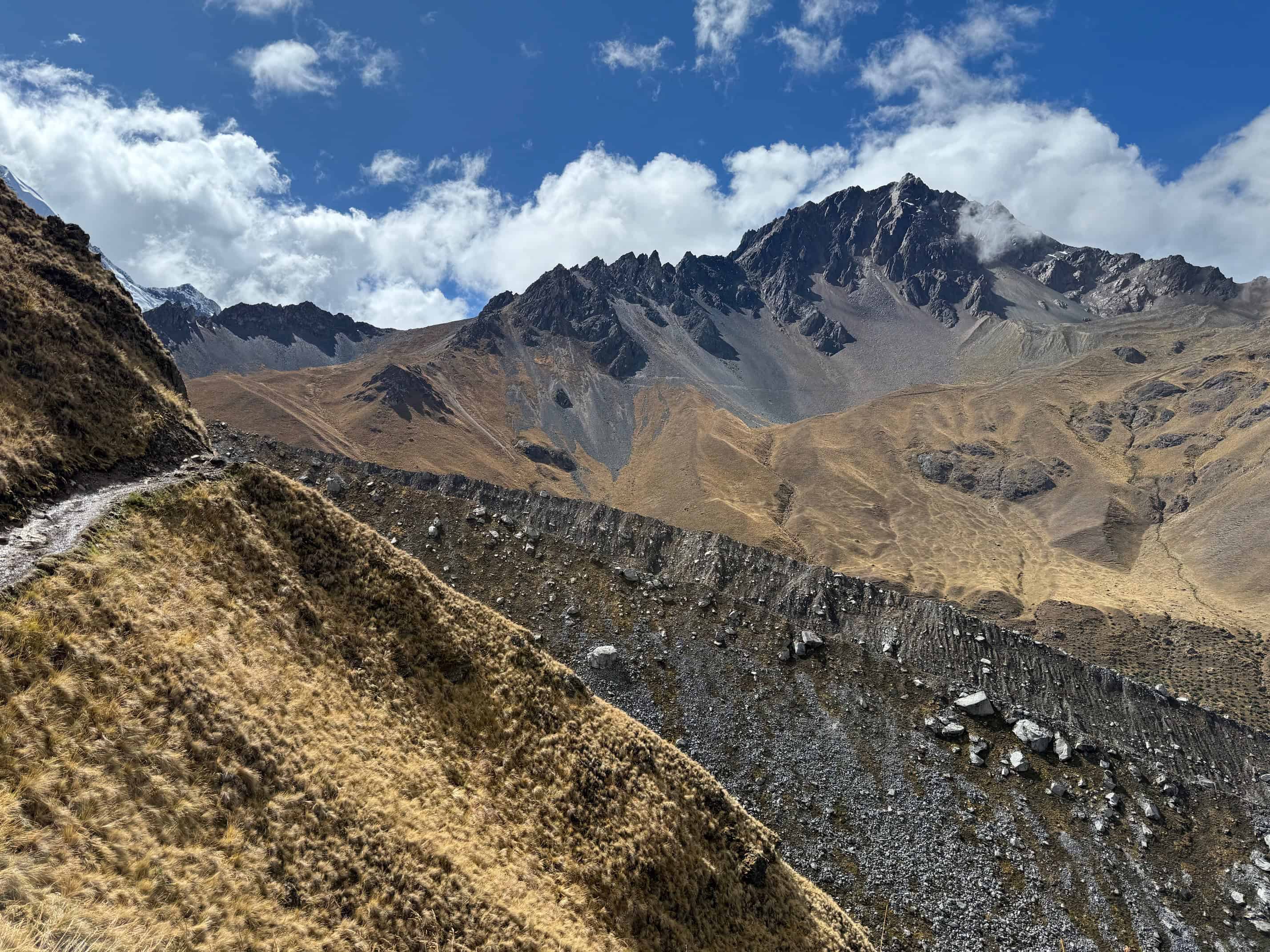
The third day of the Salkantay Trek to Machu Picchu is by far the most challenging day of the entire hike, taking you up a series of switchbacks to reach the Salkantay Pass, the highest point of the trek at 15.213 feet/4636m. This is the biggest test for hikers to see how well they have acclimatized to the high altitude. Yet in my opinion, it is one of the most rewarding days of the journey for its awe-inspiring views and feeling of accomplishment.

We rose early after a fabulous dinner at the Salkantay Lodge, Mountain Lodges of Peru’s hallmark lodge in Soraypampa. Since we were traveling with Mountain Lodges of Peru (MLP), we would be the only hikers ascending to the pass on foot, since MLP is the only outfitter that has accommodations in Wayraccmachay, a plateau located three hours after reaching the pass. There are no campgrounds there so everyone else hiking normally ascends the pass on horseback and then continues past Wayraccmachay to the next village, where we would hike the following day.

For us, it was magnificent because it meant we would have the entire trail to ourselves for two days.  As an avid hiker, this is a very special treat!

We started our hike at 7 am and were blessed with an absolutely stunning day. Had it been cloudy, we would have seen nothing.

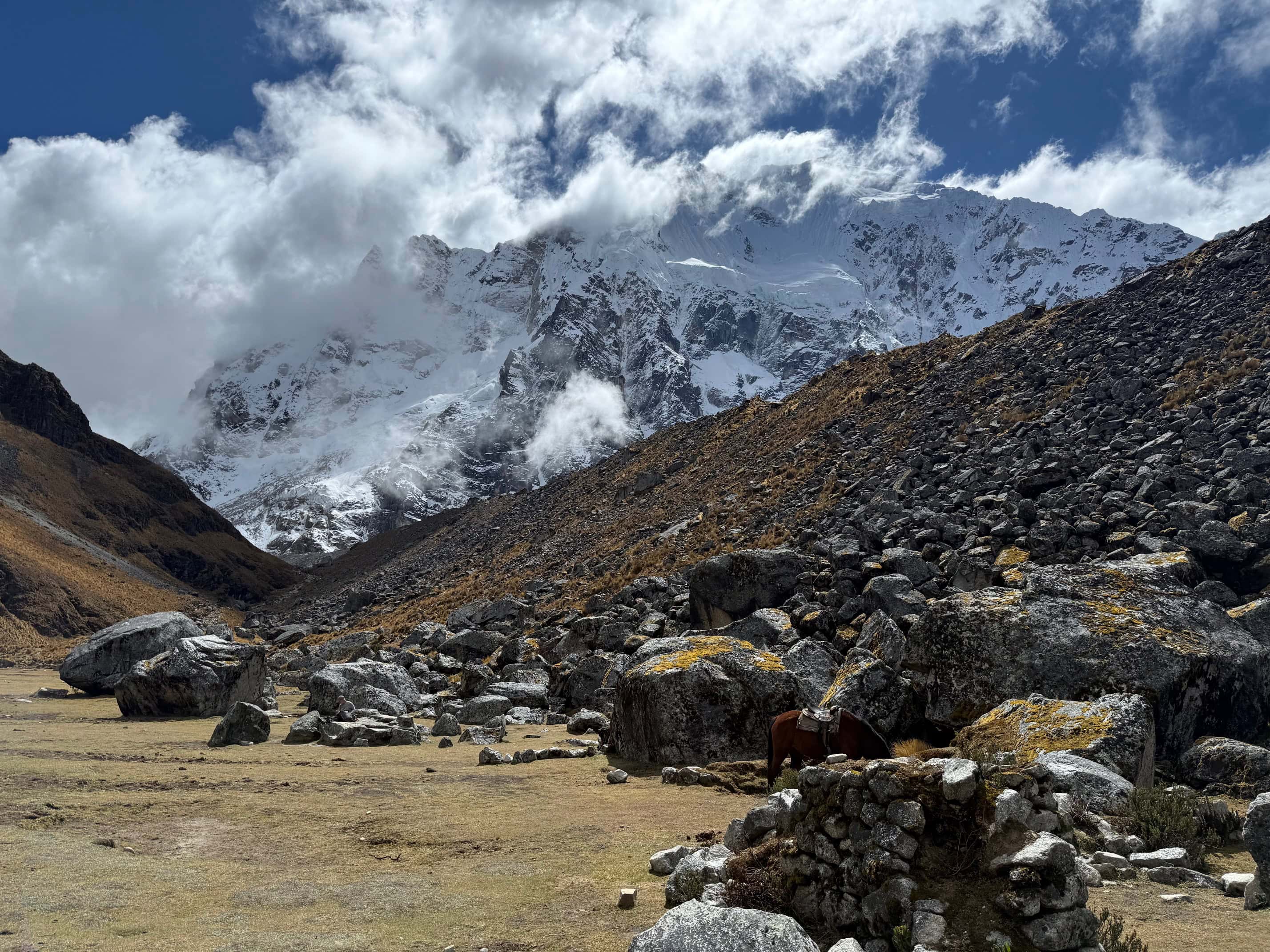
We were incredibly lucky to have surreal views of the snow-capped Humantay Peak.

As we climbed up, our lungs pounded as we acclimatized to the higher altitude. We circled Humantay Peak, with stunning views of expansive plateaus connected by enormous boulders, and remnants of the Rio Blanco Valley.

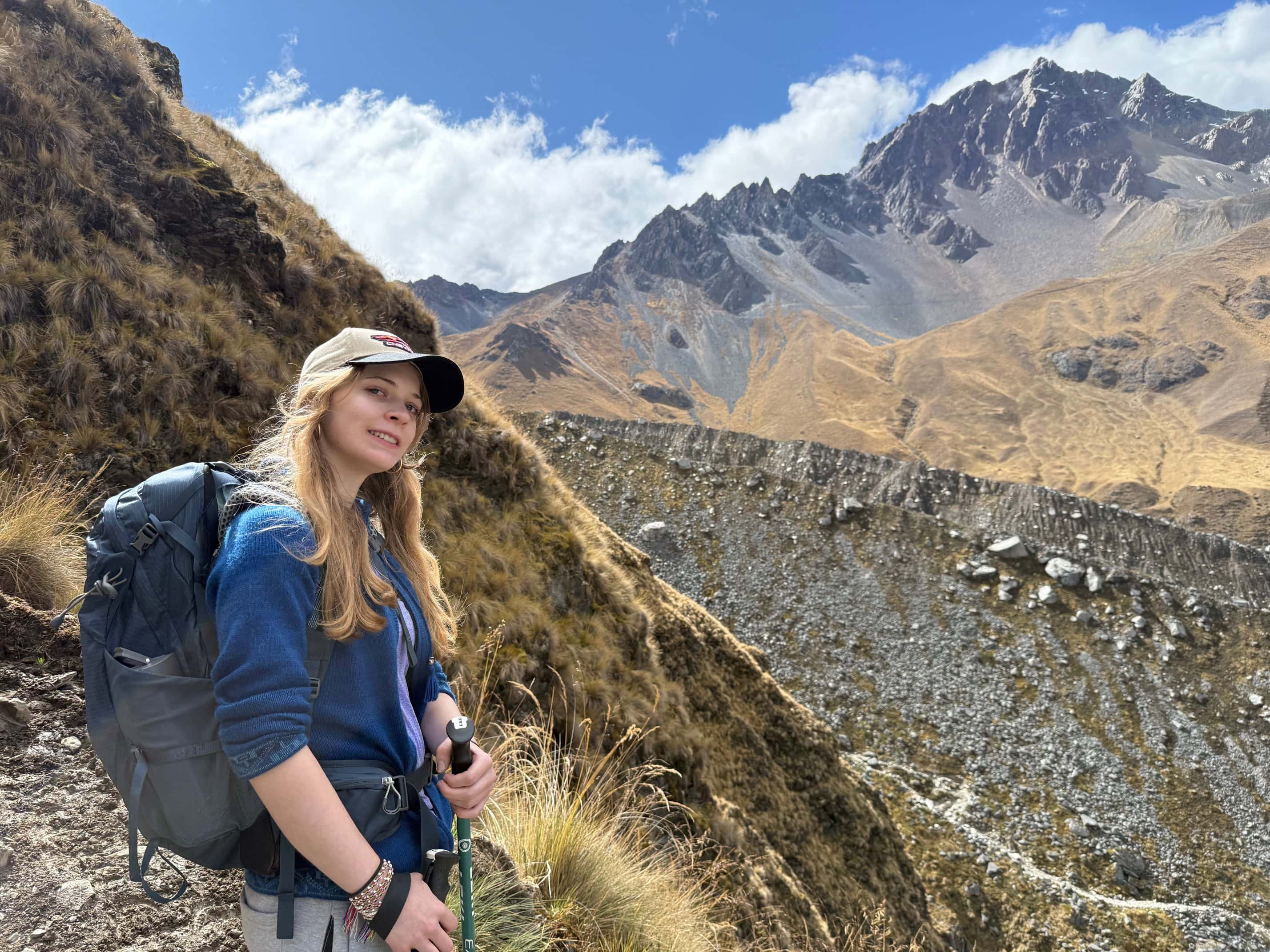
I felt really good and did not take altitude pills since I have not had any issues before with altitude. However, it was a challenge for my daughter as she had never been this high before and was struggling with her breathing. We took it slow, stopping frequently to catch our breath and take photos. The views were so spectacular that it helped.
The Salkantay Trek to Machu Picchu climbing up to Salkantay Pass

The Salkantay Trek to Machu Picchu climbing up to Salkantay Pass

The Salkantay Trek to Machu Picchu climbing up to Salkantay Pass

 The Salkantay Trek to Machu Picchu climbing up to Salkantay Pass

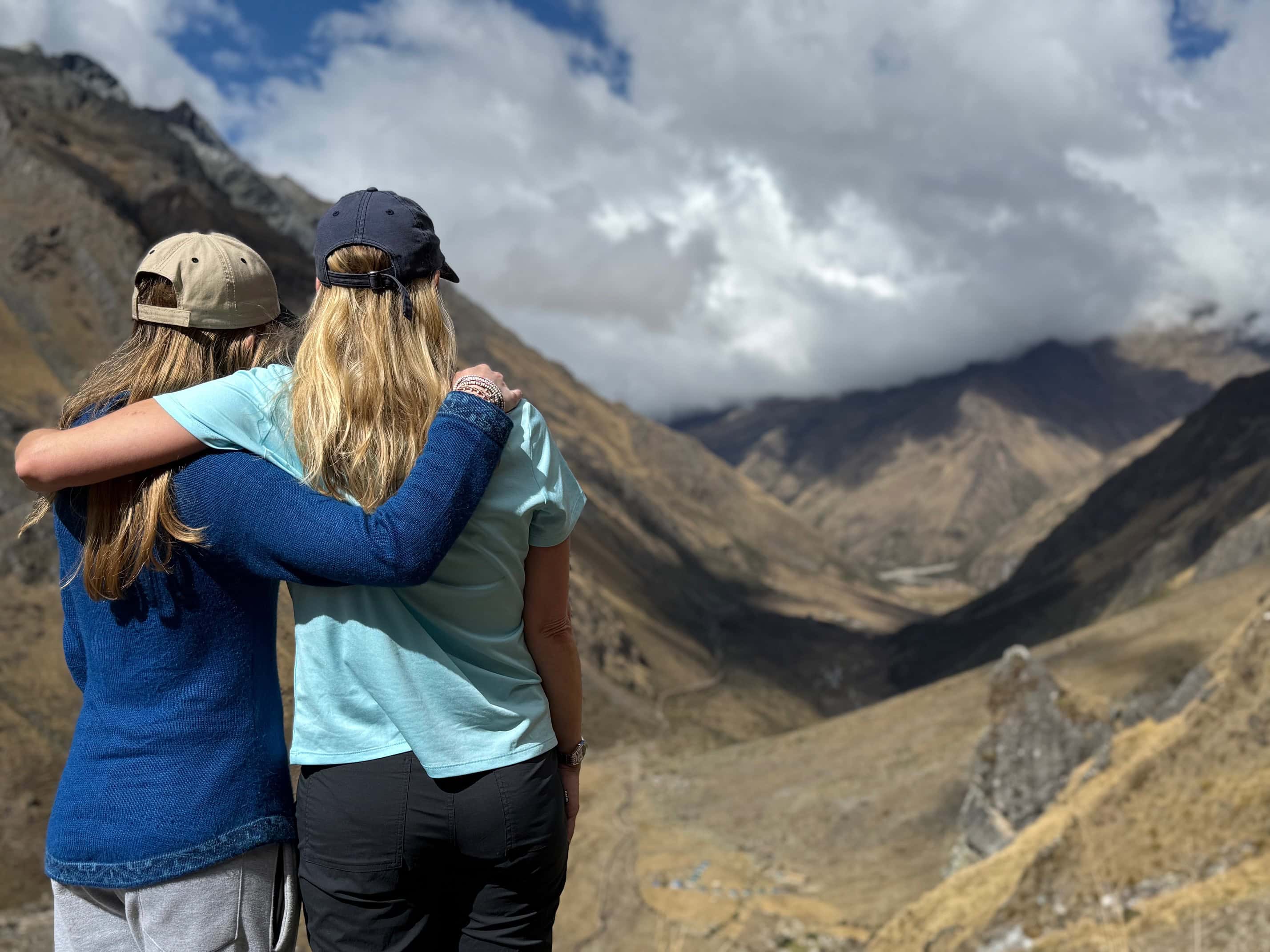
We reached the pass around 11:30 am, taking 4.5 hours (with a half-hour stop for a snack before the final push). It was an exhilarating feeling to stand at the top of the highest point of the hike with my daughter. I was so proud of her! Especially since she has been suffering from unexplained migraines and lightheadedness for several months. Even her doctor, treating her for this condition, was amazed.
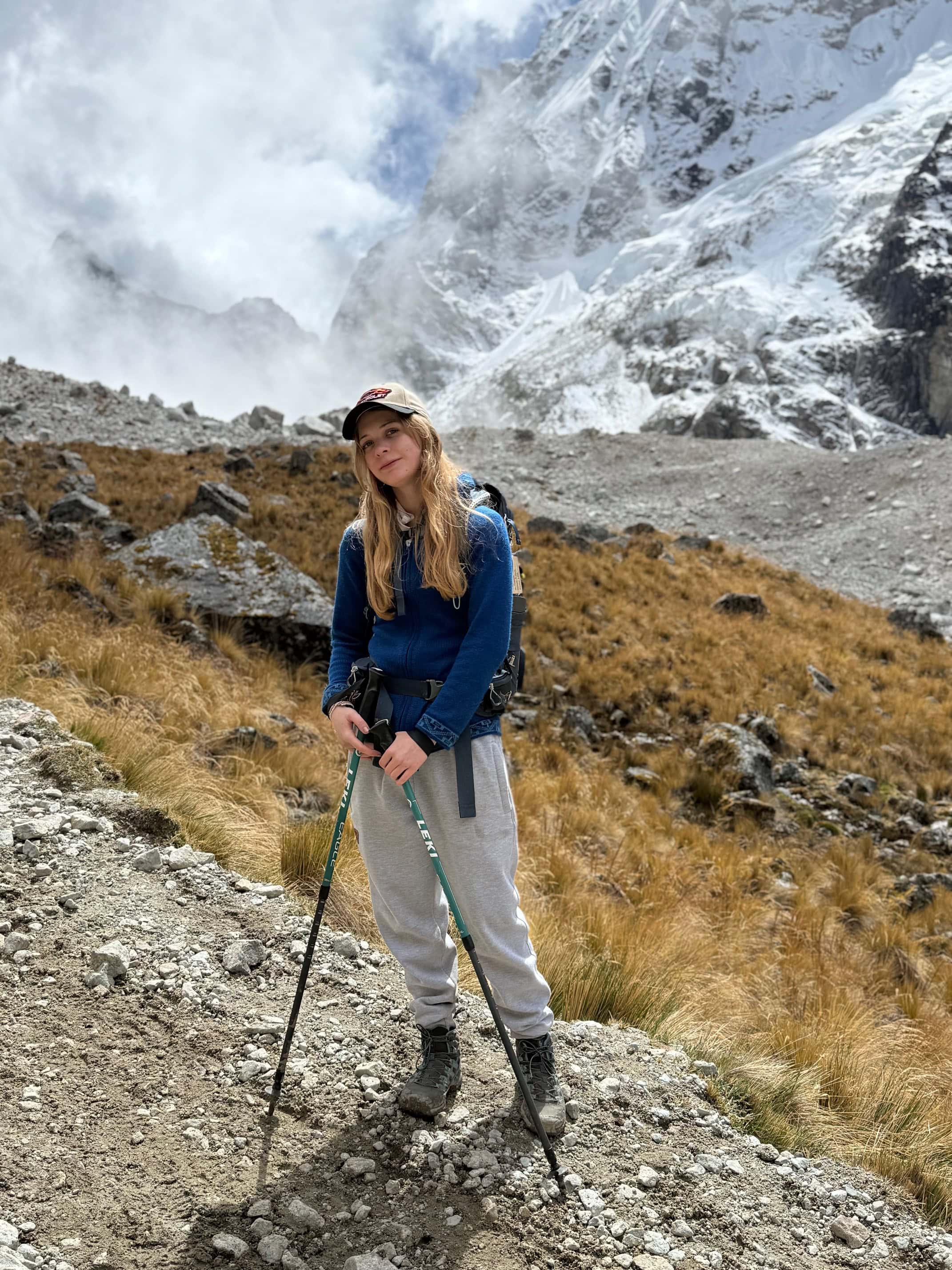
The Salkantay Trek to Machu Picchu climbing up to Salkantay Pass

The Salkantay Trek to Machu Picchu climbing up to Salkantay Pass

Clouds coming over the mountains at the pass. We timed it right as it would cloud up soon taking away the stunning views of the mountains

After the pass, we continued for another three hours hiking through rolling hills and boulders to reach the Wayra Lodge at Wayraccmachay. This is the only place to stay here – there are no campsites. If you are not hiking with Mountain Lodges of Peru, you have to continue to the next village. This is why we saw the other groups on horseback going up the switchbacks to reach the pass earlier. If they hiked it all in one day, it would be extremely difficult and almost impossible to make it before sunset.

It had clouded up, so I didn’t take many pictures after the pass. We were tired as well and ready to finish the hike.

Around 2:30 pm, we saw the lodge off in the distance. I could hardly wait!

 The Salkantay Trek to Machu Picchu climbing up to Salkantay Pass

The Salkantay Trek to Machu Picchu climbing up to Salkantay Pass

This would be one of my favorite places we stayed during the hike. It was so isolated. I tried to imagine how hard it must have been to build this place, as there are no roads and it can only be reached on foot and with the help of mules.

If you go: We booked our trip through Mountain Lodges of Peru, the only outfitter who has lodges along the trail. From start to finish, they were absolutely incredible. I highly recommend them.

Adventure Travel Peru South America TRAVEL TRAVEL BY REGION Trekking/Hiking
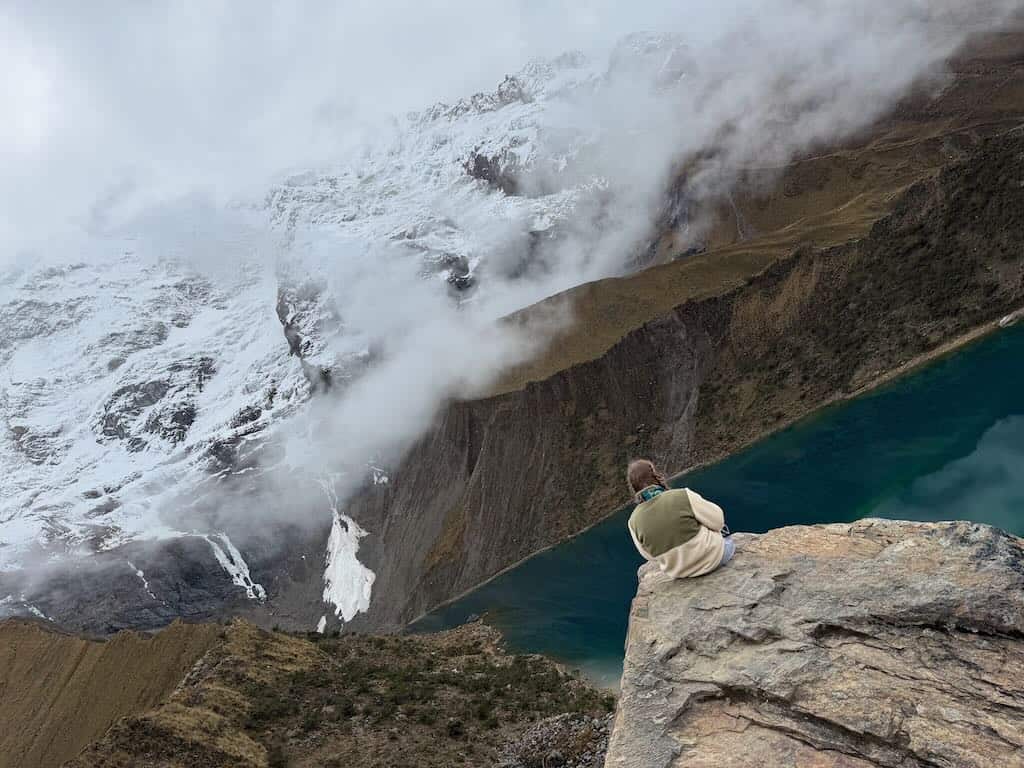
Lake Humantay, Cusco, Peru

The Salkantay Trek to Machu Picchu: Hike to Lake Humantay

On the second day of our journey along the Salkantay Trek to Machu Picchu, we rose early for our hike to Lake Humantay, a picturesque turquoise glacial lake located at the foot of the Humantay glacier in the Cusco region of Peru. We were amply warned by our guides that the hike to Lake Humantay is one of the most popular day trips from Cusco (which accounts for the endless series of white vans filled with sleeping passengers that we saw on our drive to Mollepata the previous day).  Many tourists come to celebrate the glorious colors of Lake Humantay, some hiking up the steep terrain from Soraypampa, while others ride horses. Unfortunately, it has also become a popular place for staged Instagram shots and other “influencers” who brought popularity, traffic, and overtourism to this beautiful natural place. If we wanted to see it in its glory, then we had to start early, and our guides were right.

Lake Humantay, Cusco, Peru

Adventure Travel Family Travel Peru South America TRAVEL TRAVEL BY REGION Trekking/Hiking

The Salkantay Trek to Machu Picchu: En Route to Soraypampa

Back in August, my daughter and I went on an incredible adventure together in Peru, completing the Salkantay Trek to Machu Picchu. Peru had been a place we were planning to visit in 2020 before the pandemic canceled our plans. We were finally able to do the trip together a month before she left home for college, and for me, after recovering from my second hip replacement surgery and becoming an empty nester. It was spectacular.

Morning sun looking out from the Salkantay Lodge

Adventure Travel Family Travel Peru South America TRAVEL TRAVEL BY REGION Trekking/Hiking

Hiking the Kumano Kodo: The last leg to the Nachi Grand Shrine

The last day of our hike along the Kumano Kodo was from the remote village of Koguchi to Nachi Taisha, one of the three Grand Shrines of the Kumano Kodo and the most stunning. It ended up being a grueling hike, taking 6 long hours with the first two hours being straight uphill. (Total hike: 9.2 miles/14.8 kilometers).

The hike ended with a bang and was much harder than I anticipated.

For some reason, this was harder than the 8.5-hour hike two days before. The weather was becoming a bit more humid (thank goodness it was only early June), and the incline up was much more difficult than it looked.

While I struggled through the tough, humid uphill grind  (periodically wiping the sweat dripping off my face with my shirt),  wy kids and husband whisked by me, not one bit bothered. I confess I was a bit grumpy, but decided to give myself some grace. I was 53 years old and had just had not one but two major surgeries in the past two years. My last surgery – my second hip replacement –  was only six months ago, and I was still not back up to my prior fitness levels before.

Asia Family Travel Japan TRAVEL TRAVEL BY REGION Trekking/Hiking

Hiking the Kumano Kodo: Ukegawa to Koguchi

The fourth day hiking the Kumano Kodo trail was a recovery day and only 13.2 km/8.2 miles. Our legs were sore but our souls were refreshed after a night at the Yunomine Onsen, where we dipped in the calming hot waters of the hotel’s onsen and enjoyed a traditional 12-course Japanese meal.

The hike today involved a short bus ride to the Kogumotori-goe section of the trail, where we had perhaps one of the best views of the velvety green forested mountains. The look out area is called Hyakken-gura looks out onto the “Kumano Sanzen Roppyaku-ho” – a local expression which literally translates as the “3,600 peaks of Kumano” per our guidebook.

A small Jizo statue guards a stunning backdrop of the Kumano mountains

Since much of the hike is through thick forests, we did not have many views of the mountains except on this day. The word “gura” means “high cliff,” and from the Hyakken-gura we could see velvet green-covered peaks as far as the eye could see. It certainly was magical.

Adventure Travel Asia Japan TRAVEL TRAVEL BY REGION Trekking/Hiking

Hiking the Kumano Kodo Nakahechi Trail: Chikatsuyu to Hongu Grand Shrine

Day three of the Kumano Kodo trail – from Chikatsuyo to Hongu Grand Shrine – was by far the hardest day of all in terms of distance. For this section of the trail, there are three options: Easy, moderate at 6-7 hours, and strenuous at 8.5 hours (24 km/14.9 miles). Of course, we all chose the hardest option! It was a long day, but worth it.

We began our hike, leaving our inn at 7 am, hiking through villages along the side of the road. This was actually fun as we met lots of the locals and had some fun conversations, such as learning how to say a few Japanese words like Ohayou gozaimasu which means good morning.

The outskirts of the village were lovely with lots of flowers and beautiful views of the velvet, green-covered mountains. It all felt so peaceful, too, with no noise pollution or crowds.  A rarity in today’s modern world.

The hike climbed steadily through the outlying community and countryside until we reached the forest again. It was day three and I was still amazed by the size and majestic beauty of the trees that towered over our heads like a cathedral. We hiked to the melodic birdsong yet never saw the birds because they were too high up in the canopy of cypress, camphor and pine trees.

There were lots of marvelous ancient oji shrines along the way for us to stop at. While the hike was long, it was rewarding and only a few fellow hikers were taking the long route.

By the time we reached the incredible Hongu Grand Shrine, we were so exhausted that we only grabbed a few photos. Nevertheless, it was stunning and got us even more excited for the rest of the journey.

Hongu Grand Shrine

The Hongu Grand Shrine, or Kumano Hongu Taisha, holds a deep historical and spiritual significance as one of Japan’s most sacred Shinto sites and is a central destination on the ancient Kumano Kodo pilgrimage route. Located in Wakayama Prefecture, the shrine dates back over a thousand years and was once the head shrine of more than 3,000 Kumano shrines across Japan.

For centuries, emperors, aristocrats, and commoners alike made the arduous journey through the Kii Mountains to worship here, seeking spiritual rebirth and purification. Originally situated at Oyunohara—the confluence of the Kumano, Otonashi, and Iwata Rivers—the shrine was relocated to its current site in the late 19th century after a devastating flood. Today, it stands as a powerful symbol of Japan’s enduring traditions of nature reverence, pilgrimage, and spiritual renewal, linking the past and present through its timeless rituals and sacred atmosphere.

As we left the shrine, it was late afternoon and we still had to catch a local bus to reach our accommodation for the night. We were staying at our first onsen, natural hot springs that are an integral part of Japanese culture. The onsen experience is unique as you bathe with a bunch of same gender strangers completely in the buff.  Apparently, onsens are valued not only for their soothing warmth and mineral-rich waters but also for their role in promoting relaxation, purification, and social connection. For centuries, people have visited onsens to heal both body and spirit, believing that the geothermal waters possess restorative powers.

I must confess that I chickened out and only tested the single-person onsen. But it was indeed amazingly lovely and soothing. I can see why the onsen is a beloved centuries-old tradition of Japanese culture.

We spent the next two nights at the Yunomine Onsen, which is one of the most historic hot springs in Japan. Nestled in the mountains of the Wakayama Prefecture, it is located in one of Japan’s oldest and most historic hot spring villages, with a history stretching back over a thousand years. Deeply intertwined with the sacred Kumano Kodo pilgrimage routes, it is said that pilgrims once bathed here to purify their bodies before worshiping at the nearby Kumano Hongu Taisha.

Our dinner at Yunomine Onsen was an experience in itself. We were served a traditional multi-course (I counted at least 14 courses each!)  showcasing beautifully presented, locally sourced ingredients. Some of the regional specialties included grilled river fish, mountain vegetables, tofu, seasonal pickles, lots of sushi and miso soup.

Since Yunomine is a hot spring village, a unique culinary tradition is onsen tamago—eggs gently boiled in the natural hot spring waters, resulting in a delicate, silky texture. Rice, fresh sashimi, and small plates of simmered or tempura vegetables rounded out the meal, all served with meticulous attention to detail. Together, these dishes offer visitors a taste of Japan’s deep connection between food, place, and nature, mirroring the onsen’s tranquil and spiritual atmosphere.

After such an epic day with a long hike, soaking in the onsen, and indulging in an enormous dinner, we were looking forward to the rest of the journey along the Kumano Kodo trail. The hike got even better as the trip went on.

Check out this reel of the adventurous day on Instagram. 

Asia Japan TRAVEL TRAVEL BY REGION Trekking/Hiking

Hiking the Kumano Kodo Nakahechi Trail: Takahara to Chikatsuyu

Day 2 on the Kumano Kodo Nakahechi Trail takes you from the mountain village of Takahara to Chikatsuyu, covering about 10.1 km (6.5 miles). The route winds through dense forests along an undulating path, with climbs and descents that lead past several Oji shrines. The walk takes an estimated 4 hours and is roughly 6.5 miles (10.1 kilometers).

After a delightful breakfast at our accommodations, a local family-owned inn, called Hatago Masara, owned by a Japanese-French couple, Masa and Sara, we set off for our second day of hiking the Kumano Kodo. The morning was lovely with perfect temperatures and slight cloud cover keeping us relatively cool for this time of year (while the humidity was still at bay).

From Takahara, we passed through the outskirts of the village and continued on an undulating trail past several oji shrines along the way.  Once again, we hardly saw anyone, and the trail was relatively quiet save for a few hikers. We had timed our trip right.

Asia Family Travel Japan TRAVEL TRAVEL BY REGION Trekking/Hiking
Takahara, Kumano Kodo, Japan

Hiking the Kumano Kodo Nakahechi Trail: Takijiri to Takahara

The Kumano is a sacred mountainous region located on the Kii Peninsula of Japan, stretching south of Osaka, Nara, and Kyoto, and home to the ancient spiritual Kumano Kodo Pilgrimage. There are several routes however, the most popular one is the Nakahechi Imperial Route that traverses the rugged mountainous trail winding through deep forests of cypress, pine, and camphor trees starting in Takahara and ending in Nachi at the Nachi Tasha Grand Shrine.

The pilgrimage began 1,000 years ago, taking the Imperial family and fellow pilgrims an average of 30-40 days from Kyoto. Several Oji shrines and teahouses were established along the way for pilgrims to rest, relax, and pray during this arduous trek. Today, the Nakahechi route can be completed in 5 days and covers over 46 miles (70 km) of mountainous terrain.

This past May, our family of four visited Japan for two weeks and the highlight of our trip was our time spent together doing the Kumado Kodo hike. Although the hike can be navigated and booked on your own, we opted to hire Oku Japan. Oku Japan operates guided, self-guided, and custom tours around Japan. Their trips combine the simple pleasures of enjoying the hospitality of close-knit communities deep in the countryside that preserve the traditions of a not-too-distant past. We picked them for their excellent reputation, their commitment to helping local rural communities, and their incredible attention to detail to every aspect of our trip, from start to finish. We were not disappointed.

Takijiri, Komano Kodo, Japan

Adventure Travel Asia Japan TRAVEL TRAVEL BY REGION Trekking/Hiking

A visit to the Soloy Indigenous Community in the Chiriqui Province of Panama

In the highlands of western Panama, spanning over 2,500 square miles (6,475 kilometers), lies the Ngäbe-Buglé comarca, the largest and most populous of Panama’s seven indigenous groups. Established in 1997, the Ngäbe-Buglé comarca (partially autonomous regions established in areas where its indigenous people have traditionally lived) was created to grant the Ngäbe-Buglé people autonomy over lands formally in the provinces of Bocas del Toro, Chiriquí, and Veraguas.

The Ngäbe-Buglé people are a vital part of the country’s cultural heritage, playing a key role in coffee production, agriculture, artisan crafts, and the safeguarding of ancient spiritual traditions and ecological wisdom. Despite the challenges posed by climate change, modernization, and limited opportunities in their communities, the Ngäbe-Buglé people are finding ways to navigate the modern world while preserving their unique culture.

One way they are preserving their culture and providing opportunity within their community is through community tourism. After the pandemic, the government along with the help of other nonprofit groups continued to support these grassroots efforts with the launch the Panama Alliance for Community Tourism (PACTO).

On my first day in Panama I got to explore the rich culture of the Ngäbe-Buglé people by joining one of the many tours offered by the community, where we witnessed firsthand the traditions and way of life of the Ngäbe-Buglé people.

Beshi wearing a traditional dress called a Nagua

Adventure Travel Central America Community Tourism Panama TRAVEL
Best Dolomites Hikes: Circuit around Croda da Lago near Cortina d'Ampezzo

Best Dolomites Hikes: Circuit around Croda da Lago near Cortina d’Ampezzo

Nestled in the heart of the Dolomites, lies the spectacular mountain town of Cortina d’Ampezzo. Known for its sensational beauty, high-mountain charm, and easy access to hundreds of fabulous hiking trails, it is no surprise that we chose Cortina as our last stop on our family hiking trip this past July.

I discovered the lure of Cortina last year when I went on a hiking trip with my Dad in early May just three months after a total hip replacement. Unfortunately, the timing was all wrong. There was still thick, fluffy snow coating the high mountain trails, almost the entire town had shut down after ski season and would not reopen until June, and my physical recovery and stamina from a full-blown surgery made hiking anything longer than three hours impossible. But I went on the trip, and I fell in love with the place, promising I’d come back again with my family.

Fast forward fourteen months later, I was back with a new lease on my athletic life and my desire to explore the high alpine, challenging trails that I could only dream of the year before. Over the week, we did plenty of awe-inspiring hikes with our favorite to date being the glorious hike to Lake Coldai to Rifugio Tissi (near Alleghe) and the stunning loop hike around the Sassolungo near Val di Gardena Selva. Each hike was magical, special, and unique.

We had thought we had gotten all of the long, challenging hikes out of our system until we decided to do the Circuit hike around the Croda da Lago. Rated a moderate-hard hike, this 12.5 km/7.7 mile was a beast of a hike given the field of boulders and endless scree.  Yet the wild, rough, and dramatic scenery was worth every effort and sore knees. If you are an avid, experienced hiker, then this hike is for you.

Adventure Travel Europe Family Travel Italy TRAVEL TRAVEL BY REGION Trekking/Hiking
Sassolungo hike Selva di Val Gardena, Dolomites, Italy

Best Hikes in the Dolomites: The Sassolungo Group Loop near Val di Gardena Selva

The Dolomites in Northern Italy afford some of the most breathtaking hiking in the world. This summer, my family set off on a seven-day hiking trip through the Dolomites basing ourselves in three different places: Alleghe, Salva di Val Gardena, and Cortina d’Ampezzo. It was the most hiking my two teenagers have ever done and was one of our most memorable family trips to date. Here is a review of our fourth hike of the trip – a hike around the Sassolungo Loop near Val di Gardena Selva. 

After three delightful days in Alleghe, we traveled an hour and fifteen minutes northeast to Selva di Val Gardena, a beautiful resort town at the foot of the Dolomites where we stayed two nights. It was much different than tiny Alleghe where there were few tourists. Instead, Selva di Val Gardena was bustling with tourists and its wide streets were lined with fancy, upscale restaurants and shops. The hiking trails around it were also quite crowded.  But, we all agreed that it was nice to mix it up.

The drive from Alleghe to Selva di Val Gardena was stunning yet the many hairpin turns made my stomach and head hurt as I am quite prone to motion sickness. It is worth a stop at the top of Sela Pass for incredible views of the surrounding Dolomites.  We arrived in town just in time for dinner and rest before another big hike the following morning.

The most popular hike in the area is the Sassolungo Group Loop, a 10.2-mile (16.4 km) loop trail that leads around the Sassolungo and the Sassopiatto rock formations. It is considered a challenging hike and takes roughly 6 hours depending on stops.

We began our hike at the Passo Sella, where we left our car at the car park and headed up into the low-laying clouds and fog blanketing the Sassopiatto. We climbed up the gravel road, hoping it was not going to rain, and set off clockwise towards the first of four rifguios.

The trail was extremely muddy after all of the June rain, and we were all relieved to have on good hiking boots and a pair of walking sticks. The mud made the first hour of the hike a bit more challenging but it also seemed to slow down and ward off the crowds.

Sassolungo hike Selva di Val Gardena, Dolomites, Italy

Setting off on the Sassolungo trail

Adventure Travel Family Travel TRAVEL Trekking/Hiking
Hike from Alleghe to Rifugio Sasso Bianco Italy

Hiking in Dolomites: Hike from Alleghe to Rifugio Sasso Bianco

The Dolomites in Northern Italy afford some of the most breathtaking hiking in the world. This summer, my family set off on a seven-day hiking trip through the Dolomites basing ourselves in three different places: Alleghe, Salva di Val Gardena, and Cortina d’Ampezzo. It was the most hiking my two teenagers have ever done and was one of our most memorable family trips to date. Here is a review of our third hike of the trip when we were based in Alleghe. The hike to Rifugio Sasso Bianco. 

Our last hike in Alleghe was the awe-inspiring hike from the western side of Lago di Alleghe to the Rifugio Sasso Bianco.  This hike was on the other side of Alleghe and afforded spellbinding views of the town, its namesake lake, and the flank of Mount Civetta.  The hike was recommended by the helpful man working at the Alleghe Tourist Office in town, who sizing us up, recommended three hikes.

The first two hikes (one that is circular and passes by two dairy farms and the other to Lake Coldai and Tissi Rifugio) are both located at the top of the gondola at the Col dei Baldi and are quite popular and well-traveled. However, the last hike he recommended was not well known. It turned out to be one of those local treasures. It was not crowded (we saw under a dozen people in five hours), led us through two tiny hamlets, and prized us with stunning views of the town, the lake, and the mighty Mount Civetta across the way.  We were rewarded with a delicious hot lunch at the family-run Rifigio Blanco Sasso, a beautiful hut reachable only by foot.

On a clear day, the views at the foot of the Rifugio are known as some of the best in the Dolomites. Unfortunately, it was rather cloudy that day. Yet we all still adored this adventurous hike, and I highly recommend it for the lack of crowds, beauty, and beautiful views of the area.

Hike from Alleghe to Rifugio Sasso Bianco Italy

As you climb up, the views of Alleghe and its glorious lake are mystical.

Adventure Travel Europe Family Travel Italy TRAVEL TRAVEL BY REGION Trekking/Hiking