
In the highlands of western Panama, spanning over 2,500 square miles (6,475 kilometers), lies the Ngäbe-Buglé comarca, the largest and most populous of Panama’s seven indigenous groups. Established in 1997, the Ngäbe-Buglé comarca (partially autonomous regions established in areas where its indigenous people have traditionally lived) was created to grant the Ngäbe-Buglé people autonomy over lands formally in the provinces of Bocas del Toro, Chiriquí, and Veraguas.
The Ngäbe-Buglé people are a vital part of the country’s cultural heritage, playing a key role in coffee production, agriculture, artisan crafts, and the safeguarding of ancient spiritual traditions and ecological wisdom. Despite the challenges posed by climate change, modernization, and limited opportunities in their communities, the Ngäbe-Buglé people are finding ways to navigate the modern world while preserving their unique culture.
One way they are preserving their culture and providing opportunity within their community is through community tourism. After the pandemic, the government along with the help of other nonprofit groups continued to support these grassroots efforts with the launch the Panama Alliance for Community Tourism (PACTO).
On my first day in Panama I got to explore the rich culture of the Ngäbe-Buglé people by joining one of the many tours offered by the community, where we witnessed firsthand the traditions and way of life of the Ngäbe-Buglé people.

Beshi wearing a traditional dress called a Nagua
Arriving in David, Chiriqui Province
The first full day of my adventure in Panama began with an early morning flight to David in the Chiriqui Province where I met our friendly guide Gill from Step by Step Travel. The Chiriqui region of Panama made Lonely Planet’s newly released list of Best in Travel for 2025 (Top 30 must-see destinations for 2025) and it is no surprise given the vast variety of landscapes, culture, and nature to explore.
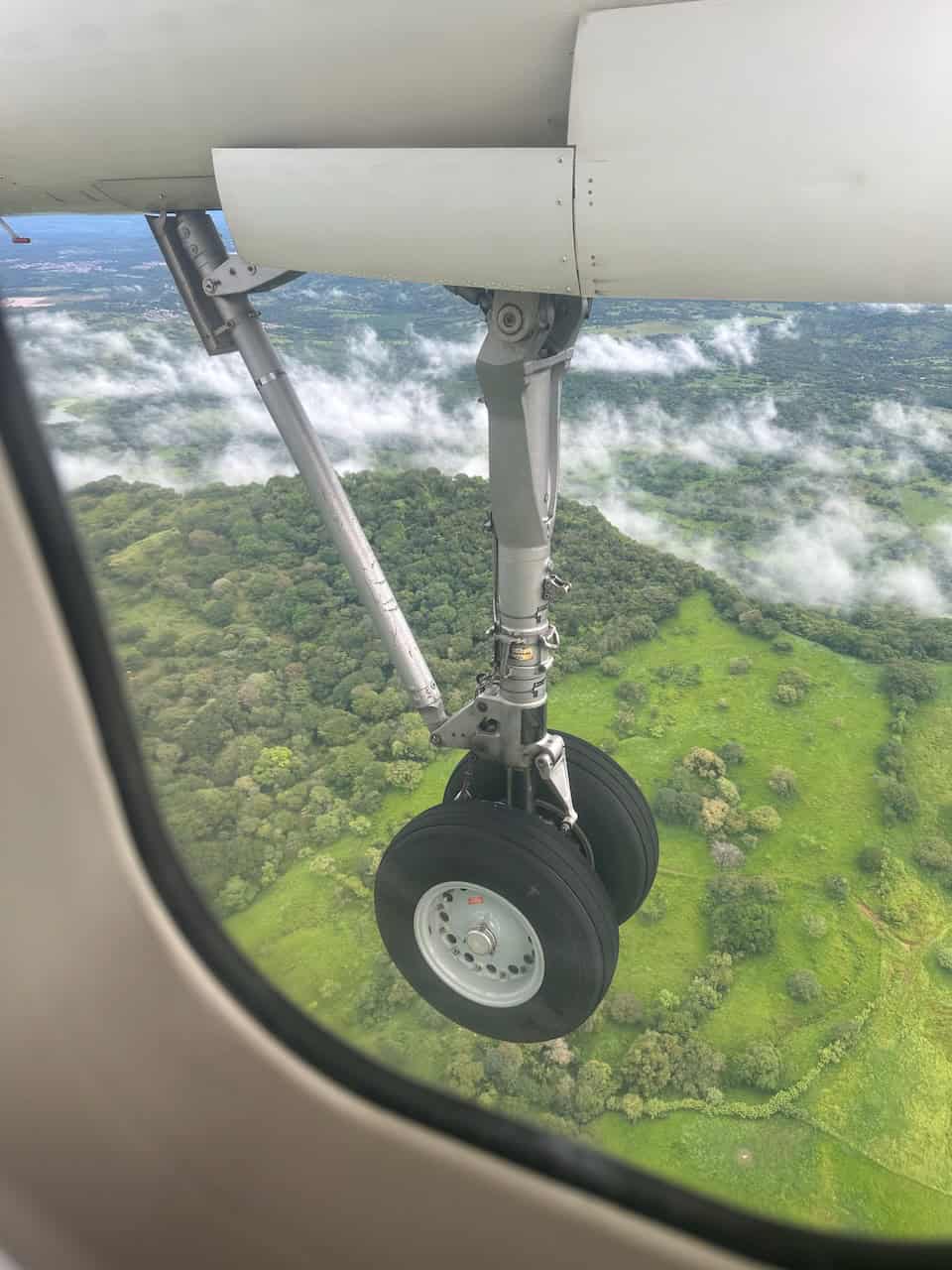
The flight to David from Panama City is only 50 minutes, yet it certainly gives you a taste of the beauty of Panama. As we took off, we flew over the gorgeous skyline of Panama City, then flew over the Panama Canal, where you can see ships lined up as far as the eye can see, waiting to enter the canal. As you turn inland, it is impressive how verdant and mountainous the landscape is as you enter Chiriqui Province. This is where a lot of coffee is grown in Boquete and home to Panama’s Baru Volcano National Park. You could easily spend a full week just in the Chiriqui Province visiting the lovely islands along the Marine National Park in the Gulf of Chiriqui, then heading inland to the Soloy community, Boquete and the Baru Volcano National Park.
The Soloy Indigenous Community
After arriving in David, we loaded up our luggage in the back of Gill’s pickup truck and followed the Pan-American Highway for roughly two hours east until we reached the entrance of the Soloy indigenous community in Besiko. Soon after, the paved roads disappeared and it was obvious why we needed a 4 x 4. We would need to pass through rivers, potholes and gravel roads for the rest of our visit. Thankfully our guide Gill kept the mood light with lots of jokes and banter about Panama to ward off my car sickness.


Our first stop of the day was at the home of Beshi, one of the community’s “abuelas” who has been running her small restaurant and snack shop since 2019 as a way to earn extra income. It was actually Beshi’s daughter who inspired her to open up her business when she noticed that tourists were coming to their community to go rafting and visit the Kiki waterfall and had no where to stop and grab a bite to eat. Together with a few other members of the community, they began offering community tours where tourists could stop for a snack of patacones (fried green plantains) or lunch followed by a tour of the farm. Over time, their grassroots community tourism grew and Beshi said it has changed her life.
Photos below (L-R): Beshi standing next to my travel companion Laura, Laura and our guide Gill, and Beshi’s homemade lunch of chicken, beans, vegetables from her farm and homemade tortilla.


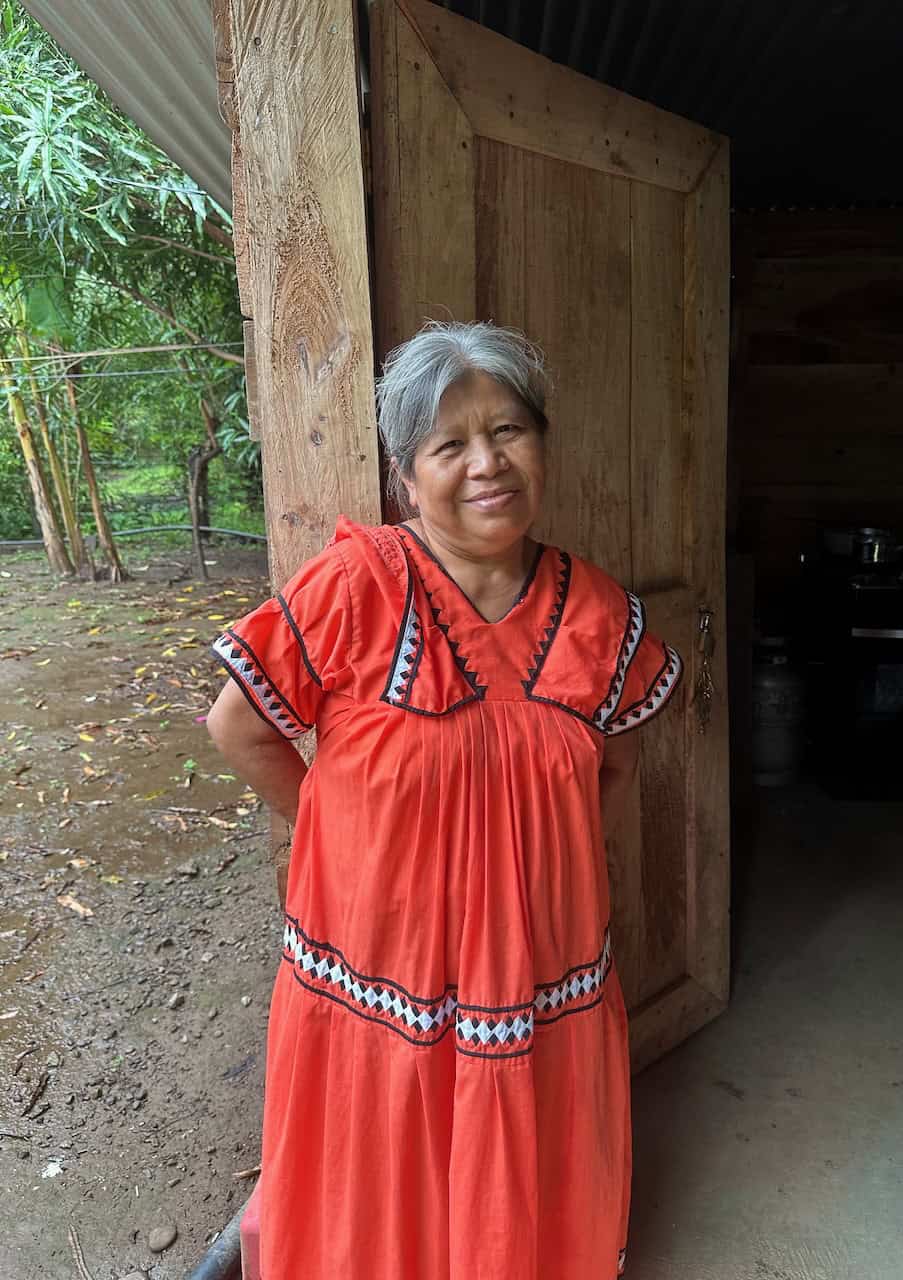
Beshi smiling standing outside of her kitchen at her restaurant
Beshi told us that for years they did not have much infrastructure in their camarca which was very difficult. Things improved after their community of 5,000 people came together and protested. The comarca now has a healthcare center and better education for the children. Some of the residents have potable water but not all. The roads are in dire need of repair as I would experience on our insanely bumpy ride to our next stop further inside the comarca.
After our visit with Beshi, we met Jose Luis, a young farmer and community guide who gave us a tour of his family’s farm. The highland conditions are perfect for growing bananas, yuccas, cacao, coffee, pumpkins and corn. Most of the community work as farmers either on their own land or for others yet it is still a very tough life especially given the impact of climate change. Jose Luis showed us the well that he and his wife Selinda made themselves to help during the droughts that happen more often than before.
Photos below: Jose Luis points out some of the produce in his farm and also introduces us to his beautiful wife Selinda and their daughter.


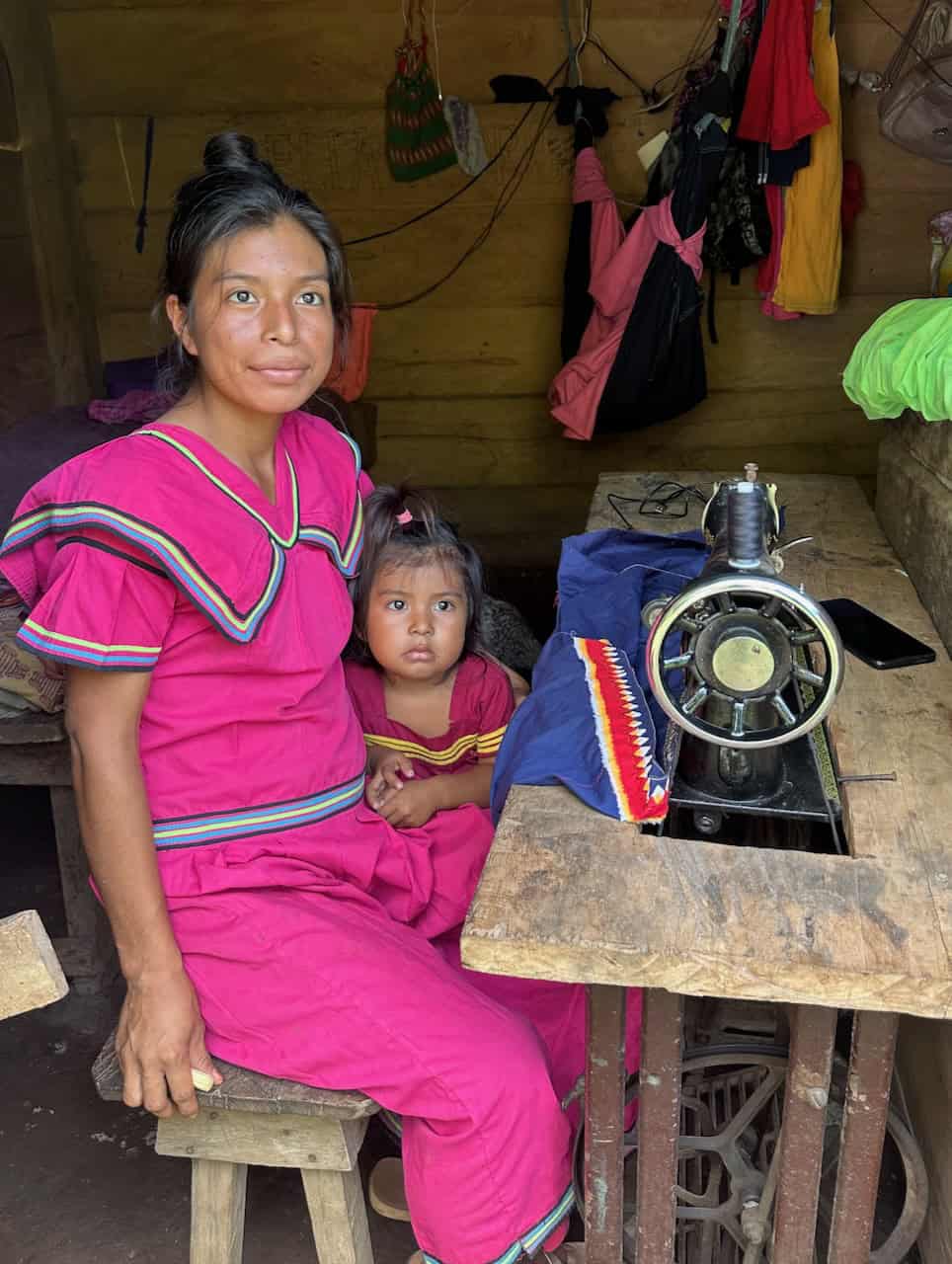
Selinda sews naguas, the traditional colorful dresses worn by Ngäbe-Buglé women. Each color has a different meaning.
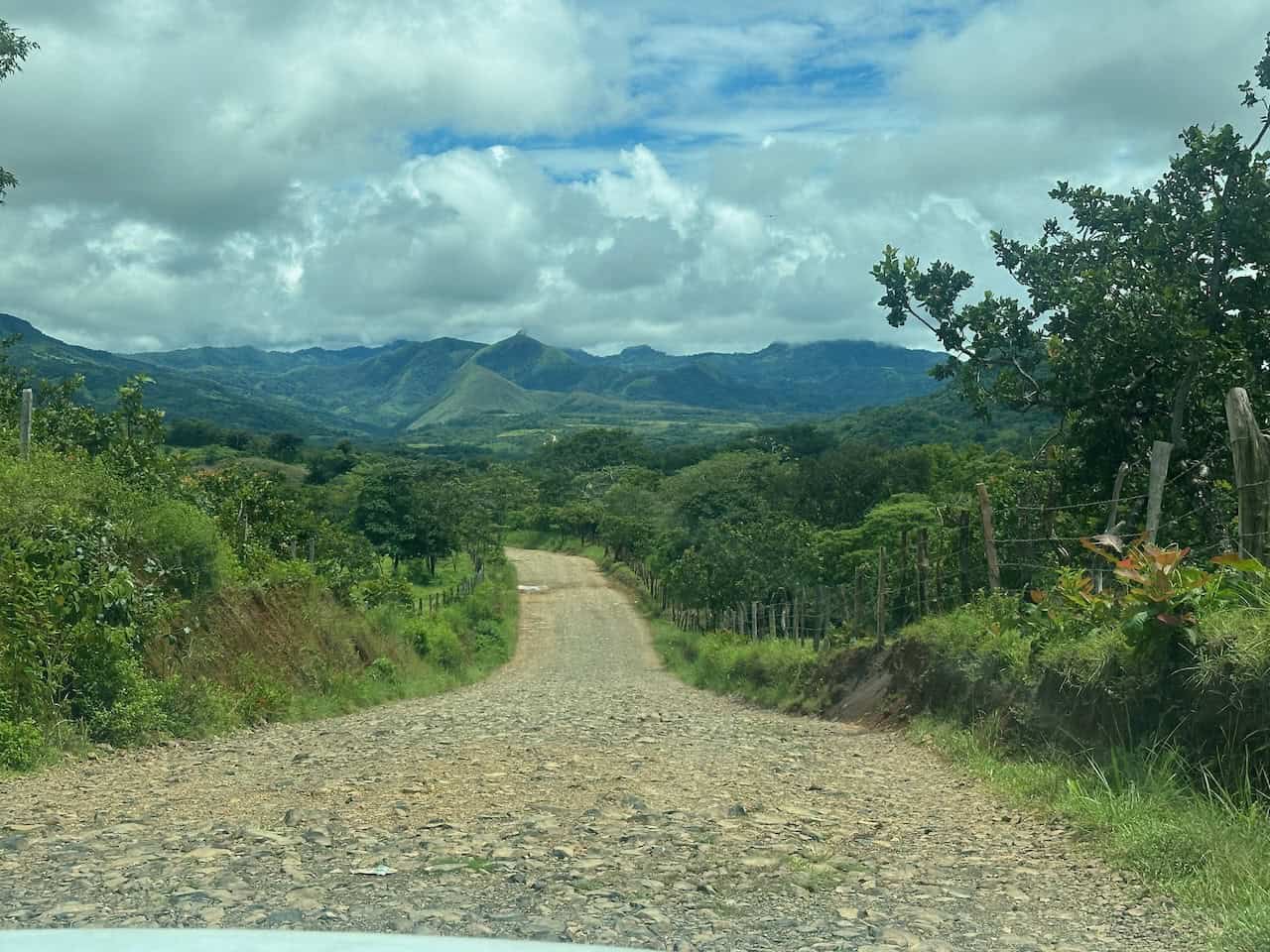
After the tour, it was back into Gill’s 4 x4 for an exceedingly bumpy ride on the “never-ending gravel road” (as I called it) to our next stop at the Cerro Banco, home to the Kiki Waterfall, the largest and most impressive waterfall in Panama.
This part of the comarca is much more remote, located in the foothills of the Central Mountain range along stunning panoramic views of the mountainside. There are several small villages sprinkled along the way and from the top of Cerro Banco, it feels like the land goes for as far as the eye can see. The ride felt like it lasted forever and I was grateful we had not eaten lunch yet or I may have lost it along the way. Once we arrived, I knew it was worth it. It was beautiful.
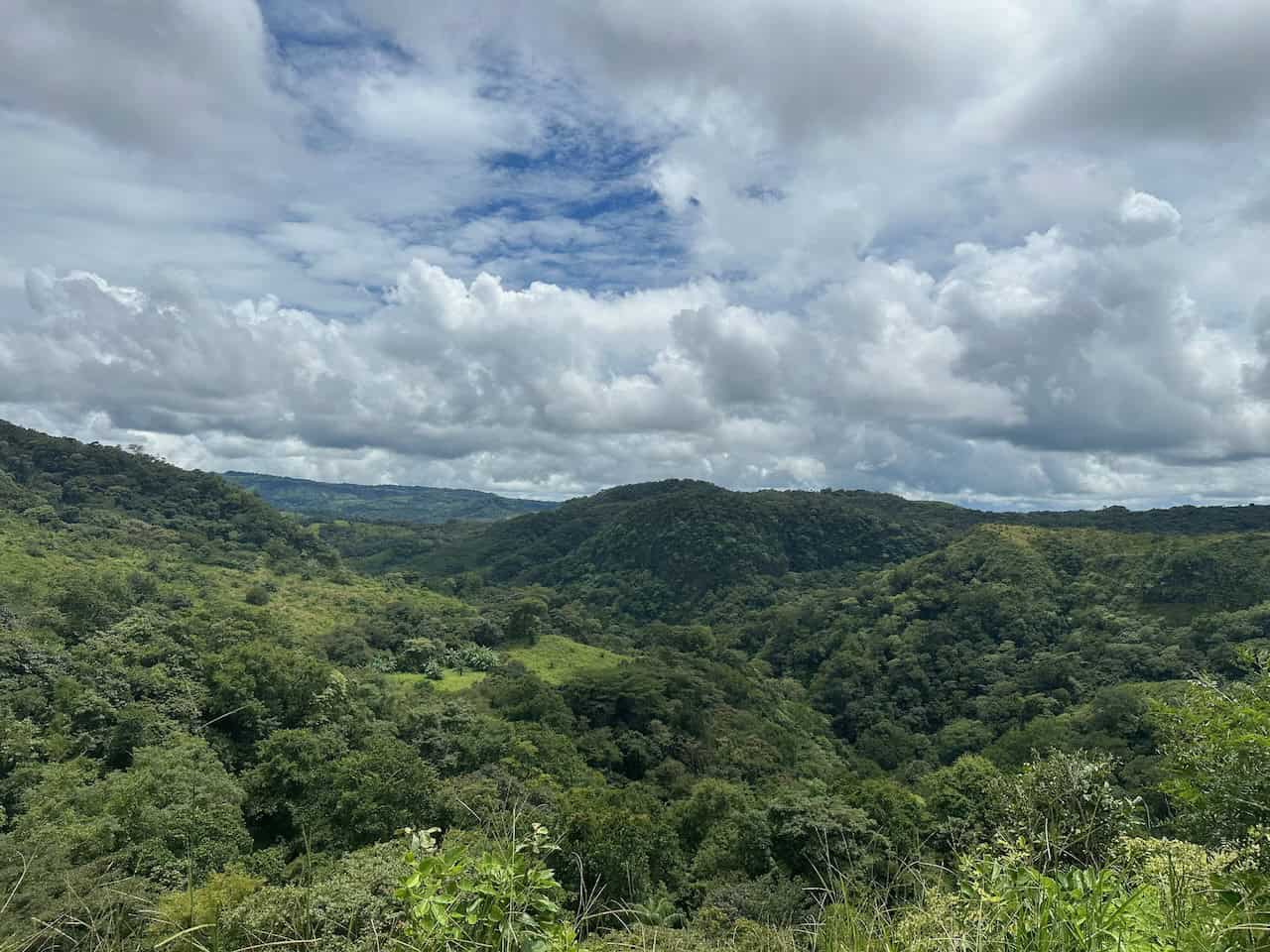
The view from Cerro Banco looking out over the comarca
In Cerro Banco we met our next local guide, grabbed a walking stick and began the hike to the waterfall, crossing a fairly deep river along the way. I wasn’t used to river crossing on foot so was glad I had a walking stick and my guide to hang on to. By the end of my week in Panama, I’d become a pro.


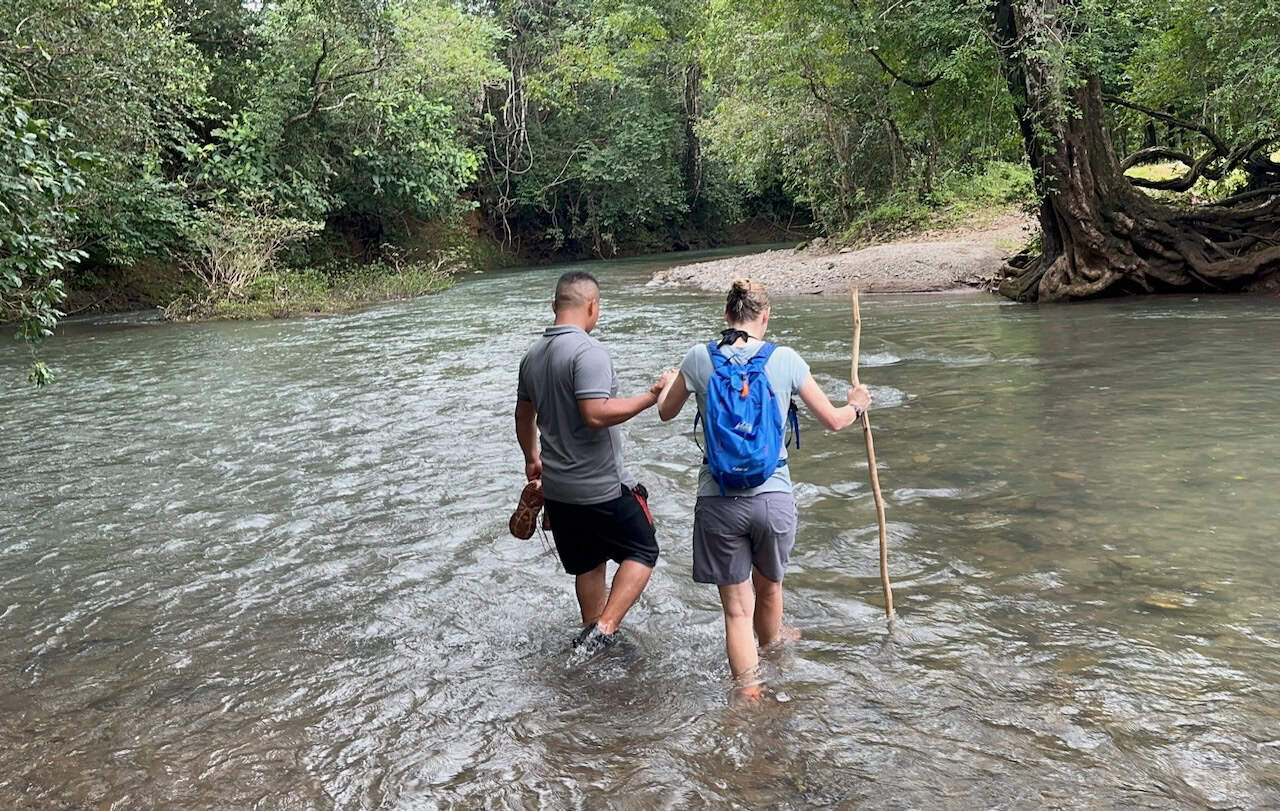
Spirituality is sacred to the Ngäbe way of life, and waterfalls are deemed sacred. As we descended down the steep path, I could sense that we were in for a magical experience. Although we couldn’t see the waterfall, we could hear its roar and feel its mist. In just a few more steps down, we caught our first glimpse and it took my breath away.


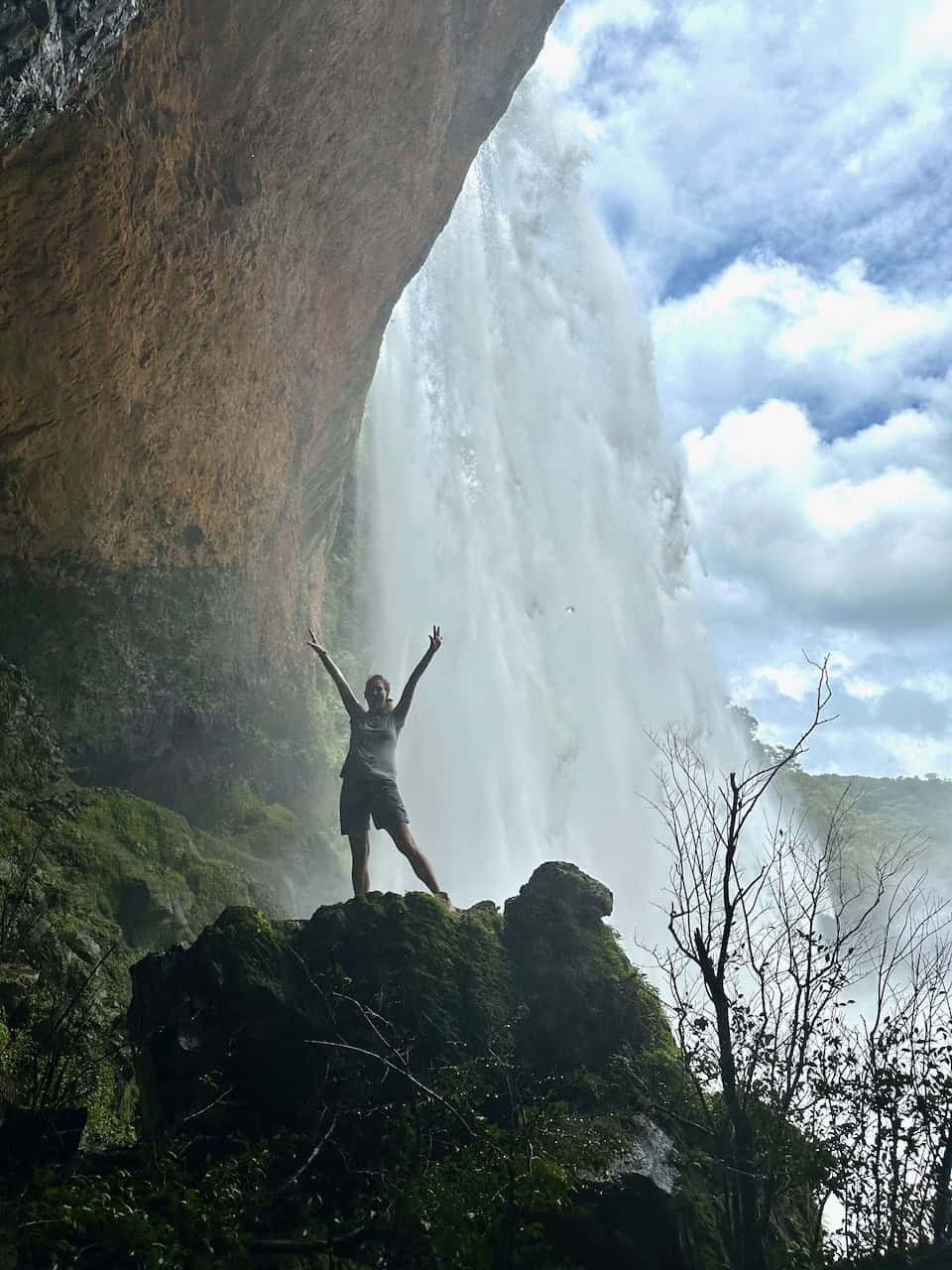
The Kiki Waterfall is one of the most magnificent waterfalls in Panama and has a free fall of approximately 113 meters (371 feet), making it the largest waterfall in the country. Once you get down to the waterfall, you can walk behind it for a surreal view of its mist and power. On calmer days, you can even take a swim in a small pool.
The waterfall has brought much needed tourism to the Soloy Community. On a good day during high season, they can see a couple dozen tourists said Gill, thanks to the partnership between the community and Step by Step Travel.
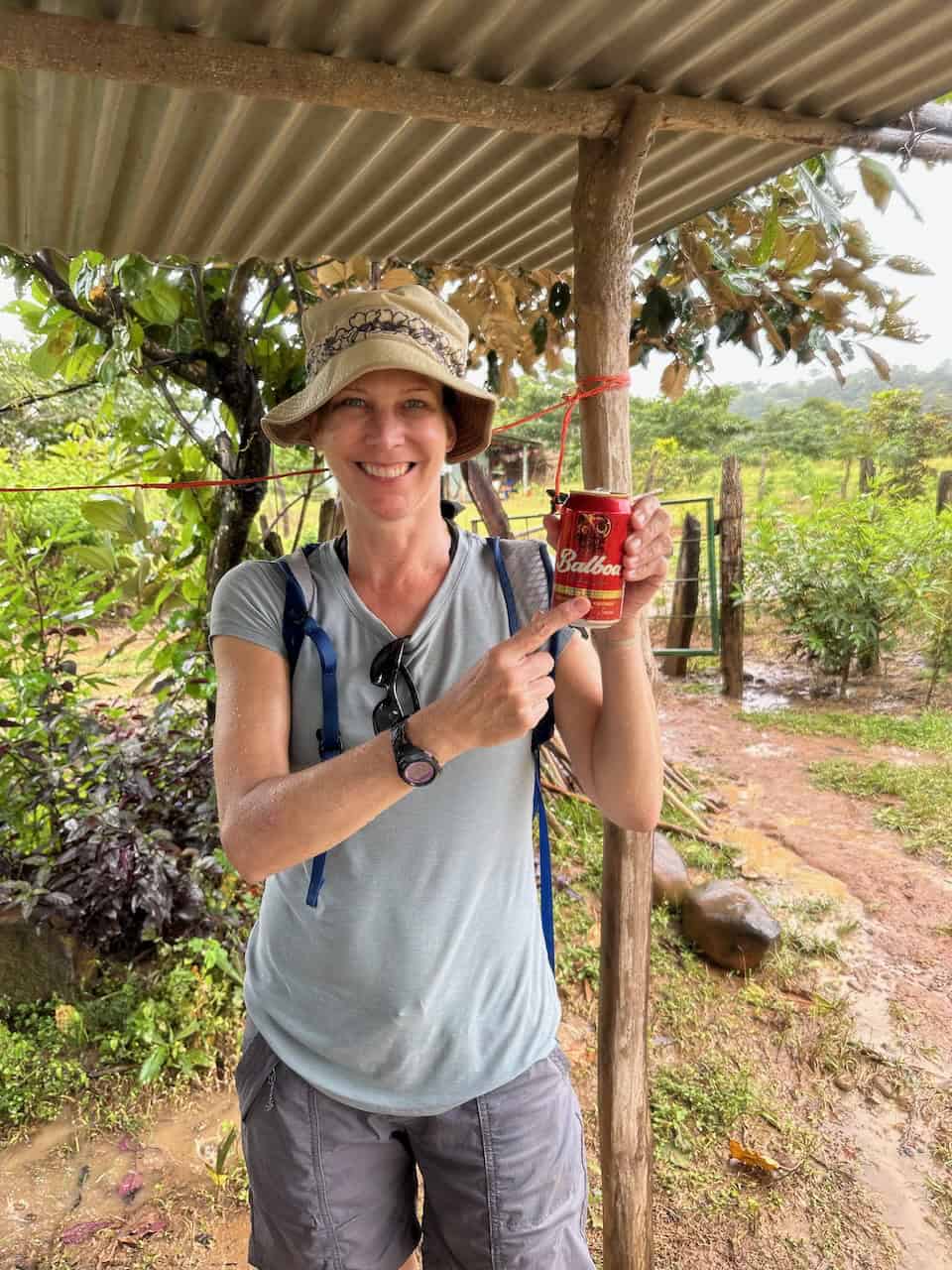
As we left the Soloy community, Gill left behind a few spare tires that would be used to help make it easier for tourists to access the waterfall. “The company (Step by Step Travel) does a lot to support the local community here” said Gill. “Years ago they began operating their rafting tours down the river, then started bringing tourists to stop at Beshi’s place for lunch after a rafting or waterfall tour. By working together, they have created a win-win situation where not only does the local community benefit, the guests have a richer, deeper experience”. I could not agree with him more. My day at the Soloy Community ended with a big smile after lots of adventure and an icy cold local beer. I could hardly wait for the next four days of my trip!
If you go:
Tours and visits to the Soloy Indigenous Community can be arranged with Step by Step Travel. A local guide is mandatory inside the comarca and the Kiki waterfall is reachable only by foot.
Check out this reel on Instagram:
In October, I attended the Adventure Travel and Trade Association (ATTA) World Summit in Panama City, Panama. It was my first time traveling to Panama and before the conference started I got to test out a pre-adventure tour hosted by Step by Step Travel. Given my passion for community tourism, I chose a tour involving visits to two indigenous communities on each coast. It was the highlight of my visit to Panama. Here is the first story of my visit with sections of this story coming from my published article on GLP Films “Travel Beyond Sustainable”.
nice post,,, thank you sk
Thanks for reading! 🙂
Another grand adventure! I enjoyed learning about the people and an area with which I was unfamiliar. Happy 2025!
janet
Thanks Janet! It was quite the trip. I ended up spraining my ankle at the end of it and was in a boot for five weeks once I returned. I hope you are well and happy new year! 🙂
That’s certainly not the way you want to end a trip! Our 2024 has been interesting as Bill had a recurrence of cancer in his thyroid area. He’s had chemo for about eight months and will be doing iodine radiation treatment in a few weeks. Hopefully that is going to eradicate it for good. Other than that, life has been good.
Thanks for the update, Janet.