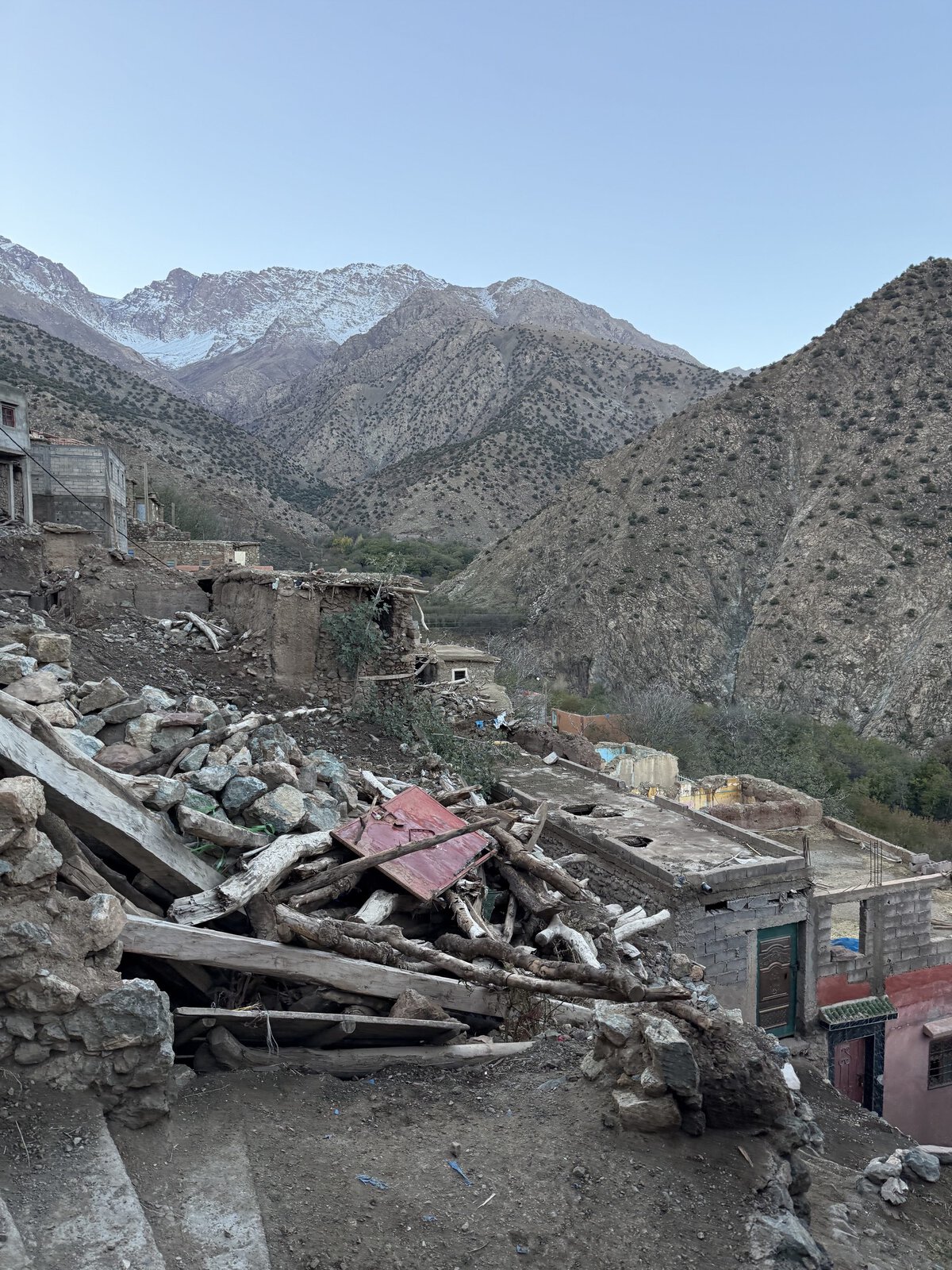
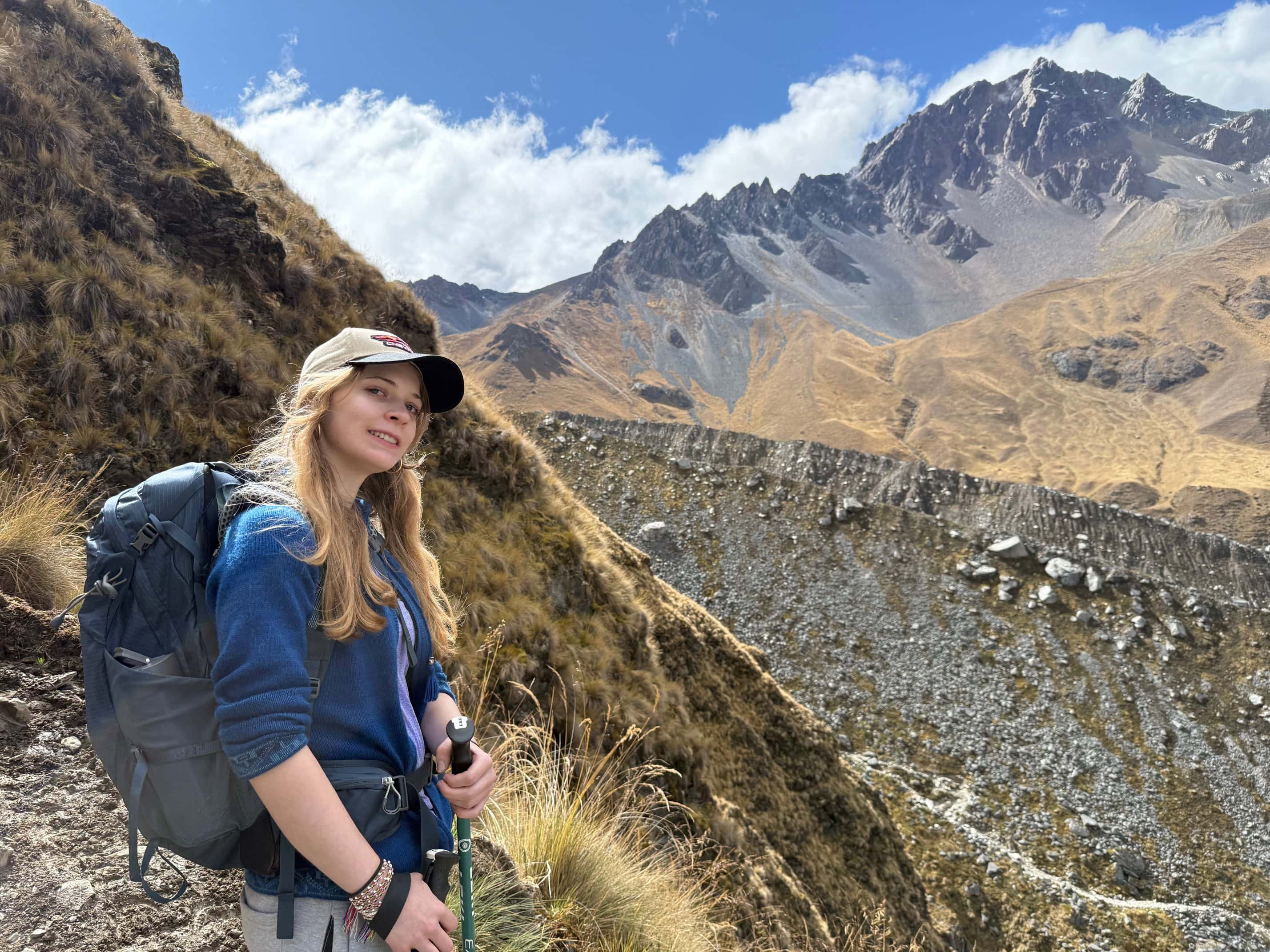
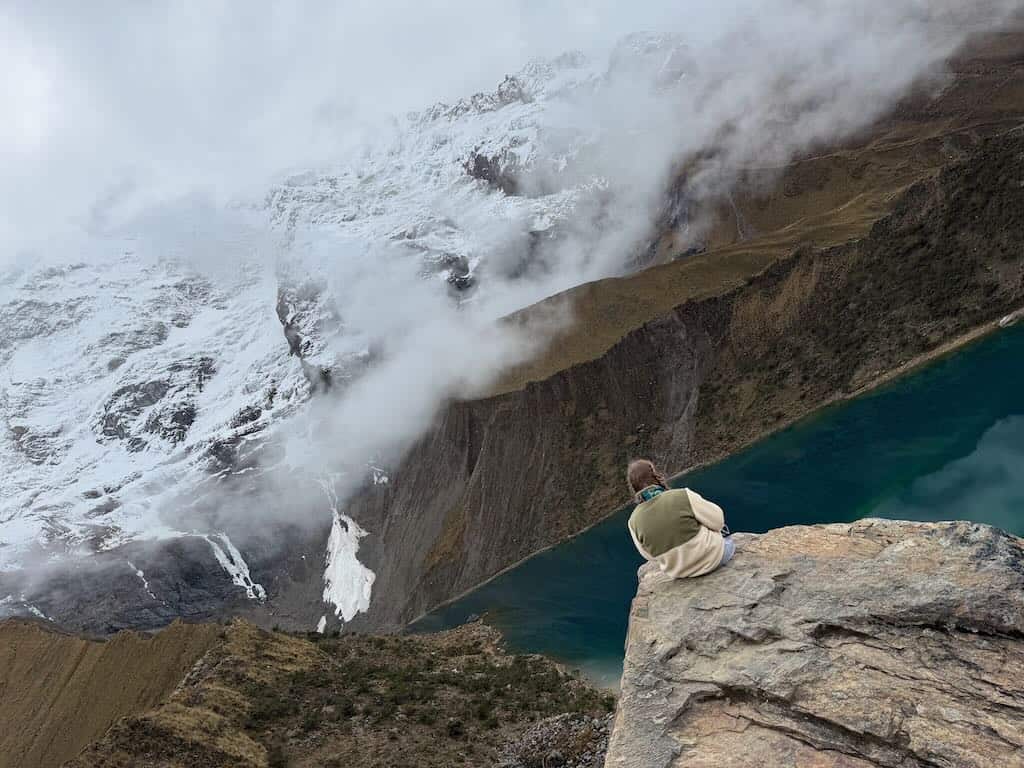
The Salkantay Trek to Machu Picchu: En Route to Soraypampa

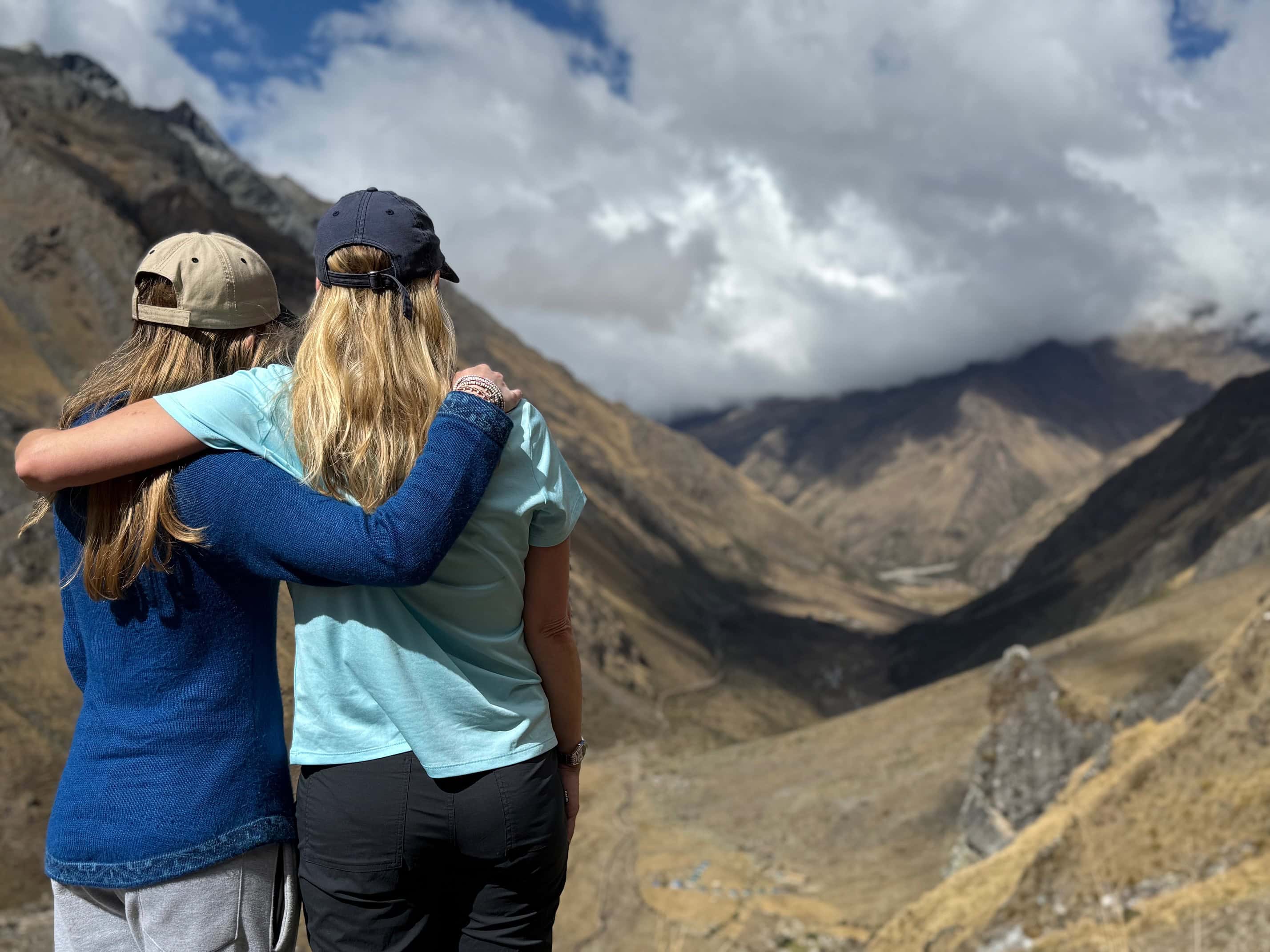
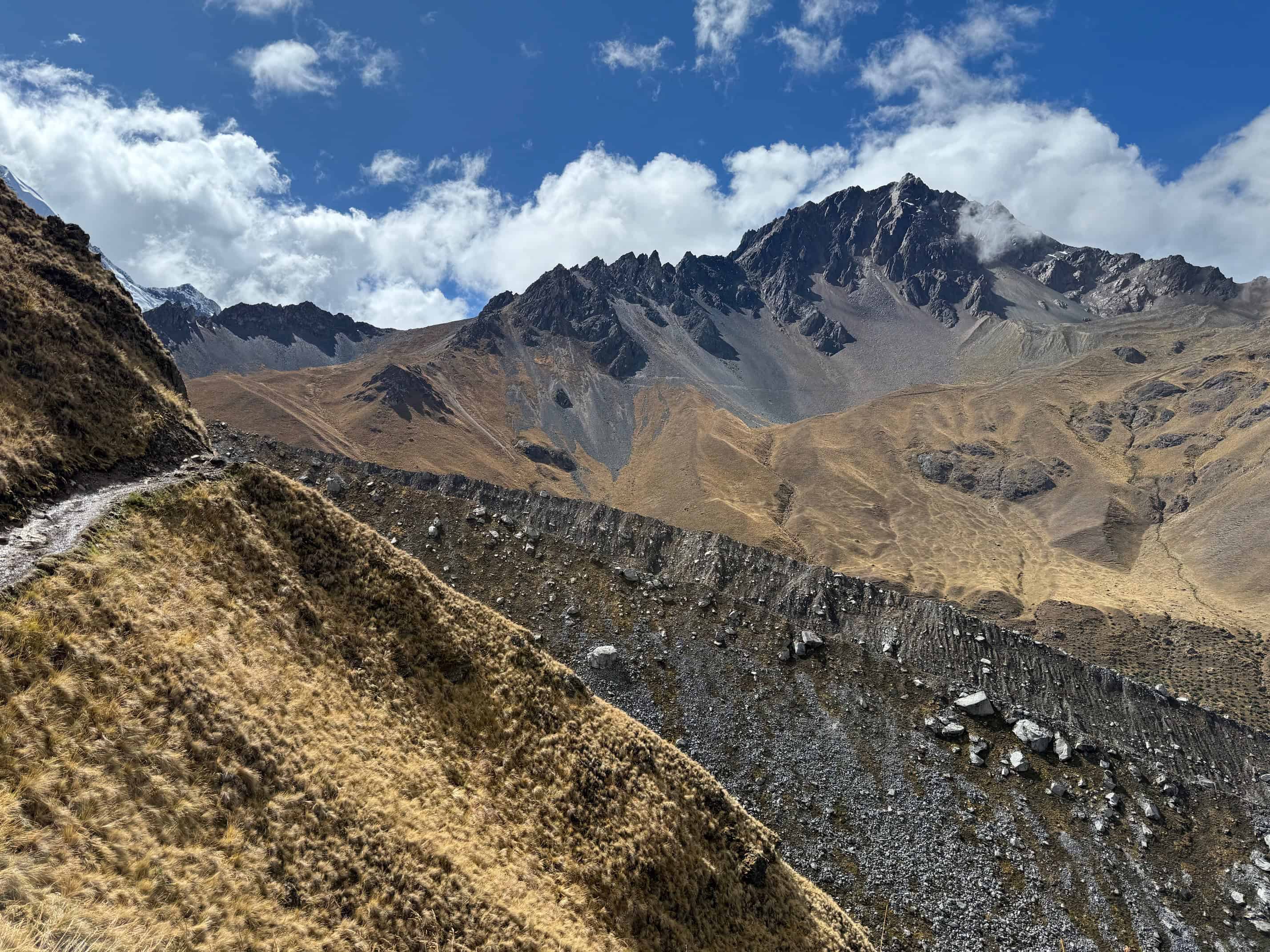
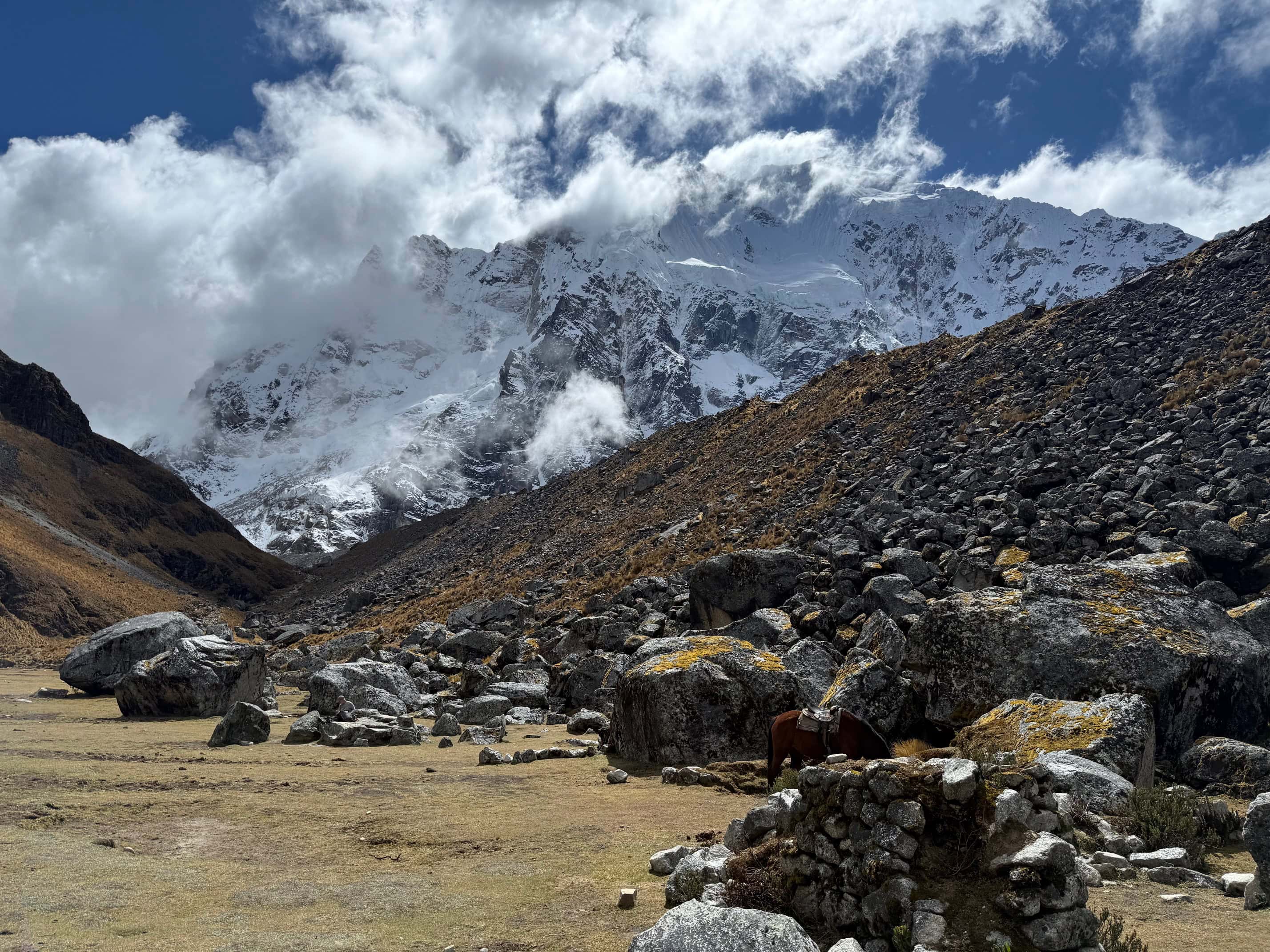
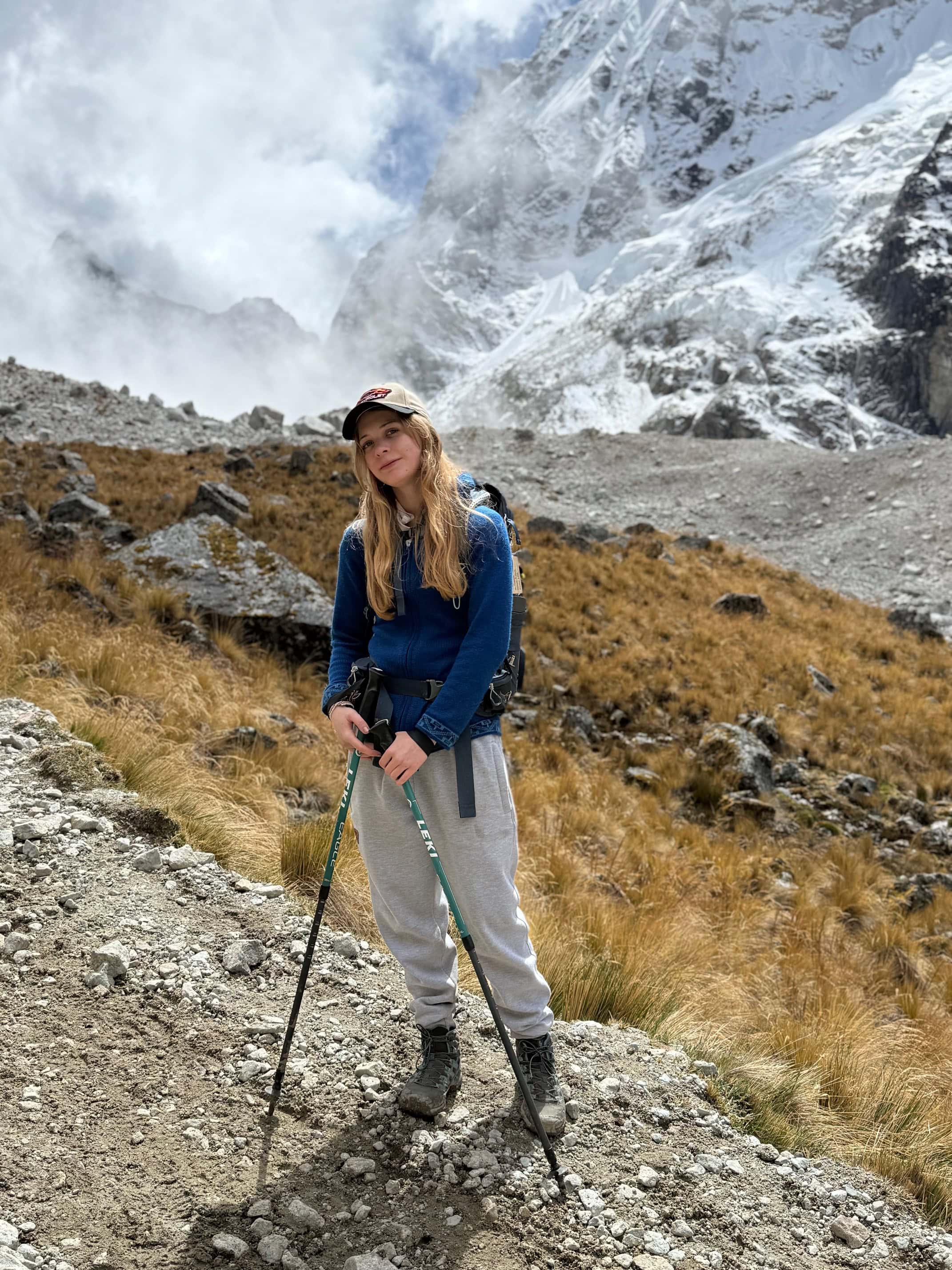
Back in August, my daughter and I went on an incredible adventure together in Peru, completing the Salkantay Trek to Machu Picchu. Peru had been a place we were planning to visit in 2020 before the pandemic canceled our plans. We were finally able to do the trip together a month before she left home for college, and for me, after recovering from my second hip replacement surgery and becoming an empty nester. It was spectacular.

Morning sun looking out from the Salkantay Lodge

Adventure Travel Family Travel Peru South America TRAVEL TRAVEL BY REGION Trekking/Hiking
Icalama, Chile

Ancestral Paths to Mountain Biking Trails in Icalma, Chile

A small dedicated group of local people in the remote Aracauria region of Chile has turned ancient ancestral paths into sustainable tourism through mountain biking as a way to keep their indigenous traditions and culture alive. Here is their story. Note: This article was written by me for the Chile Tourism Board and was published on GLP Films

Beneath a towering canopy of ancient Araucanía trees, Victor Abarzua and Aldo Torres snap on their helmets and mount their bikes. As they glide down the age-old trail, sunlight filters through the forest, casting their silhouettes in a golden ray of light. Every twist and turn of the ride feels like magic. For this forest is not just a path to be ridden; it’s a living history, its roots entwined with the stories of the Mapuche people and the sacred wisdom of the past. As their tires carve into the earth, a plume of dust rises like smoke, drifting toward the treetops. Adrenaline surges through them, but so does a deep sense of reverence. Here, mountain biking becomes more than a sport—it’s a ritual, a celebration that bridges past and future, and builds connection between man and nature.

For the past ten years, Victor has been working with the local Indigenous Mapuche community to transform Icalma, a relatively remote and unknown region of Chile, into a sustainable tourism destination offering Mountain biking as the primary tool. It has not been an easy journey as Victor came to Icalma—a community that is 99% Indigenous—as an outsider and had to take time to develop relationships and, more importantly, to build trust. For Icalma is not just any place; it is a sacred place, one that is worth protecting, adding an extra layer of complexity to sustainably and responsibly developing tourism in this part of Chile.

Mountain biking in Icalma Chile

Photo by Hass Salum/GLP Films

Chile South America TRAVEL TRAVEL BY REGION

Hiking the Kumano Kodo: The last leg to the Nachi Grand Shrine

The last day of our hike along the Kumano Kodo was from the remote village of Koguchi to Nachi Taisha, one of the three Grand Shrines of the Kumano Kodo and the most stunning. It ended up being a grueling hike, taking 6 long hours with the first two hours being straight uphill. (Total hike: 9.2 miles/14.8 kilometers).

The hike ended with a bang and was much harder than I anticipated.

For some reason, this was harder than the 8.5-hour hike two days before. The weather was becoming a bit more humid (thank goodness it was only early June), and the incline up was much more difficult than it looked.

While I struggled through the tough, humid uphill grind  (periodically wiping the sweat dripping off my face with my shirt),  wy kids and husband whisked by me, not one bit bothered. I confess I was a bit grumpy, but decided to give myself some grace. I was 53 years old and had just had not one but two major surgeries in the past two years. My last surgery – my second hip replacement –  was only six months ago, and I was still not back up to my prior fitness levels before.

Asia Family Travel Japan TRAVEL TRAVEL BY REGION Trekking/Hiking

Hiking the Kumano Kodo: Ukegawa to Koguchi

The fourth day hiking the Kumano Kodo trail was a recovery day and only 13.2 km/8.2 miles. Our legs were sore but our souls were refreshed after a night at the Yunomine Onsen, where we dipped in the calming hot waters of the hotel’s onsen and enjoyed a traditional 12-course Japanese meal.

The hike today involved a short bus ride to the Kogumotori-goe section of the trail, where we had perhaps one of the best views of the velvety green forested mountains. The look out area is called Hyakken-gura looks out onto the “Kumano Sanzen Roppyaku-ho” – a local expression which literally translates as the “3,600 peaks of Kumano” per our guidebook.

A small Jizo statue guards a stunning backdrop of the Kumano mountains

Since much of the hike is through thick forests, we did not have many views of the mountains except on this day. The word “gura” means “high cliff,” and from the Hyakken-gura we could see velvet green-covered peaks as far as the eye could see. It certainly was magical.

Adventure Travel Asia CULTURE Japan TRAVEL TRAVEL BY REGION Trekking/Hiking

Hiking the Kumano Kodo Nakahechi Trail: Chikatsuyu to Hongu Grand Shrine

Day three of the Kumano Kodo trail – from Chikatsuyo to Hongu Grand Shrine – was by far the hardest day of all in terms of distance. For this section of the trail, there are three options: Easy, moderate at 6-7 hours, and strenuous at 8.5 hours (24 km/14.9 miles). Of course, we all chose the hardest option! It was a long day, but worth it.

We began our hike, leaving our inn at 7 am, hiking through villages along the side of the road. This was actually fun as we met lots of the locals and had some fun conversations, such as learning how to say a few Japanese words like Ohayou gozaimasu which means good morning.

The outskirts of the village were lovely with lots of flowers and beautiful views of the velvet, green-covered mountains. It all felt so peaceful, too, with no noise pollution or crowds.  A rarity in today’s modern world.

The hike climbed steadily through the outlying community and countryside until we reached the forest again. It was day three and I was still amazed by the size and majestic beauty of the trees that towered over our heads like a cathedral. We hiked to the melodic birdsong yet never saw the birds because they were too high up in the canopy of cypress, camphor and pine trees.

There were lots of marvelous ancient oji shrines along the way for us to stop at. While the hike was long, it was rewarding and only a few fellow hikers were taking the long route.

By the time we reached the incredible Hongu Grand Shrine, we were so exhausted that we only grabbed a few photos. Nevertheless, it was stunning and got us even more excited for the rest of the journey.

Hongu Grand Shrine

The Hongu Grand Shrine, or Kumano Hongu Taisha, holds a deep historical and spiritual significance as one of Japan’s most sacred Shinto sites and is a central destination on the ancient Kumano Kodo pilgrimage route. Located in Wakayama Prefecture, the shrine dates back over a thousand years and was once the head shrine of more than 3,000 Kumano shrines across Japan.

For centuries, emperors, aristocrats, and commoners alike made the arduous journey through the Kii Mountains to worship here, seeking spiritual rebirth and purification. Originally situated at Oyunohara—the confluence of the Kumano, Otonashi, and Iwata Rivers—the shrine was relocated to its current site in the late 19th century after a devastating flood. Today, it stands as a powerful symbol of Japan’s enduring traditions of nature reverence, pilgrimage, and spiritual renewal, linking the past and present through its timeless rituals and sacred atmosphere.

As we left the shrine, it was late afternoon and we still had to catch a local bus to reach our accommodation for the night. We were staying at our first onsen, natural hot springs that are an integral part of Japanese culture. The onsen experience is unique as you bathe with a bunch of same gender strangers completely in the buff.  Apparently, onsens are valued not only for their soothing warmth and mineral-rich waters but also for their role in promoting relaxation, purification, and social connection. For centuries, people have visited onsens to heal both body and spirit, believing that the geothermal waters possess restorative powers.

I must confess that I chickened out and only tested the single-person onsen. But it was indeed amazingly lovely and soothing. I can see why the onsen is a beloved centuries-old tradition of Japanese culture.

We spent the next two nights at the Yunomine Onsen, which is one of the most historic hot springs in Japan. Nestled in the mountains of the Wakayama Prefecture, it is located in one of Japan’s oldest and most historic hot spring villages, with a history stretching back over a thousand years. Deeply intertwined with the sacred Kumano Kodo pilgrimage routes, it is said that pilgrims once bathed here to purify their bodies before worshiping at the nearby Kumano Hongu Taisha.

Our dinner at Yunomine Onsen was an experience in itself. We were served a traditional multi-course (I counted at least 14 courses each!)  showcasing beautifully presented, locally sourced ingredients. Some of the regional specialties included grilled river fish, mountain vegetables, tofu, seasonal pickles, lots of sushi and miso soup.

Since Yunomine is a hot spring village, a unique culinary tradition is onsen tamago—eggs gently boiled in the natural hot spring waters, resulting in a delicate, silky texture. Rice, fresh sashimi, and small plates of simmered or tempura vegetables rounded out the meal, all served with meticulous attention to detail. Together, these dishes offer visitors a taste of Japan’s deep connection between food, place, and nature, mirroring the onsen’s tranquil and spiritual atmosphere.

After such an epic day with a long hike, soaking in the onsen, and indulging in an enormous dinner, we were looking forward to the rest of the journey along the Kumano Kodo trail. The hike got even better as the trip went on.

Check out this reel of the adventurous day on Instagram. 

Asia Japan TRAVEL TRAVEL BY REGION Trekking/Hiking

Hiking the Kumano Kodo Nakahechi Trail: Takahara to Chikatsuyu

Day 2 on the Kumano Kodo Nakahechi Trail takes you from the mountain village of Takahara to Chikatsuyu, covering about 10.1 km (6.5 miles). The route winds through dense forests along an undulating path, with climbs and descents that lead past several Oji shrines. The walk takes an estimated 4 hours and is roughly 6.5 miles (10.1 kilometers).

After a delightful breakfast at our accommodations, a local family-owned inn, called Hatago Masara, owned by a Japanese-French couple, Masa and Sara, we set off for our second day of hiking the Kumano Kodo. The morning was lovely with perfect temperatures and slight cloud cover keeping us relatively cool for this time of year (while the humidity was still at bay).

From Takahara, we passed through the outskirts of the village and continued on an undulating trail past several oji shrines along the way.  Once again, we hardly saw anyone, and the trail was relatively quiet save for a few hikers. We had timed our trip right.

Asia Family Travel Japan TRAVEL TRAVEL BY REGION Trekking/Hiking
Takahara, Kumano Kodo, Japan

Hiking the Kumano Kodo Nakahechi Trail: Takijiri to Takahara

The Kumano is a sacred mountainous region located on the Kii Peninsula of Japan, stretching south of Osaka, Nara, and Kyoto, and home to the ancient spiritual Kumano Kodo Pilgrimage. There are several routes however, the most popular one is the Nakahechi Imperial Route that traverses the rugged mountainous trail winding through deep forests of cypress, pine, and camphor trees starting in Takahara and ending in Nachi at the Nachi Tasha Grand Shrine.

The pilgrimage began 1,000 years ago, taking the Imperial family and fellow pilgrims an average of 30-40 days from Kyoto. Several Oji shrines and teahouses were established along the way for pilgrims to rest, relax, and pray during this arduous trek. Today, the Nakahechi route can be completed in 5 days and covers over 46 miles (70 km) of mountainous terrain.

This past May, our family of four visited Japan for two weeks and the highlight of our trip was our time spent together doing the Kumado Kodo hike. Although the hike can be navigated and booked on your own, we opted to hire Oku Japan. Oku Japan operates guided, self-guided, and custom tours around Japan. Their trips combine the simple pleasures of enjoying the hospitality of close-knit communities deep in the countryside that preserve the traditions of a not-too-distant past. We picked them for their excellent reputation, their commitment to helping local rural communities, and their incredible attention to detail to every aspect of our trip, from start to finish. We were not disappointed.

Takijiri, Komano Kodo, Japan

Adventure Travel Asia Japan TRAVEL TRAVEL BY REGION Trekking/Hiking
Yasaka Shrine, Kyoto

Three Perfect Days in Kyoto

Kyoto is often referred to as the cultural heart of Japan, and for good reason. Once the imperial capital for over a thousand years, the city blends timeless tradition with quiet elegance, offering a window into Japan’s past while still pulsing with modern life. Here, centuries-old wooden teahouses stand beside tranquil gardens, and the scent of incense drifts from ornate temples and shrines that have survived wars and earthquakes. Visitors come not only for Kyoto’s 17 UNESCO World Heritage sites, but also for its living heritage, including seasonal festivals, exquisite kaiseki cuisine, and the artistry of geisha districts like Gion. Whether it’s the cherry blossoms of spring, the crimson maples of autumn, or the hushed snow of winter, Kyoto’s beauty is ever-changing—yet eternally unforgettable.

In 2024, Kyoto welcomed a record 10.88 million international visitors and 16.3 million overnight stays in total, marking one of its busiest years—second only to 2015. There are definitely challenges with overtourism as many sites are unbearably overcrowded. Yet if you time your visit right by going slightly off-season or get up early to arrive first at the most popular sites, you can find ways to avoid the massive crowds and still enjoy this glorious city.

Kiyomizu-dera

The stunning Kiyomizu-dera Temple

Asia Japan TRAVEL TRAVEL BY REGION

Two weeks in Japan celebrating many milestones

This summer has been a summer of milestones. Our youngest daughter, Sophia, graduated from high school. It had been six months since my second hip surgery,  and my husband and I celebrated our twenty-fifth wedding anniversary. To top it off, our twenty-year-old son was home from his second year of college, so with so much to celebrate, we did a fabulous two-week trip to Japan.

I had been to Japan decades ago when I was just 19 and wanted to see what had changed in this place that everyone seems to be talking about and visiting.

In fact, in the past year, travel to Japan has grown exponentially. In 2024, a record 36.9 million international visitors came to Japan, representing a 47.1% increase, according to the Japan Tourism Organization, and projections for 2025 are not slowing down. Japan continues to make the list of top countries to visit, and it is no surprise given the strong dollar-to-yen exchange rate, more direct flights from the US, and most of all, a country that has so incredibly much to offer its visitors. Add in the other benefits that Japan is a safe country, is incredibly easy to get around given its amazing network of trains, subways, and buses, and Japan was the ideal choice for our family vacation.

When I first went to Japan as a teenager decades ago, I hated the food. How wrong I was! Japanese cuisine is some of the most varied, delicious food I’ve ever experienced. Eating was half of the fun of this two-week family trip to Japan.

Family Travel Japan TRAVEL

Bamboo Rafting Through A Naso Comarca: A Journey Into Indigenous Panama

“Stand tall, but be sure to bend slightly at the knees,” yelled Max Williams, my Indigenous guide representing the Naso Comarca, as my travel companion Laura and I slowly started to travel down the Teribe River in Northeastern Panama. Slightly nervous, I smiled and waved. “Remember to use your feet for balance just like surfing when you enter the rough spots” he called out as our homemade bamboo raft picked up speed and headed faster downstream.

Laura and I were at the riverbank in the middle of the jungle, leaving behind the tiny Naso village of Sieykin, which is only reachable by water. Never in my wildest dreams did I imagine I’d be traveling down a river while standing up on a homemade bamboo raft. But visiting the heart of the Naso Kingdom – an ancient community that has no roads and is centered around the river – meant we had no other way.

Adventure and Culture in the Heart of the Naso Comarca

As one of seven indigenous tribes in Panama – the smallest and one of the last monarchies in the Americas- the Naso have fought for their lives, their land, and their culture for hundreds of years, facing continual threats and persecution by other tribes, big business, and even their government. After decades of protest, in 2020, the Naso were finally granted the return of some of their ancestral land in the formation of their comarca (semi-autonomous Indigenous region), which includes the biodiverse La Amistad Biosphere Reserve (Central America’s largest intact rainforest). Yet, decades of little opportunity have meant this tiny tribe of only 3,500 remaining members is being forced to move away from the comarca, threatening what they value most, their cultural identity as a tribe.

Since 2020, the Tourism Authority of Panama and other international NGOs have been counting on community tourism as a way forward for indigenous communities throughout Panama and have funded the ambitious $301 million Master Plan for Sustainable Tourism. While the development of community tourism has been slow in the Naso Comarca, there is hope that the rehabilitation of an ancestral trail (that follows the river) will help increase tourism to this remote part of Panama. The community also became part of the Tourism Cares Meaningful Travel Map last June, bringing more awareness to tourism experiences. But it is the hope that once the trail is completed this spring, more visitors will come.

Spending a day with the Naso tribe in Sieykin was one of the highlights of my trip to Panama. The night before heading upriver to Sieykin, Laura and I stayed near the Posada Medialuna, a rustic community tourism initiative located in the Bonllik comarca, not far from Changuinola.

Visiting Sieykin: An Indigenous Village Only Reachable by Water

In the morning, we met our Naso guide, Max Williams for an hour motorboat ride up the Teribe River to reach the heart of the Naso kingdom, Sieykin where the king resides and a thriving Naso community continues to live as they have for generations.

As we rode upriver, Max shared a bit about the importance of nature, particularly the water for his people. “The basis of Naso life, both historically and today, is the Teribe River. Although called the Teribe by the Spanish, the original Naso name for the river is Tjër D. ‘Di’ means ‘water’ and ‘Tjer’ is the ‘Grand-Mother’, the giver of life and guiding spiritual force of the Naso ancestors.

Max William going up Teribe River for Naso tour

Photo of Max leading us up the Teribe River

The History and Resilience of the Naso Tribe

The Naso Comarca hugs the vast forests of the Tjër Di river basin (including the Palo Seco Protective Forest and the La Amistad International Park) and extends to the border with Costa Rica. For centuries, the Naso have been the stewards of their land and have fought against its destruction from neighboring tribes, big business, and the government itself. It was not until they officially received their comarca five years ago that they finally became the legal protectors.

“We strongly forbid the illegal cutting down of our trees,” Max told us and “we unsuccessfully fought for decades against putting in the hydroelectric plant and dam on the river.  At first, locals were happy to find jobs – albeit low-paying ones – at the hydroelectric company but when they finished the work and closed down the company, they were left once again with nothing”.

This is where community tourism can help. Slowly over the past 10 years, thanks to the entrepreneurship of the women in Bonyik who opened up Posada Mediluna and young guides like Max, tourism has begun creeping into their comarca. It has helped, but still, it is not enough.

Home of the Naso King who is democratically elected by the tribe.

We arrived at the bank of the entrance to Sieykin and still had a twenty-minute walk crossing through rivers and jungle until we reached the community. We saw women washing clothes and children playing in the river. As a Westerner, I was not accustomed to how hard it is to walk through the currents of a rushing river and felt a little bit embarrassed as I saw abuelas much older than me, lifting up the hem of their dress and effortlessly walking across.

One of many river crossings on the way to the community

We spent the afternoon at the home of Cristovalina and her family, learning about Naso culture through various activities such as traditional weaving to make baskets, handicrafts, and even the roofs of their homes, and also traditional chocolate making.

How Community Tourism Supports Indigenous Cultures in Panama

“The essence of tourism is that we share culture,” our guide Max’s mother told us the night before when we had dinner at their home. “We need help with tourism as a way to preserve our community and our land, to help us remain who we are and not lose our identity”.

Learning about how families come together and make chocolate was my favorite experience. Harvesting chocolate is a tradition passed on from generation to generation by the grandmother to her daughter and involves the entire family. It is also how their language and stories are passed on through hours of storytelling and singing by the fire.


I even captured this beautiful moment in this reel I created for Instagram of the chocolate-making tradition.

As we left Sieykin floating down the river on a homemade bamboo raft, I couldn’t help but wonder what the future holds for the Naso community. Will the opening of the much-anticipated Naso Trail bring the responsible tourism that they so desperately need to survive?

While the first phase covering 8 kilometers is now complete (reaching the communities of Bonyik and So Long), the remaining four kilometers should be ready for next season’s tourism season. I remember the words I heard the night before from our guide Max’s mother, a true warrior and champion of the Naso cause:

“For hundreds of years, we’ve fought for our land, our culture, and our traditions,” said Virginia Sososo. “Finally, we have the chance to share it with others through community tourism. It has allowed visitors to come here and learn about our culture and community and not take it away. To not extract things but to appreciate and respect our unique culture and land. When people stay for a night or two and spend time with us and talk to us, it creates an unforgettable experience and connects us. It brings us hope”.

Central America Community Tourism Panama TRAVEL TRAVEL BY REGION
Max William going up Teribe River for Naso tour

A Visit to the Naso comarca in Western Panama, one of the last monarchies in the Western Hemisphere

After a beautiful morning whale-watching in the Chiriqui National Marine Park in Boca Chica, Panama it was time to hit the road and head to our next stop: Bonyic Naso Indigenous Community in the Bocas del Toro Province of Northwestern Panama. 

As one of seven indigenous tribes in Panama – the smallest and one of the last monarchies in the Americas- the Naso have fought for their lives, their land, and their culture for hundreds of years, facing continual threats and persecution by other tribes, big business, and even their government. After decades of protest, in 2020, the Naso were finally granted the return of some of their ancestral land in the formation of their comarca (semi-autonomous Indigenous region), which includes the biodiverse La Amistad Biosphere Reserve (Central America’s largest intact rainforest).  Yet, decades of little opportunity have meant this tiny tribe of only 3500 remaining members are being forced to move away from the comarca, threatening what they value most, their cultural identity as a tribe. 

Riding a traditional bamboo raft down the Teribe River is one of many fun experiences offered by the Naso tribe’s community tourism initatives

I spent two days visiting three of the eleven communities of the tribe and it was one of the most meaningful experiences I had in two weeks in Panama. One of the most special parts of my trip happened the very first night. Here is the story.

Central America CULTURE Panama TRAVEL BY REGION
Isla Bolaños, Chiriqui National Marine Park, Panama

A Visit to the Chiriqui National Marine Park, Panama

The Chiriqui National Marine Park covers 14,740 hectares of islands and sea off Panama’s western Pacific coast and is home to over 20 stunning islands many uninhabited. The best way to reach the park is from Boca Chica which is roughly a 50 minutes drive from David, the capital of Chiriqui Province. A visit to the Chiriqui National Marine Park is a must-do for those seeking beauty, wildlife and adventure, and I was grateful to visit this extraordinary place last October during my two-week trip to Panama.

I arrived at the lovely boutique Hotel Bocas del Mar after a long adventurous day visiting the Soloy Indigenous Community in the highlands of Chiriqui province. The sun was already dipping below the horizon but it was evident how extraordinarily beautiful the setting was.  Located 2 kilometers from Boca Chica, the hotel is the perfect getaway for nature-lovers and those seeking tranquility. Perched high above the ocean, the resort overlooks the start of Chiriqui National Marine Park and is the perfect launching off point for exploring the park.

Sunset over Hotel Bocas del Mar, Boca Chica, Panama

Sunset over Hotel Bocas del Mar, Boca Chica, Panama

Central America Panama TRAVEL TRAVEL BY REGION